
Vietnam Tuna Export EU Market Overview: Growth Amid Challenges
Let’s start with some good news before we dive into the complications. The European market isn’t dead for Vietnamese tuna—far from it. But the growth story comes with significant asterisks attached.
Current Export Performance to EU
The numbers from October 2025 actually look quite promising at first glance. Vietnam tuna export EU reached nearly $15 million in a single month, representing a healthy 16% increase compared to September. Key markets like the Netherlands and Italy have been particularly enthusiastic, with both countries showing triple-digit growth rates that would make any export manager celebrate.
Cumulative figures for the first ten months of 2025 paint a stable picture: $175 million in Vietnamese tuna exports to Europe, up 4% year-over-year. Given the global challenges in seafood trade—from shipping disruptions to fluctuating demand—a 4% gain isn’t something to dismiss.

But here’s where context matters. Overall Vietnam tuna exports in the same period reached $791 million across all markets. Break that down, and you’ll see the EU accounts for roughly 22% of total tuna exports, ranking as the second-largest destination. The United States dominates with 37%, followed by Russia at 5%, Canada at 4%, and a mixed bag of other markets comprising 32%.
The question VNSeafoodInsider keeps asking: Why isn’t the EU share larger? With EVFTA offering preferential tariffs that should create a massive competitive advantage over competitors like Thailand or the Philippines, Vietnamese tuna should be flooding European markets. Instead, growth remains tepid, and that 22% market share tells a story of unrealized potential.
Why EU Market Recovery Matters for Vietnamese Exporters
Understanding why the EU matters so much requires looking beyond simple tonnage figures. European consumers pay premium prices for quality seafood, and sustainability-certified tuna commands even higher margins. The EVFTA eliminates 99% of tariffs over time, theoretically giving Vietnam tuna processors a significant edge.
More importantly, EU partnerships tend toward long-term relationships rather than spot purchases. European retailers and food service companies value consistency, traceability, and sustainability—all areas where Vietnam has invested heavily. Cracking the EU market properly could stabilize revenue streams during seasonal fluctuations in other markets.
There’s also the strategic angle. With 37% of Vietnam’s tuna exports heading to the United States, diversification isn’t just smart—it’s essential. Trade tensions, regulatory changes, or economic downturns in any single market can devastate exporters who’ve put all their eggs in one basket. The EU represents that diversification opportunity, if only Vietnamese exporters could fully capitalize on it.
See more: MMPA tuna ban 2026
Understanding EUR1 Certificate Requirements for Vietnam Tuna Export EU
Now we arrive at the document causing all the headaches. If you’ve ever wondered why a simple certificate of origin could become a bottleneck for an entire industry, buckle up. The EUR1 certificate sits at the intersection of international trade law, sustainability requirements, and domestic regulations—and it’s that intersection where Vietnamese tuna exporters keep crashing.
What is EUR1 Certificate?
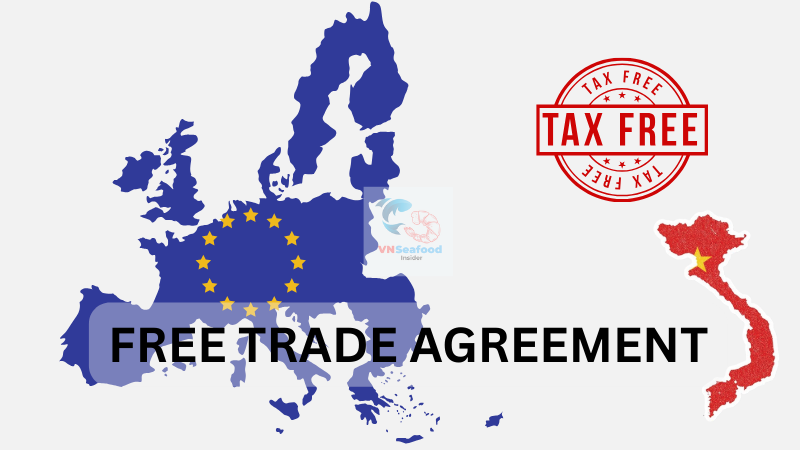
Think of the EUR1 certificate as your tuna shipment’s passport to preferential treatment. Officially, it’s a “movement certificate” issued by Vietnam’s Ministry of Industry and Trade (MoIT) that proves your product originates in Vietnam and therefore qualifies for EVFTA benefits.
Without this certificate, your tuna entering the EU faces standard tariff rates. With it, those tariffs drop dramatically or disappear entirely. For a 20-foot container of skipjack tuna, we’re talking about thousands of dollars in savings. Multiply that across an industry shipping hundreds of millions of dollars worth of tuna annually, and you understand why this certificate matters.
When EUR1 Certificate is Required
Here’s where it gets specific. If your Vietnam tuna shipment to EU exceeds €6,000 in value—which most commercial shipments easily do—you need the EUR1 certificate to claim preferential tariff treatment. Below that threshold, exporters can use self-certification through an origin declaration, but that’s relevant mainly for samples or small test shipments.
Interestingly, EU exporters can self-certify for much larger shipments if they’re “approved exporters,” but Vietnam hasn’t adopted this flexible approach for Vietnamese exporters. This asymmetry puts Vietnamese companies at a procedural disadvantage right from the start.
Key EUR1 Documentation Requirements
Now we get to the really challenging part. To obtain an EUR1 certificate for your tuna, you must prove one of two things: either the product fully originates in Vietnam, or any non-originating materials underwent “sufficient working or processing” in Vietnam to fundamentally transform them.
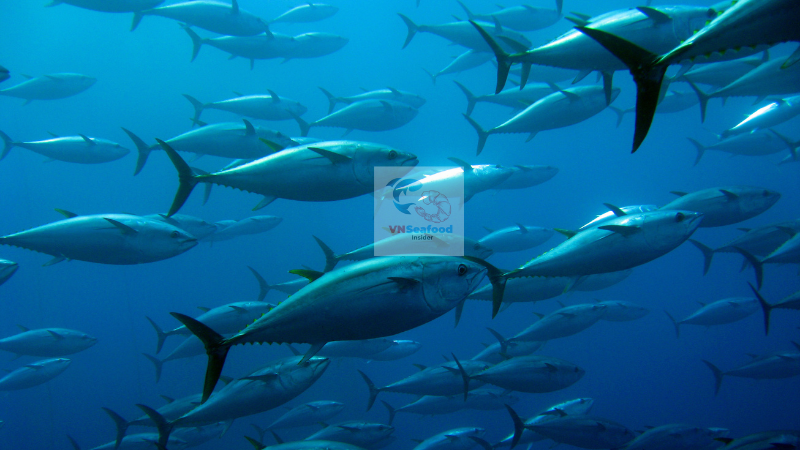
What does “sufficient” mean? That’s where arguments begin. You’ll need to provide:
- Manufacturing process evidence from your accounts and internal records showing exactly what happened to the tuna in your facility
- Proof of originating status for all materials used in processing (this is where imported raw materials become problematic)
- Documents proving working or processing in Vietnam that go beyond simple operations
- Catch certificates for tuna demonstrating the fish came from legal, sustainable fishing practices
That last requirement—catch certificates—has become particularly thorny, as we’ll discuss shortly.
EVFTA Rules of Origin Specific to Tuna
The EVFTA doesn’t treat all seafood equally. Product-specific processing requirements under Protocol 1 mean that different tuna products face different rules. Certain processed tuna products remain subject to tariff quotas even under the free trade agreement, creating additional complexity.
There’s also regional cumulation, which theoretically allows Vietnamese processors to use materials from select ASEAN countries without losing origin status for certain seafood products. In practice, however, documenting this cumulation satisfactorily for EUR1 purposes adds yet another layer of paperwork that many companies struggle to navigate.
See more: Tuna CO Treatment vs Natural Methods: What Importers Need to Know
The EUR1 Certificate Bottleneck: Core Challenges for Vietnam Tuna Export EU
With the background established, let’s examine exactly why obtaining EUR1 certificates has become so difficult that many Vietnamese exporters are simply walking away from EU opportunities. VNSeafoodInsider has identified four interconnected challenges creating this bottleneck.
Challenge #1: Difficulty Proving Sufficient Processing
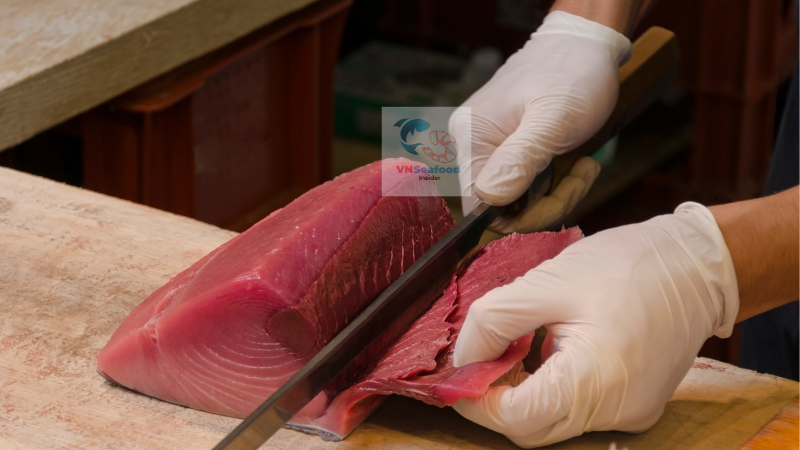
Many Vietnamese tuna factories operate as processors rather than vertically integrated operations. They receive frozen tuna, process it into various products, and export the result. Simple enough, right?
Not when it comes to proving “sufficient processing” for EUR1 purposes. The EVFTA specifically excludes certain operations from qualifying as sufficient transformation:
- Simple assembly operations
- Affixing labels or brand marks
- Basic packaging changes
- Operations requiring no special skills or specialized equipment beyond simple cutting or mixing
The problem? Many Vietnamese operations fall into gray areas. Is cleaning, filleting, and vacuum-packing whole tuna “sufficient processing”? What about making tuna steaks from loins? Different inspectors sometimes reach different conclusions, creating uncertainty that exporters can’t afford when European buyers need shipment guarantees.
Factories struggle particularly when they’ve imported raw materials from non-EVFTA countries. Even if they perform considerable processing, proving that processing fundamentally transformed the product becomes an uphill documentation battle.
See more: Yellowfin Tuna Cube: The Versatile Gem of Seafood Cuisin
Challenge #2: Domestic Raw Material Supply Issues
This challenge hits at the heart of the EUR1 bottleneck. Vietnam’s Decree 37/2024 introduced minimum size requirements for skipjack tuna—500mm to be precise—aimed at ensuring sustainable fishing practices. Noble goal, significant unintended consequences.

Before this decree, Vietnamese processors could easily obtain EUR1 certificates because their raw materials came from domestic fishing vessels. The fish originated in Vietnam, processing happened in Vietnam, and certification was straightforward. Then Decree 37/2024 changed everything.
Suddenly, the percentage of Vietnamese tuna products eligible for EVFTA benefits plummeted from 80-100% to roughly 30%. Why? Because domestic supply meeting the new size requirements couldn’t satisfy industry demand. The decree essentially created a shortage of EUR1-certifiable raw materials overnight.
Many shipments now sit in cold storage, unable to obtain the catch certification (S/C) and certificate of origin (C/O) required for EUR1 because the fish don’t meet domestic regulatory standards. It’s a frustrating paradox: the fish are perfectly marketable, but they can’t get the paperwork proving Vietnamese origin.
Challenge #3: Complex Documentation and Traceability
Vietnamese tuna exporters find themselves caught in what VNSeafoodInsider calls the “compliance catch-22.” Comply with domestic regulations like Decree 37/2024 and you lose access to local raw materials. Import materials from abroad to maintain production, and you forfeit EVFTA benefits because you can’t prove Vietnamese origin.
The documentation burden has multiplied exponentially. Each shipment requires:
- Catch certificates proving legal fishing
- Vessel registration documentation
- Processing records with sufficient detail to satisfy EUR1 scrutiny
- Traceability documentation connecting specific raw materials to specific finished products
- Additional sustainability certifications that EU buyers increasingly demand
For smaller processors without sophisticated IT systems, managing this paper trail becomes nearly impossible. Even larger companies with dedicated compliance teams find the administrative costs eating into the tariff savings that EUR1 certificates supposedly provide.
Challenge #4: Import Dependency Undermining Origin Status
Here’s the broader structural challenge: Vietnam is transforming from a fishing-based tuna exporter to a processing-based one. Vietnamese fishing vessels can’t supply the volume that international demand requires, so processors increasingly import frozen tuna from distant water fishing nations.
This shift makes perfect economic sense from a production standpoint. Vietnam has invested heavily in processing infrastructure, cold storage, and skilled labor. Using those assets to process imported tuna generates employment and export revenue.
But it’s terrible for EUR1 certification. Imported tuna—even if extensively processed in Vietnam—faces much higher hurdles to qualify as “Vietnamese origin” under EVFTA rules. The result? Many Vietnam tuna export EU shipments can’t access the preferential tariffs that the trade agreement promises, undermining Vietnam’s competitive advantage against countries like Thailand or Ecuador.
Industry Response: Why Vietnamese Manufacturers Choose Alternative Markets
Faced with these EUR1 certification challenges, Vietnamese tuna processors haven’t simply given up on exports. Instead, they’ve adapted by shifting focus to markets where certificates of origin matter less or not at all. Understanding this strategic pivot helps explain why Vietnam tuna export EU growth remains limited despite European demand.

Market Diversion Strategy
The numbers tell the story clearly. While Vietnamese tuna exports to EU showed modest 4% growth, exports to Thailand surged an eye-popping 137% to reach $20 million in the same period. Why Thailand? Because Thai importers largely don’t require complex origin certifications—they’re buying Vietnamese-processed tuna for re-export through Thailand’s own extensive trade networks.
Manufacturers have also shifted product mix. Frozen tuna products, which face simpler compliance requirements, grew 5% to reach $258 million in the first half of 2025. Meanwhile, processed and canned tuna—products requiring more complex processing documentation—declined 5% to $214 million.
This isn’t coincidence. VNSeafoodInsider’s conversations with processors reveal a deliberate strategy: focus on products and markets where the compliance burden doesn’t outweigh potential profits.
Cost-Benefit Analysis
Let’s talk brass tacks. Applying for an EUR1 certificate isn’t free. There are direct costs—application fees, compliance consultant fees, internal staff time—and indirect costs like potential shipment delays if certification gets rejected or requires additional documentation.
For a typical container of tuna valued at $100,000, the preferential tariff savings might total $5,000-8,000. Sounds significant, but if obtaining EUR1 certification costs $2,000 in direct expenses plus risk of shipment delays that could trigger penalties from buyers, suddenly the math looks less attractive.
Many processors make pragmatic decisions: accept the higher EU tariffs, skip the EUR1 hassle, and price accordingly. They lose some competitive advantage but gain certainty and speed-to-market. For buyers with tight delivery windows or just-in-time inventory systems, that certainty often matters more than a few percentage points on tariffs.
Product Category Shift
Beyond market diversion, processors have also adjusted which tuna products they emphasize. Fresh and frozen whole tuna or basic cuts face relatively straightforward quality and traceability standards. You can document the catch, prove the cold chain, and get the product to market without extensive processing records.
Compare that to value-added products like seasoned tuna steaks, tuna salad mixes, or canned tuna with complex ingredient lists. Each additional ingredient creates another traceability requirement. Each processing step must be documented. The complexity grows exponentially, and with it, the difficulty of satisfying EUR1 requirements.
The industry shift toward simpler frozen products reflects this reality. It’s not that Vietnamese processors lack capability for value-added products—they’re simply responding rationally to regulatory incentives that make simpler products more profitable when targeting the EU market.
Solutions and Future Outlook for Vietnam Tuna Export EU
Understanding the problem is one thing; fixing it requires coordinated effort from multiple stakeholders. VNSeafoodInsider has gathered perspectives from throughout the supply chain on potential solutions and what the future might hold for Vietnam tuna export EU opportunities.
Industry-Proposed Solutions
Vietnamese seafood associations have been vocal about needed reforms, and their proposals deserve serious consideration:
Inspection flexibility tops the list. Currently, authorities inspect and certify based on each export shipment. Industry groups propose allowing batch-based inspection for established processors with proven track records, reducing administrative burden while maintaining quality standards.
Digital certification systems could dramatically streamline processes. Several other ASEAN countries have implemented electronic origin certificate systems that reduce paperwork, speed approvals, and minimize errors. Vietnam has discussed such systems but implementation remains frustratingly slow.
Traceability process streamlining could eliminate redundant documentation. Why should exporters submit the same vessel registration multiple times for different shipments from the same catch? Smarter systems could maintain approved vessel databases that pre-qualify subsequent shipments.
Most controversially, many in the industry advocate for amending or refining Decree 37/2024. Nobody wants to return to unsustainable fishing practices, but some flexibility around the 500mm minimum—perhaps seasonal exceptions or graduated implementation—could restore access to domestic raw materials that qualify for EUR1 certification.
What Vietnamese Exporters Can Do
While waiting for regulatory reforms, smart exporters aren’t sitting idle. Forward-thinking companies are taking several proactive steps:
Vertical integration provides more control over origin requirements. Companies investing in their own fishing vessels or long-term contracts with domestic fishing cooperatives can ensure EUR1-compliant raw material supply. Yes, it’s capital-intensive, but for large processors targeting premium EU markets, it may be worth the investment.
Documentation systems and internal record-keeping represent lower-cost improvements. Many EUR1 rejections stem from inadequate documentation rather than actual non-compliance. Investing in proper systems—even simple databases tracking raw materials to finished products—significantly improves certification success rates.
Building relationships with EVFTA-compliant material suppliers creates options. While Vietnamese raw materials remain ideal, understanding which imported materials might still qualify under regional cumulation rules or undergo sufficient processing to gain origin status provides flexibility.
Some larger exporters are exploring approved exporter status possibilities. While Vietnam hasn’t widely implemented this EU mechanism allowing self-certification, the regulatory framework exists. Companies meeting stringent requirements could potentially self-certify, eliminating the bottleneck entirely.
Finally, partnering with compliance experts familiar with EUR1 requirements saves time and money. Specialized consultants who understand both Vietnamese regulations and EVFTA rules can navigate the complexity far more efficiently than in-house teams learning through trial and error.
What International Buyers Should Know
If you’re a European importer working with Vietnamese tuna suppliers, VNSeafoodInsider wants you to understand several critical realities:
Not all Vietnamese tuna qualifies for EVFTA preferential rates. Don’t assume your supplier can automatically provide EUR1 certificates. Ask early in negotiations, and build potential tariff costs into your pricing discussions.
Verify EUR1 certificate authenticity before claiming tariff benefits with your customs authority. Invalid certificates can trigger retroactive duty assessments plus penalties. The EU has systems for verification—use them.
Build long-term relationships with compliant Vietnamese suppliers rather than constantly switching based on lowest price. Suppliers who’ve invested in EUR1 compliance deserve loyalty and slightly better pricing that recognizes their investment.
Understand the 30-70% compliance gap—roughly 30% of Vietnamese tuna can currently obtain EUR1 certification, while 70% cannot. This isn’t your supplier trying to inflate costs; it’s the reality of current regulations.
Finally, consider supporting suppliers’ compliance investments. Some European buyers provide technical assistance, advance payments for traceability systems, or long-term contracts that justify Vietnamese processors’ investments in vertical integration. These partnerships create win-win outcomes.
Market Outlook 2026
What does the future hold? VNSeafoodInsider sees a market at a crossroads, with outcomes depending heavily on regulatory decisions in the coming months.
The EU remains critical despite challenges, representing 22% of Vietnam’s tuna exports and offering premium pricing that make solving compliance issues worthwhile. No serious Vietnamese exporter wants to write off such an important market.
However, growing EU sustainability requirements add pressure. Marine Stewardship Council (MSC) certification, Dolphin Safe standards, and other eco-labels increasingly become prerequisites for major European retailers. These requirements complement EUR1 challenges, creating additional hurdles for Vietnamese exporters.
Recovery potential exists if reforms materialize. If Vietnam streamlines EUR1 processes, adjusts Decree 37/2024 implementation, or achieves greater flexibility in inspection methods, Vietnam tuna export EU could surge significantly. The underlying demand exists—it’s regulatory friction holding back supply.
Netherlands and Italy show strongest growth potential based on recent performance. Both markets have demonstrated appetite for Vietnamese tuna, and building on these relationships could create beachheads for broader European expansion.
The pessimistic scenario? Continued regulatory gridlock pushes more Vietnamese processors toward markets with simpler compliance requirements. The EU’s 22% share gradually erodes as Thailand, Australia, and Middle Eastern markets capture volume that should flow to Europe. Given EVFTA’s promise, that outcome would represent a significant missed opportunity for both Vietnamese exporters and European consumers.
See more: The Rise of Vietnam Seafood Processing: Market Trends & Future Outlook
Conclusion
The EUR1 certificate bottleneck reveals how even well-intentioned trade agreements can stumble over implementation details. Vietnam and the EU negotiated EVFTA to create mutually beneficial trade expansion. Vietnamese tuna should be flowing into European markets at volumes far exceeding the current $175 million annually. European consumers should enjoy greater seafood variety at competitive prices. Instead, thousands of tons of quality tuna sit frozen, unable to obtain the paperwork necessary for preferential market access.
Yet VNSeafoodInsider remains cautiously optimistic. The 4% year-over-year growth in Vietnam tuna export EU demonstrates that some companies are finding ways through the bottleneck. Success stories in Netherlands and Italy prove that compliant Vietnamese tuna exports to Europe can thrive when companies invest in proper systems.
The path forward requires partnership. Vietnamese authorities must balance sustainability goals with industry practicality, implementing reforms that streamline EUR1 certification without sacrificing environmental standards. Exporters must invest in compliance infrastructure, documentation systems, and supply chain traceability that satisfy both Vietnamese and European requirements. European buyers should recognize compliance costs in pricing negotiations and support suppliers making those investments.
For international seafood buyers considering Vietnamese suppliers, understand that the EUR1 challenge doesn’t reflect product quality or company capability. Vietnam tuna processors rank among the world’s most sophisticated, with modern facilities, skilled workforces, and genuine commitment to sustainability. They’re navigating a regulatory maze that doesn’t align well with their operational realities.
The EU market’s 22% share and premium pricing make solving these challenges worthwhile for all stakeholders. With EVFTA’s tariff benefits theoretically available, the opportunity cost of the current bottleneck runs into tens of millions of dollars annually. That’s money that could flow to Vietnamese fishing communities, processor employees, European importers, and ultimately consumers benefiting from competitive pricing.
VNSeafoodInsider will continue monitoring regulatory developments, industry responses, and market trends in this space. The story of Vietnam tuna export EU and the EUR1 bottleneck isn’t finished—it’s simply waiting for the next chapter where stakeholders finally coordinate on sustainable solutions that unlock the trade agreement’s full potential.
