Understanding the EU Whitefish Shortage Crisis
The European seafood market is facing what industry insiders are calling “the perfect storm.” Multiple factors have converged simultaneously, creating a supply crunch that’s sending shockwaves through the entire value chain. Let’s break down exactly what’s gone wrong.
Russian Import Tariffs Reshape Supply Chains
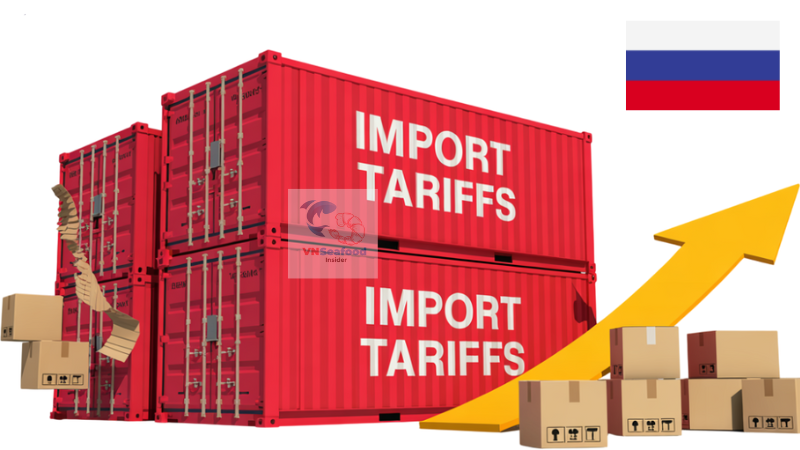
Russia has historically been the lifeline for European whitefish consumption, supplying a substantial portion of the market. But geopolitical tensions have fundamentally changed this relationship. Starting in 2026, the EU will implement punishing tariff increases: 13.7% on whitefish fillets and 15% on surimi products from Russian sources.
Now, you might think a few percentage points don’t sound catastrophic. But when you’re dealing with millions of tons of seafood and razor-thin margins, these numbers transform the entire economic equation. Importers who’ve relied on Russian supply for decades are suddenly facing untenable cost structures. The question isn’t whether they’ll look for alternatives—it’s how quickly they can pivot. This is how Vietnamese Whitefish Alternatives with favorable tariff has approached the market gap.
See more: Vietnam Seafood Export Boom 2025: Key Markets, Trends, and Opportunities for Importers
Declining Wild Catch Volumes
If the tariff situation wasn’t challenging enough, Mother Nature has dealt another blow. Cod stocks in the Barents Sea and Norwegian Sea—traditionally the backbone of European whitefish supply—have collapsed to approximately one-third of their historical levels. That’s not a typo. We’re talking about a 66% reduction in available catch.
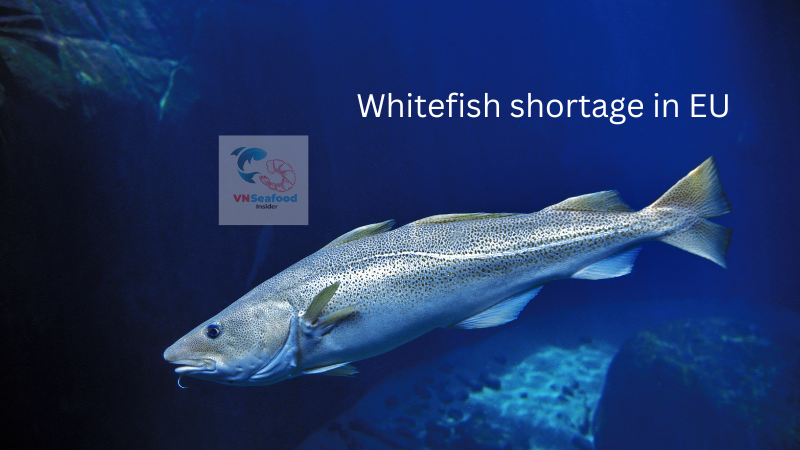
Alaska pollock and haddock populations face similar pressures. Climate change is warming northern waters, disrupting spawning patterns and migration routes. Decades of intensive fishing have taken their toll. The fish populations simply can’t recover fast enough to meet market demand, even with increasingly stringent catch quotas.
Growing Demand Meets Shrinking Supply
Here’s the uncomfortable truth: The EU imports roughly 94% of its whitefish consumption. European waters simply can’t produce enough to meet domestic appetite. Industry analysts project a 100,000-ton deficit by the 2025-2026 period—a gap that traditional suppliers cannot fill.
This shortage is already driving price escalation across foodservice and retail sectors. Restaurant operators are reformulating menus. Supermarkets are scrambling to maintain fish counter inventory. The downstream effects ripple through the entire European economy. Someone needs to fill this gap, and fast.
Vietnamese Whitefish Alternatives: A Reliable Solution
Vietnam has been quietly preparing for this moment. While European markets focused on traditional sources, Vietnamese aquaculture invested heavily in infrastructure, technology, and sustainability. Now, that preparation is paying dividends.
Pangasius: The World’s Leading Option of Vietnamese Whitefish Alternatives
Let’s talk about pangasius—or as you might know it, Vietnamese catfish or basa. Vietnam is the world’s largest pangasius producer, and there’s a reason this fish has become a global phenomenon. Its mild flavor profile and firm, flaky texture make it remarkably similar to cod, haddock, and pollock—the very species Europe is running short on.
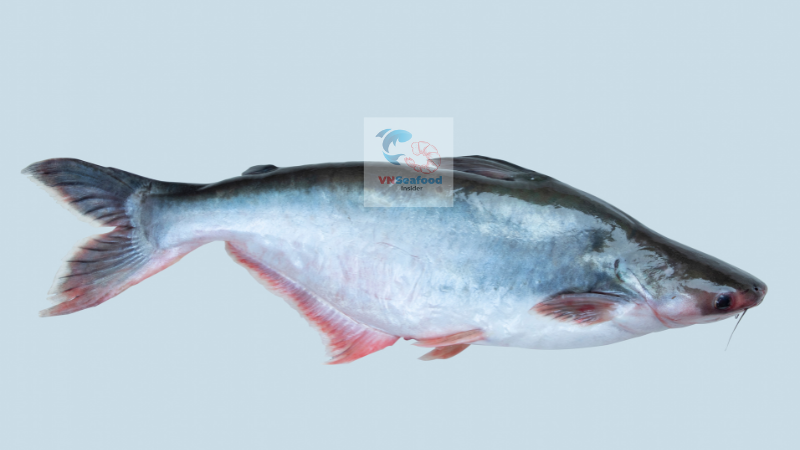
Unlike wild-caught fish with seasonal availability, pangasius farming delivers year-round production with predictable volumes. That consistency is gold for importers managing complex supply chains. The numbers speak for themselves: In the first 10 months of 2025, Vietnam’s pangasius exports reached $1.8 billion, making it the country’s second-largest seafood product after shrimp.
What many Europeans don’t realize is that pangasius isn’t a downgrade—it’s an evolution. Modern farming techniques have elevated quality to levels that match or exceed wild-caught alternatives. And because aquaculture controls the entire production environment, food safety standards can be maintained with precision that ocean fishing simply cannot match.
Tilapia: The Rising Star for Vietnamese Whitefish Alternatives
While pangasius has been carrying the torch, tilapia export from Vietnam is emerging as the industry’s most exciting growth story. The numbers are staggering: 220% growth to $62 million in just the first 10 months of 2025. That’s not gradual expansion—that’s explosive market penetration.
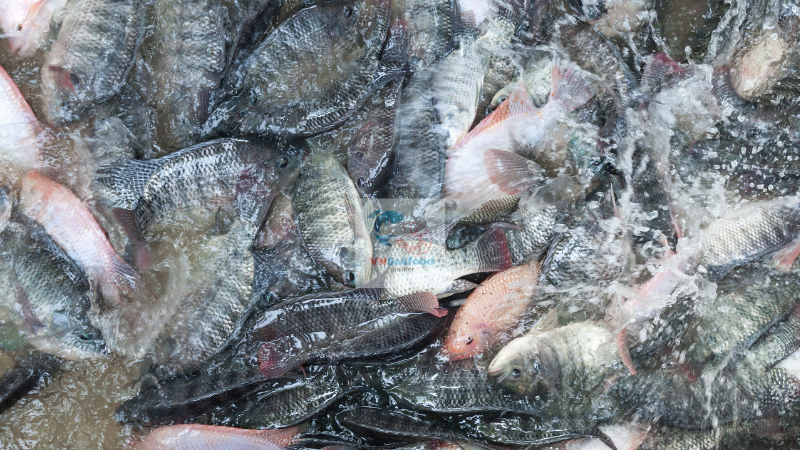
Vietnam’s systematic investment in tilapia farming infrastructure is paying off. Many facilities now utilize RAS (Recirculating Aquaculture System) technology, which recycles water and maintains optimal growing conditions year-round. This isn’t your grandfather’s fish farming. We’re talking about precision agriculture applied to aquaculture—controlled temperature, pH levels, oxygen saturation, and feeding schedules optimized by data analytics.
The quality control standards implemented across Vietnamese tilapia farms rival any terrestrial livestock operation. From fingerling to finished fillet, every step is monitored, documented, and traceable. For EU importers navigating increasingly complex food safety regulations, this transparency is invaluable.
Other Vietnamese Whitefish Species
Beyond pangasius and tilapia, Vietnam’s aquaculture portfolio continues diversifying. Barramundi production is expanding, targeting premium market segments with its buttery texture and versatility. Cobia farming shows promise for sushi-grade applications. The strategic vision is clear: Build a diversified species portfolio that can serve every market segment from budget-conscious foodservice to high-end retail.
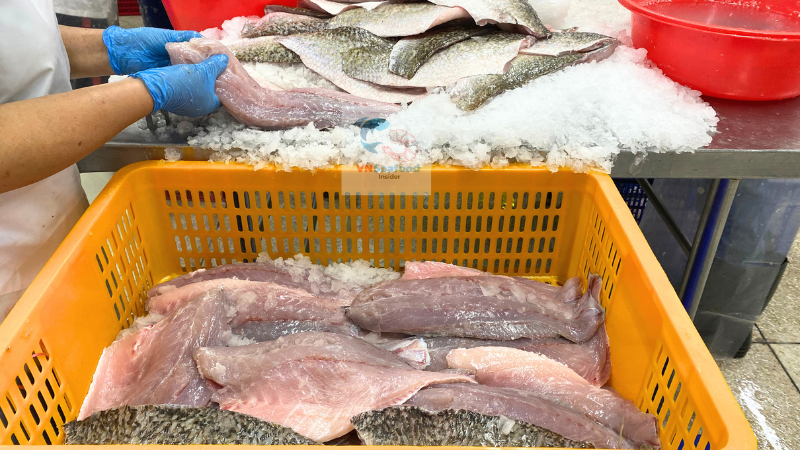
This diversification insulates both producers and importers from single-species risk. If one market segment softens, others can compensate. It’s smart business strategy meeting market demand.
See more: Top 5 frozen barramundi fillet Vietnam supplier in 2025
Sustainable Pangasius Export: Meeting EU Standards
Sustainability isn’t just a marketing buzzword in Vietnamese aquaculture—it’s a competitive necessity. European retailers and consumers demand verifiable environmental credentials, and Vietnamese producers have risen to meet those expectations.
International Certification Standards
Walk into any major EU supermarket chain, and you’ll likely see sustainability labels on seafood products: ASC, BAP, MSC. These aren’t decorative stickers—they’re rigorously audited certifications that validate environmental and social responsibility throughout the supply chain.
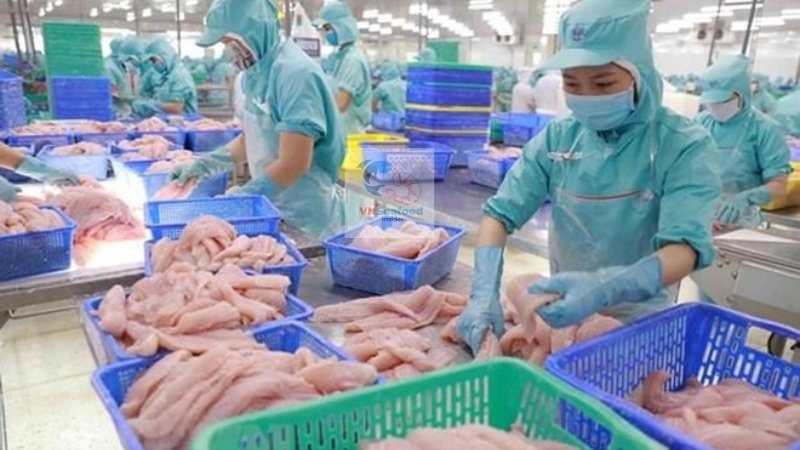
A growing number of Vietnamese pangasius facilities now carry ASC (Aquaculture Stewardship Council) certification, which addresses water quality, biodiversity impact, feed sourcing, and social accountability. BAP (Best Aquaculture Practices) compliance is similarly widespread, covering food safety, environmental responsibility, employee welfare, and animal health.
Many EU retailers now require these certifications as table stakes for shelf access. The fact that Vietnamese producers have invested in achieving them demonstrates long-term commitment to the European market. This isn’t opportunistic export dumping—it’s strategic partnership building.
See more: Top 5 exotic vietnam white fish that the importers should consider
Advanced Farming Technologies
Modern Vietnamese aquaculture bears little resemblance to the rustic pond farming of decades past. Today’s operations maintain water oxygen levels consistently above 5mg/L with pH precisely controlled between 6.5-7.5. Automated monitoring systems track dozens of parameters in real-time, triggering alerts if anything drifts outside optimal ranges.
Perhaps most significantly, antibiotic usage has plummeted thanks to improved biosecurity measures. Prevention beats treatment every time, and Vietnamese farms have embraced this philosophy. Reduced chemical dependency isn’t just better for consumers—it’s better for production economics and environmental impact.
Traceability systems now enable farm-to-fork tracking, documenting every step from hatchery to export container. If a quality issue emerges, managers can identify the precise production batch and timing within hours. That level of accountability would have been impossible just a decade ago.
Vietnamese Whitefish Alternatives: Trade Advantages
Beyond product quality and sustainability, Vietnamese suppliers offer concrete economic advantages that traditional sources increasingly cannot match.
Zero-Tariff Access Under EVFTA
The EU-Vietnam Free Trade Agreement (EVFTA), which entered into force in 2020, is fundamentally reshaping trade flows. Under this agreement, tariffs on seafood products are being progressively eliminated, with many already at zero.
Think about the competitive dynamics: Russian imports face 13.7-15% tariffs, while Vietnamese alternatives enter duty-free. That’s not a marginal advantage—it’s a structural cost difference that makes Vietnamese products inherently more competitive, even before considering production efficiencies.
For EU importers, this tariff structure provides strong incentive to diversify supply chains toward Vietnamese sources. And unlike bilateral agreements that can be disrupted by geopolitical tensions, the EVFTA represents a stable, long-term framework for trade cooperation.
Competitive Pricing Structure
Let’s talk numbers. Vietnamese whitefish alternatives typically cost 10-40% less than traditional cod or pollock equivalents. That price advantage reflects multiple factors: lower labor costs, economies of scale in large aquaculture operations, and year-round production that eliminates seasonal price volatility.
For foodservice operators working on tight margins—restaurants, institutional cafeterias, quick-service chains—this cost differential is transformative. It allows menu pricing that remains accessible to consumers while preserving profitability. In an inflationary environment where every cost input matters, stable, affordable protein sources become strategic assets.
Aquaculture’s controlled production environment means pricing remains predictable. Wild fisheries face boom-and-bust cycles depending on catch success, weather, and quota allocations. Vietnamese pangasius and tilapia farms can project production volumes months in advance, enabling fixed-price contracts that give buyers budget certainty.
See more: The Rise of Vietnam Seafood Processing: Market Trends & Future Outlook
Market Outlook: Vietnamese Whitefish Alternatives in 2025-2026
The trajectory for Vietnamese seafood in European markets points decisively upward. Several converging trends suggest this is just the beginning of a long-term supply relationship.
Vietnamese seafood exports in the first 10 months of 2025 reached over $9.5 billion—a remarkable 15% increase year-over-year. While shrimp leads the charge, whitefish alternatives are gaining momentum. The industry’s ambitious target is reaching $11 billion in total seafood exports by year-end 2025.
Infrastructure investments continue accelerating. New processing facilities are coming online, expanding capacity to serve growing demand. Feed production is being localized to reduce costs and improve supply chain resilience. Port facilities are being upgraded to handle increased export volumes efficiently.
Perhaps most significantly, Vietnamese producers are not resting on their laurels with existing species. Research and development efforts are exploring new whitefish varieties suitable for different market applications. The goal isn’t simply to fill Europe’s current supply gap—it’s to become the preferred long-term partner for sustainable seafood.
Sustainability leadership positioning will continue differentiating Vietnamese producers. As consumer awareness grows and regulatory requirements tighten, certified sustainable aquaculture will shift from competitive advantage to market prerequisite. Vietnam’s early investment in this area positions it to lead, not follow, this trend.
The EU market for pangasius specifically shows strong upward potential. In the first 10 months of 2025, exports to Europe reached $149 million—a 3% increase from the previous year. While that growth rate might seem modest, it comes against the backdrop of overall market expansion and represents significant volume gains.
Vietnamese whitefish alternatives aren’t just filling a gap—they’re leading the evolution toward truly sustainable global seafood systems. And that’s a future we can all get behind.
