Vietnam Seafood Processing Industry Overview
Before we explore the market dynamics, it’s important to understand the foundation that makes Vietnam such a formidable player in the seafood processing hub Vietnam landscape.
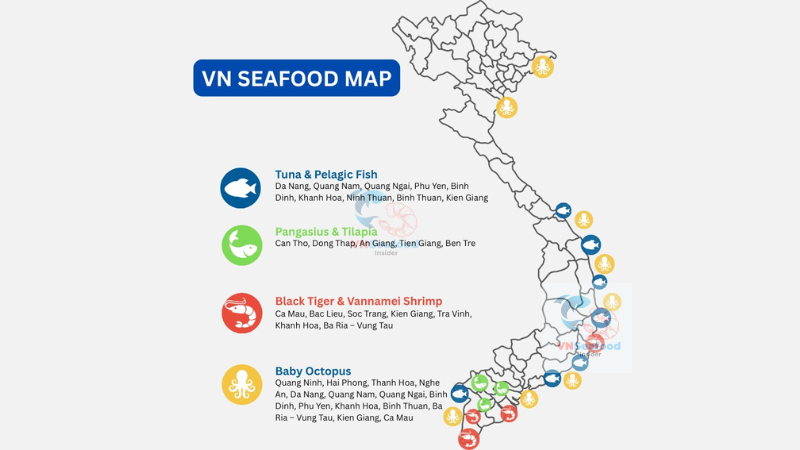
Vietnam’s geographic advantages are hard to overstate. With a 3,260-kilometer coastline stretching from the Gulf of Tonkin to the Gulf of Thailand, the country has natural access to abundant marine resources. Processing facilities are strategically concentrated in three main regions: the Mekong Delta (the heart of pangasius farming), the Central Coast (where shrimp processing thrives), and Northern provinces (specializing in marine fish processing).
The product portfolio is impressively diverse. Shrimp dominates the export mix, with whiteleg shrimp accounting for 67% and black tiger shrimp representing 18% of total shrimp exports. Pangasius (the ubiquitous white fish you’ve probably eaten without knowing it), frozen marine fish, crab, octopus, and squid round out the offerings. But here’s what sets Vietnamese processors apart: value-added capabilities. We’re talking breaded shrimp, sushi-ready portions, pre-marinated fillets, and retail-ready packaging that major supermarket chains demand.
International certifications? Check. Vietnamese facilities hold HACCP, ISO, BRC, ASC, MSC, BAP, and FDA compliance certifications—essentially the complete alphabet soup that global retailers require before they’ll even consider a supplier.
Why Vietnam Seafood Processing Leads Southeast Asia
Numbers tell part of the story, but competitive advantages reveal why Vietnam seafood exports are outpacing regional rivals. Let’s break down what makes Vietnam the preferred choice over Thailand and Indonesia.
Competitive Advantages Over Thailand and Indonesia
Cost matters, especially in commodity seafood categories. Vietnamese labor costs run 20-30% lower than Thailand’s, providing immediate price competitiveness without sacrificing quality. But cost alone doesn’t explain Vietnam’s rise.
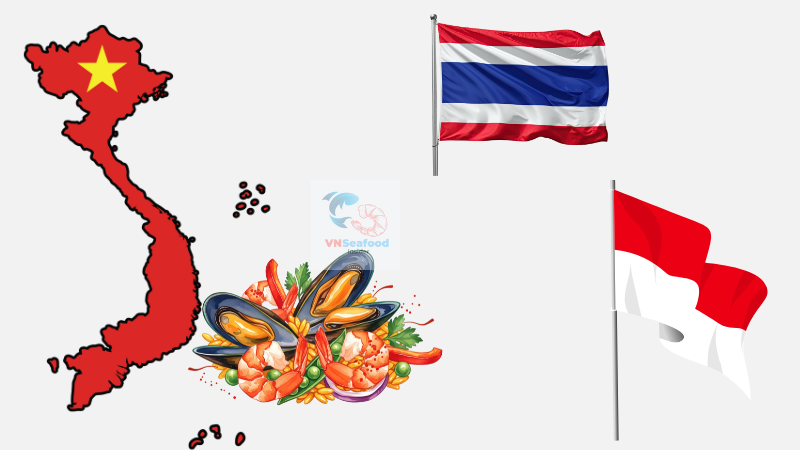
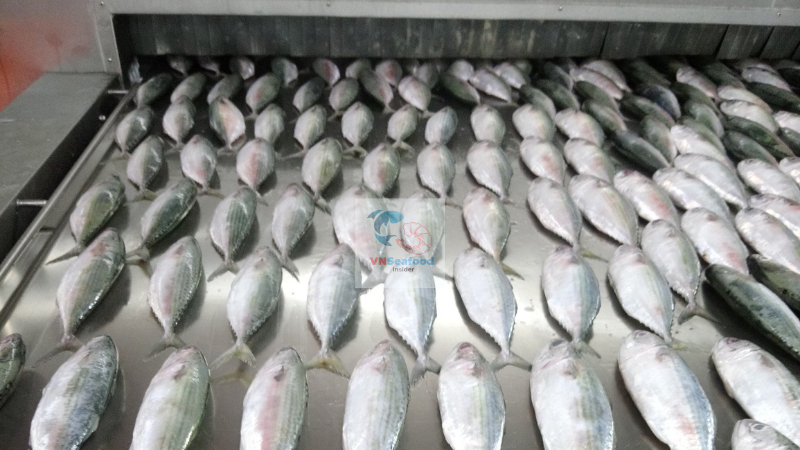
Processing capacity is where Vietnam truly shines. Modern facilities equipped with advanced Individual Quick Freezing (IQF) technology, automated packaging lines, and blast freezers can handle large orders while maintaining strict quality specifications. Compare this to Indonesia, where processing infrastructure remains fragmented and inconsistent, or Thailand, where facilities are often operating at full capacity with limited room for expansion.
Product diversity gives Vietnamese processors flexibility that competitors struggle to match. Need pangasius one month and shifting to shrimp the next? Vietnamese facilities can accommodate. Looking for both raw and value-added products from the same supplier? No problem. This versatility makes Vietnam an attractive one-stop-shop for international buyers managing complex product portfolios.
Political stability might sound boring, but it’s actually crucial. Vietnam maintains consistent trade policies, actively courts foreign investment, and has demonstrated remarkable diplomatic dexterity in navigating relationships with both the US and China—no small feat in today’s polarized world.
See more: Vietnam Seafood Export Boom 2025: Key Markets, Trends, and Opportunities for Importers
Infrastructure and Technology Investment
Vietnam’s government isn’t sitting idle. Dedicated seafood contract manufacturing Asia zones receive preferential treatment, with streamlined permitting and infrastructure support. Cold chain logistics, once a significant weakness, have improved dramatically with new refrigerated warehousing facilities and temperature-controlled transportation networks connecting processing plants to major ports.
Automation is rapidly transforming operations. Traceability systems using blockchain technology allow buyers to track products from farm to fork—increasingly important as consumers demand transparency about seafood origins. Research and development initiatives focus on value-added product innovation, helping Vietnamese processors move up the value chain rather than competing solely on price.
Geopolitical Shifts Driving Vietnam Seafood Processing Growth
Here’s where things get interesting. Global politics rarely makes seafood headlines, but recent events have fundamentally altered processing flows throughout Asia. For Vietnamese processors, geopolitical chaos has created extraordinary opportunities.
Japan’s Pivot from China to Vietnam
The Japan-China seafood relationship, once robust and stable, has become anything but. In August 2023, China imposed a seafood import ban on Japan following the Japanese government’s decision to release treated radioactive water from the Fukushima nuclear plant into the ocean. After a brief resumption in June 2025, China reimposed the ban in Nov 2025 due to diplomatic tensions related to Taiwan.
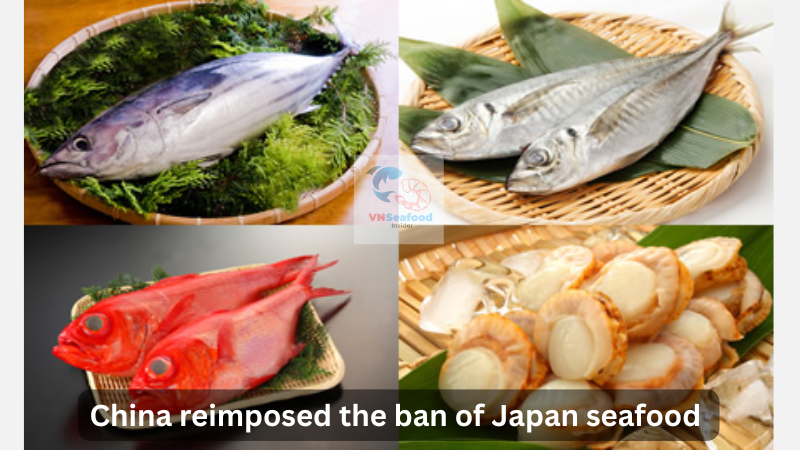
For Japanese seafood companies, this on-again, off-again relationship is untenable. They’re actively seeking reliable processing alternatives, and Vietnam has emerged as the primary beneficiary.
Japanese enterprises are now sending raw materials—particularly scallops—to Vietnam for processing before re-export. Value-added shrimp products have become a cornerstone of the Vietnam-Japan relationship, with breaded, fried, and sushi-ready shrimp accounting for significant export volumes. Frozen fish exports to Japan represent 37.2% of bilateral seafood trade, a figure that continues growing.
What’s particularly noteworthy is the nature of these partnerships. We’re not talking about short-term, transactional relationships. Japanese companies are establishing long-term collaborative processing models, investing in training Vietnamese workers to meet exacting Japanese quality standards. This represents a fundamental shift in regional supply chains that’s likely to persist regardless of future China-Japan relations.
US-China Trade Tensions Reshape Supply Chains
Meanwhile, escalating US-China trade tensions have created parallel disruptions. Prohibitive tariffs have forced many Chinese processing facilities handling US orders to temporarily or permanently cease operations. American seafood buyers, suddenly scrambling for alternatives, are knocking on Vietnamese doors.
What are US buyers looking for? Geographic diversification tops the list—nobody wants all their processing eggs in one basket anymore. Political stability and predictable trade relations have become as important as pricing. And speaking of pricing, buyers still need competitive rates, but they’re increasingly willing to pay a modest premium for reliability and quality assurance.
Vietnam checks all these boxes. The country maintains favorable trade relations with the United States, and Vietnamese processors have extensive experience meeting FDA requirements and US food safety standards. Capacity for contract manufacturing and private label production has expanded rapidly, allowing Vietnamese facilities to handle sophisticated retail programs that previously would have been processed in China.
See more: How US Reciprocal Tariffs impact Vietnam Seafood Exporters
Vietnam Seafood Processing for European Markets
The European Union presents yet another compelling opportunity driven by supply disruptions, though the dynamics differ from the Japan and US situations.
Addressing EU Whitefish Supply Crisis
European markets are experiencing a severe shortage of cod and haddock—the traditional whitefish staples that form the backbone of European fish consumption. Catch volumes in the Barents Sea and Norwegian waters have declined sharply due to quotas and environmental factors. Farmed cod production, despite investment and optimism, remains insufficient to close the supply gap. To complicate matters further, EU sanctions on Russian seafood have eliminated another significant supply source.
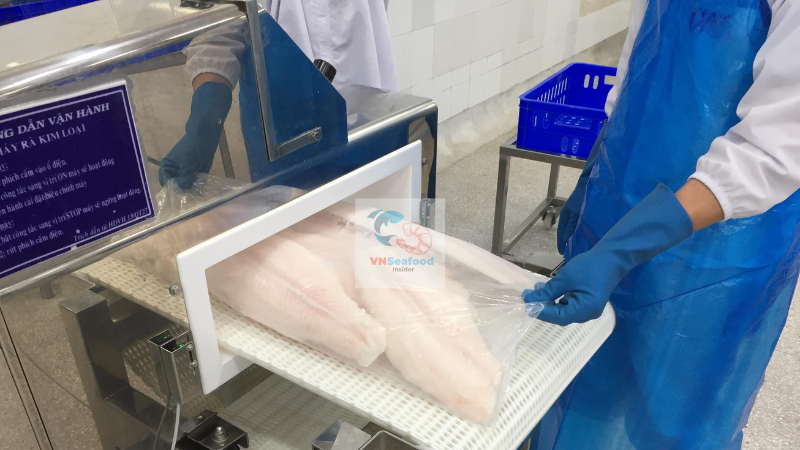
This creates a processing opportunity for Vietnam. European buyers are importing whitefish from various origins and sending it to Vietnam seafood processing facilities for value-added preparation before re-export to EU markets. The EU-Vietnam Free Trade Agreement (EVFTA) provides tangible benefits: reduced tariffs, streamlined customs procedures, and regulatory harmonization that makes Vietnam particularly attractive compared to other Asian processing destinations.
Vietnamese processors operating EU-approved facilities can handle multiple whitefish species to exact European specifications, providing the flexibility that European importers desperately need. Full traceability systems ensure compliance with stringent EU regulations regarding origin documentation and food safety standards.
See more: Top 5 exotic vietnam white fish that the importers should consider
Key Market Trends in Vietnam Seafood Processing
Looking beyond specific market opportunities, several broader trends are reshaping Vietnamese seafood processing.
Expansion of Contract Manufacturing Services
OEM and ODM partnerships are proliferating. International brands increasingly view Vietnamese processors not just as suppliers but as manufacturing partners capable of producing to proprietary specifications. Private label production capabilities have become particularly important as retailers develop their own seafood brands. Customized processing for specific market requirements—whether halal certification for Middle Eastern markets or organic certification for premium Western retailers—is now standard rather than exceptional.
Value-Added Product Development
The days of Vietnam simply filleting fish and freezing shrimp are fading. Processors are developing marinated products, portion-controlled packs, recipe kits, and ready-to-cook meals that command premium pricing and stronger customer loyalty. This value-added focus helps insulate processors from commodity price volatility while building more sustainable competitive advantages.
Digital Transformation and Traceability
Technology adoption is accelerating. Blockchain-based traceability platforms allow real-time tracking throughout the supply chain. Digital quality control systems using AI-powered image recognition can detect defects faster and more consistently than human inspectors. These technological capabilities aren’t just operational improvements—they’re increasingly becoming minimum requirements for accessing premium markets.
See more: Top 20 biggest seafood companies in vietnam
Future Outlook for Vietnam Seafood Processing
So where does this all lead? The trajectory looks decidedly positive, though challenges certainly exist.
Growth Projections and Market Opportunities
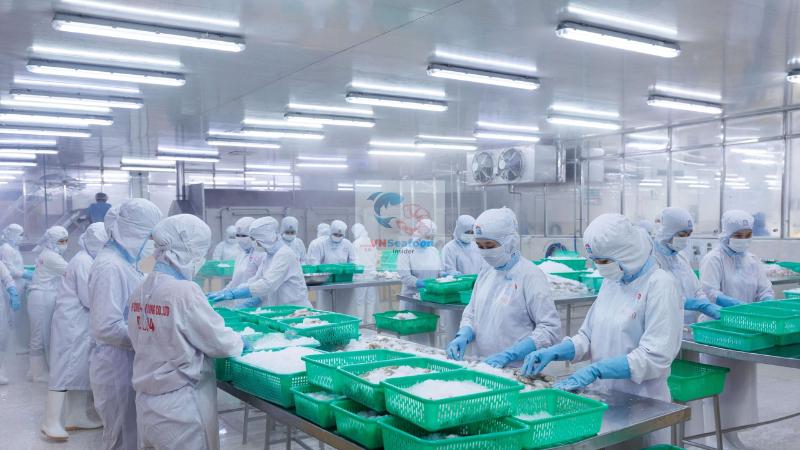
Vietnam has set an ambitious export target of $10+ billion by 2026, and based on current momentum, this seems achievable. Emerging markets in the Middle East, Latin America, and Africa represent untapped potential beyond traditional markets in the US, EU, and Japan. Niche segments—organic seafood, MSC-certified sustainable products, and halal-certified offerings—provide opportunities for differentiation and premium positioning.
Challenges and Strategic Responses
No success story comes without obstacles. Labor shortages pose a genuine challenge as Vietnam’s economy develops and younger workers seek opportunities beyond factory floors. Processors are responding with automation investment and comprehensive workforce training programs that make seafood processing more attractive as a career path.
Environmental sustainability concerns are intensifying. Responsible sourcing practices, waste reduction initiatives, and energy-efficient processing technologies are transitioning from nice-to-have features to competitive necessities. Vietnamese processors embracing sustainability proactively will have advantages in accessing Western markets where environmental consciousness drives purchasing decisions.
Competition remains fierce. Thailand and Indonesia aren’t conceding market share without a fight, and Chinese processors will undoubtedly seek to reclaim lost business as geopolitical situations evolve. Continuous quality improvement, innovation, and relationship-building remain essential for Vietnamese processors to maintain their momentum.
Vietnam Seafood Processing as Asia’s Hub
The convergence of geopolitical disruptions, infrastructure development, and strategic positioning has created a remarkable opportunity for Vietnam seafood export. What we’re witnessing isn’t a temporary blip but a structural shift in global seafood processing flows.
For international buyers seeking reliable, quality-focused, and cost-competitive processing partners, Vietnam has moved from alternative option to preferred choice. The country’s ability to simultaneously serve Japanese, American, and European markets while maintaining political neutrality and trade relationships with all major economies is genuinely exceptional.
At VNSeafoodInsider, we believe this is just the beginning. As seafood processing hub Vietnam continues evolving, expect further capacity expansion, technological advancement, and value chain integration. For buyers willing to invest in partnerships rather than merely transactional supplier relationships, Vietnam offers compelling long-term opportunities.
The question isn’t whether Vietnam will play a major role in global seafood processing—that’s already decided. The question is how quickly buyers will adapt their sourcing strategies to capitalize on what Vietnam offers. Based on what we’re seeing, those who move decisively will gain significant competitive advantages in an increasingly complex global seafood marketplace.

Pingback: Vietnamese Whitefish Alternatives: Opportunity in EU's Seafood Shortage Crisis