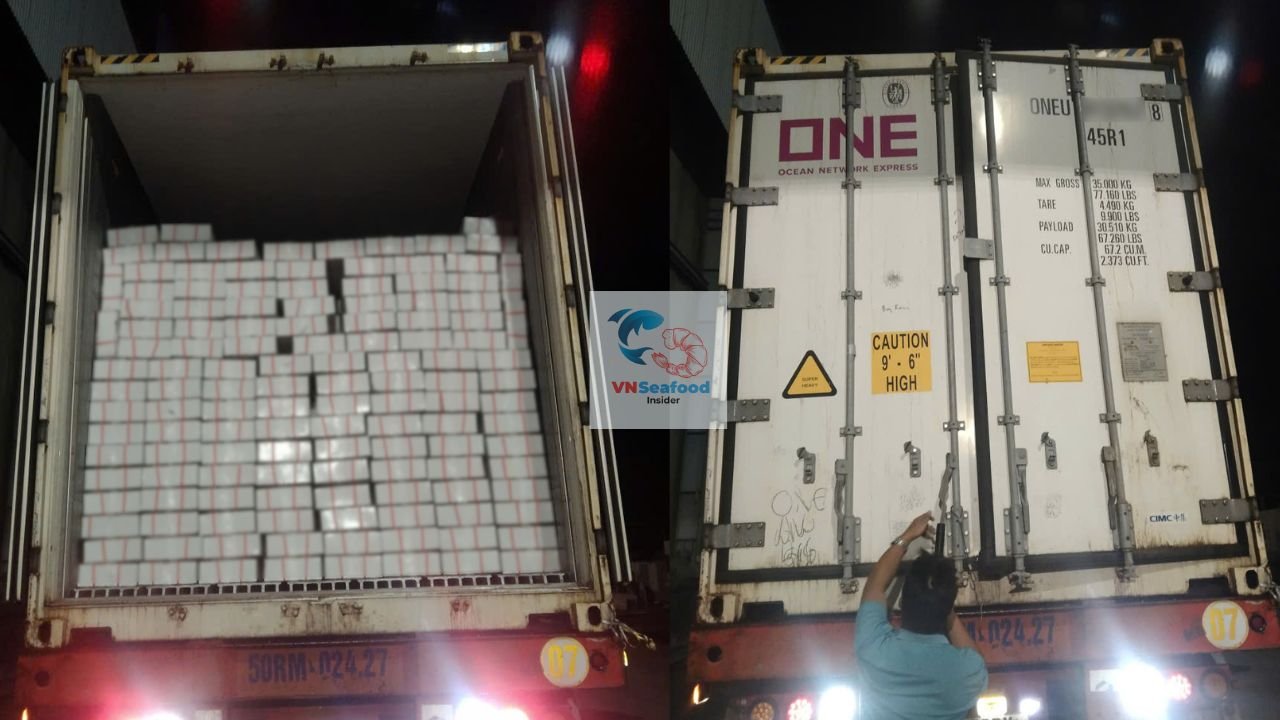
Frozen fish container loading is the point where a cold chain is either protected or compromised. We recently shipped another container of pangasius fillets to a customer who had never bought from us before. For a first order, the loading records are often the first real evidence of how a supplier works.
Three Checks Before Every Container Is Closed
Every container follows the same standard steps, whatever the product or the customer:
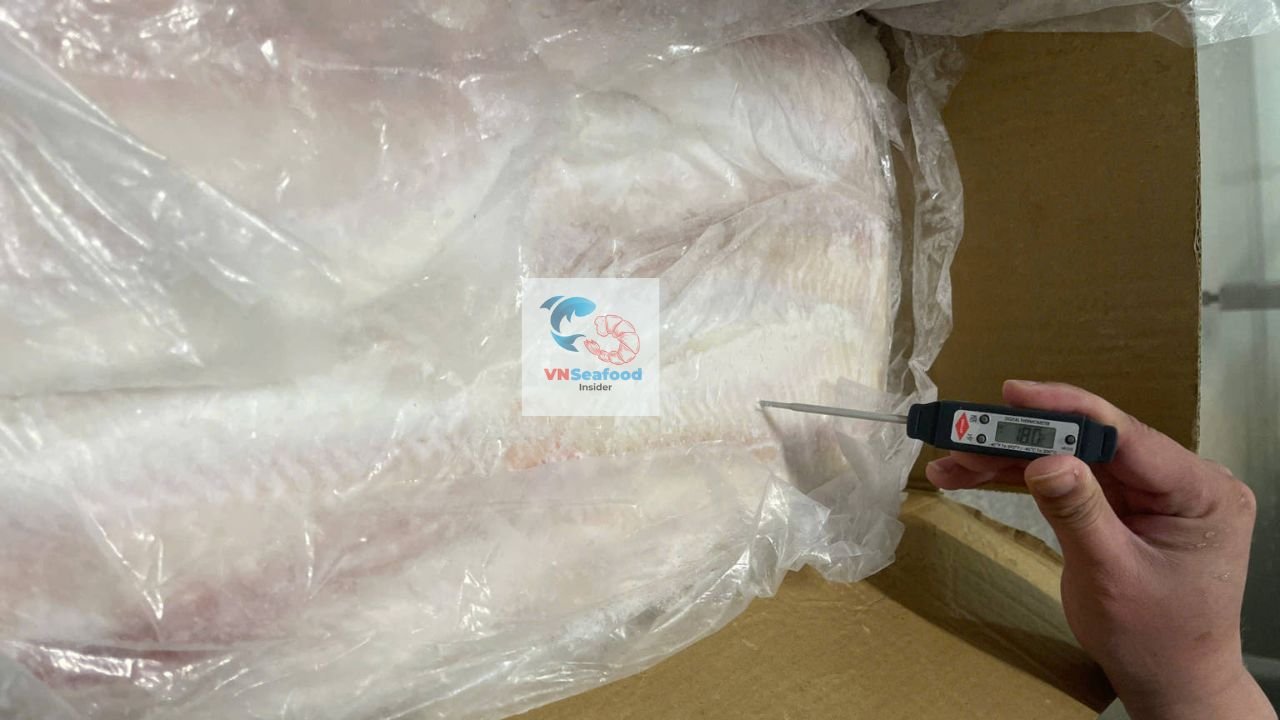
- Product core temperature: at or below -18°C
- Container temperature: at or below -18°C
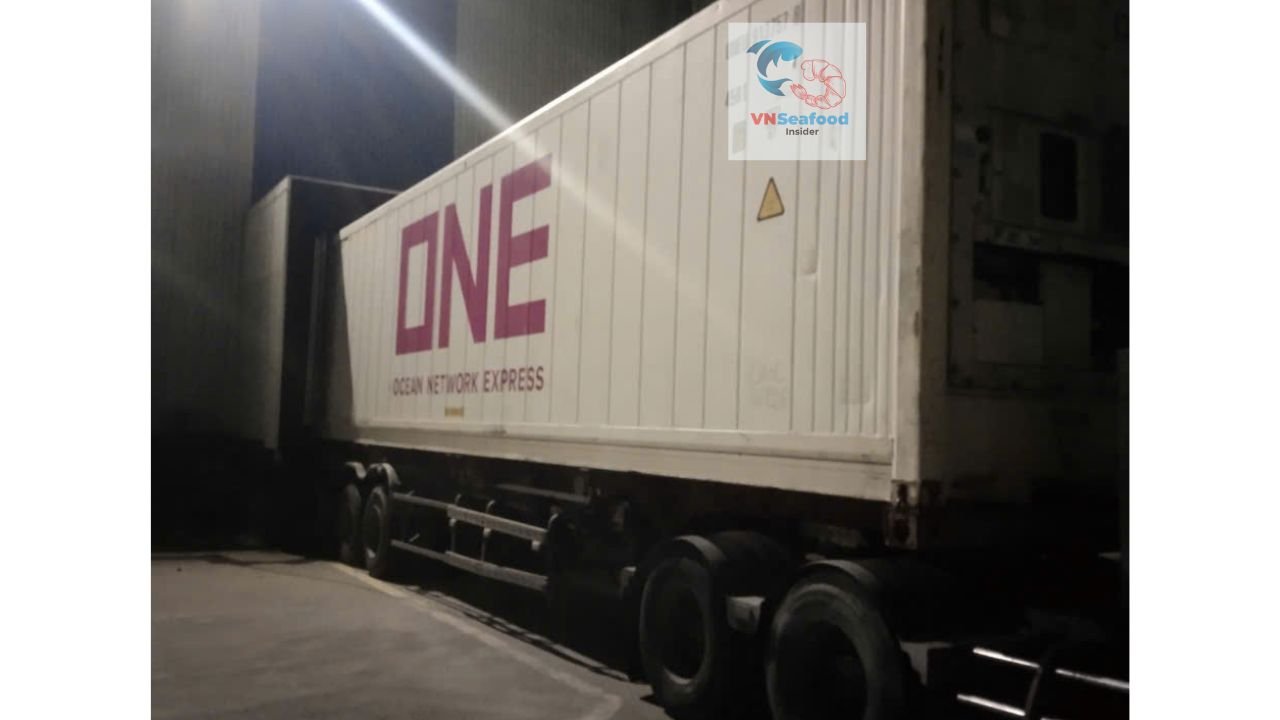
- Photos of each line as it is loaded into the container
The checks run during loading, so any deviation shows up before the container leaves the facility.
Read more: Inside Vietnam Pangasius Farming — What Every Seafood Importer Must Know
Why Loading Photos Support Cold Chain Temperature Control
Temperature readings show the condition of the product at one moment. Photos show the process behind them: how the cartons are placed, line by line, inside the container.
We send all loading photos to the importer. A new buyer can see how loading is managed and how temperature is maintained through the cold supply chain, without having to take our word for it. For this shipment, the customer received the full photo set.
See more: Pangasius Supply Chain Under Pressure: What H2 2026 Means for Importers
This matters most when the buyer has no history with the supplier and no one on site. The records give the importer something concrete to review, and to compare against the goods on arrival.
One Procedure Across Species
The same loading procedure applies across our range, from farmed fish such as pangasius to shrimp and other wild-caught species. Our products are processed in HACCP and BRC certified facilities, and the loading checks are the final step before the shipment leaves.
Importers who source from Vietnam often worry about quality problems that surface only after the container arrives. A consistent loading routine, with records the buyer can see, is one practical way to reduce that uncertainty.
Read more: Seafood Quality Control Vietnam: Complete Guide to Avoid Oversoaked Products
Read more: Pangasius Fillet Grading: What Importers Must Know
If you are sourcing frozen seafood from Vietnam, contact us and we will share specifications, a sample loading photo set, and details of how we handle your shipments.
