If you buy seafood from Vietnam, you are not just buying shrimp or pangasius. You are buying into a control system. And that system has layers — four of them, to be exact.
At VNSeafoodInsider, we talk to importers who ask the same question in different words: “How do I know this container is safe?” Fair question. Nobody wants a rejection notice at the port. So let us walk you through how Vietnam seafood food safety actually works, layer by layer, in plain language.
Why Vietnam Seafood Food Safety Matters for Importers
Food safety is not paperwork for its own sake. It is the difference between a smooth clearance and a container sitting in a cold store while lawyers talk. Before we get into the mechanics, here is why this topic deserves your attention.
Vietnam Seafood Export Scale in 2026
Vietnam is one of the few countries with genuinely abundant raw seafood material — warm water, long coastline, deep aquaculture experience. That abundance shows up in the numbers.
In the first 10 months of 2026, Vietnam’s seafood export turnover reached roughly USD 10.4–10.46 billion, up more than 12% year-on-year. That is a lot of fish moving across a lot of borders.
Scale cuts both ways. Big volume means competitive pricing and reliable supply. It also means the control system has to work hard, every single day, across thousands of shipments. Vietnam seafood food safety is not a nice-to-have at that scale. It is the thing holding the whole business together.
Strict Import Markets Driving Vietnam Seafood Food Safety Standards
Vietnam does not set its standards in a vacuum. The EU, the United States, Japan, South Korea and China all have their own rulebooks, and they are not shy about enforcing them.
A single border alert can trigger recalls, extra testing, or in bad cases, a suspension. So the Vietnamese system is built with one eye on domestic regulation and the other on what happens after the container lands. Seafood export compliance is treated as a risk-management exercise, not a box-ticking ritual.
Vietnam Seafood Food Safety System: A Chain-Based Approach
Here is the key idea. Vietnam does not inspect seafood at one point and call it a day. It manages safety along the entire chain — from the pond, to the plant, to the health certificate, and then back again from the market.
NAFIQPM: The Central Authority for Seafood Food Safety
The main authority is the National Authority for Agro-Forestry-Fisheries Quality, Processing and Market Development (NAFIQPM), which sits under the Ministry of Agriculture and Environment.
NAFIQPM does not work alone. Regional branches and local sub-departments handle the hands-on work: verification visits, sampling, laboratory testing, and certificate issuance. Think of NAFIQPM as the conductor and the regional centres as the orchestra. When they play together, you get a clean shipment.
How the 4 Control Layers Work Together
The four layers are simple to remember:
- Farm and raw material control
- Processing plant control
- Export inspection and health certification
- Market feedback and corrective action
Each layer catches what the previous one might have missed. No single layer is perfect. Together, they are pretty solid.
| Stage | Main Control Requirement | Enforcement Mechanism |
|---|---|---|
| Farm / pond | Traceability, records of drugs, feed, chemicals | Farm inspections, raw material sampling, residue monitoring |
| Processing | HACCP, GMP, facility conditions, personnel, records | Verification audits, periodic inspection, lot inspection |
| Export | Document review, sensory check, laboratory testing when needed | Health Certificate issued per destination market |
| Import market | Alerts, recalls, regulatory changes | NAFIQPM receives, communicates, and enforces corrective action |
Layer 1: Farm and Raw Material Control in Vietnam Seafood Food Safety
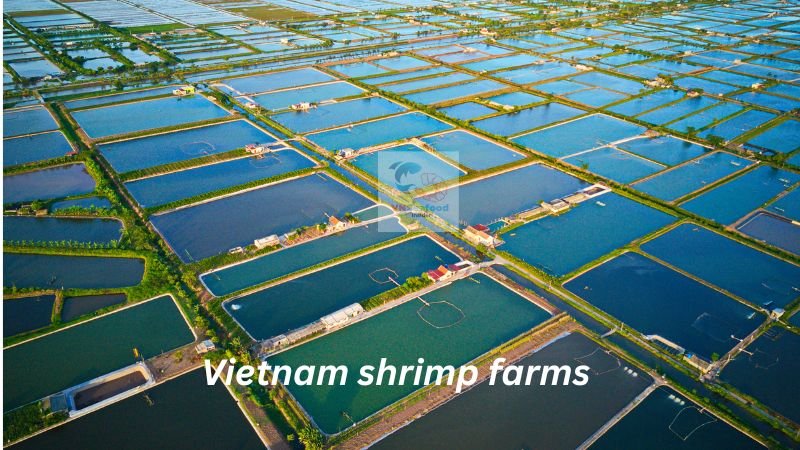
Everything starts in the water. If the raw material is wrong, no amount of clever processing will fix it. This is where Vietnam seafood food safety earns its first points.
Traceability and Farm Records Under Decision 3885/QĐ-BNNMT
At the business level, ponds and farms must meet welfare and husbandry standards, and every batch must be traceable back to its origin.
Farms, growing areas and collection points are required to keep production records: veterinary drug use, feed, chemicals, and harvest activity. If an inspector asks what went into pond number seven in March, somebody should be able to open a file and answer.
Decision 3885/QĐ-BNNMT (2026) formalises the inspection and raw material traceability process. Export dossiers must include the full set of documents — certificates, inspection slips, the Health Certificate, the customs declaration and HACCP documentation. Missing one piece is like showing up to the airport without a passport. Technically you are there. Practically, you are not going anywhere.
2026 Residue Monitoring Programme for Farmed Seafood
The National Residue Monitoring Programme for harmful substances in farmed aquatic animals is the workhorse of Layer 1. Its job is early detection — catching a problem before raw material enters the factory, and long before a container leaves the port.
Samples are drawn from farming areas and tested for banned and restricted substances. When something turns up, the response happens upstream, where it is cheap to fix, instead of downstream, where it is expensive and embarrassing.
Species Covered: Shrimp, Pangasius, Tilapia and Other Farmed Seafood
In the southern region, the adjusted 2026 monitoring scope covers 14 farmed species:
- Black tiger shrimp
- Vannamei shrimp
- Black tiger shrimp
- Pangasius
- Red tilapia (diêu hồng)
- Catfish (cá trê)
- Featherback fish(cá nàng hai)
- Barramundi (cá chẽm)
- Naked catfish (Cá chốt)
- Snakehead (cá lóc)
- Tilapia
- Climbing perch (cá rô đồng)
If you are importing shrimp, pangasius or tilapia — which covers most readers — your species sits squarely inside the monitoring programme.
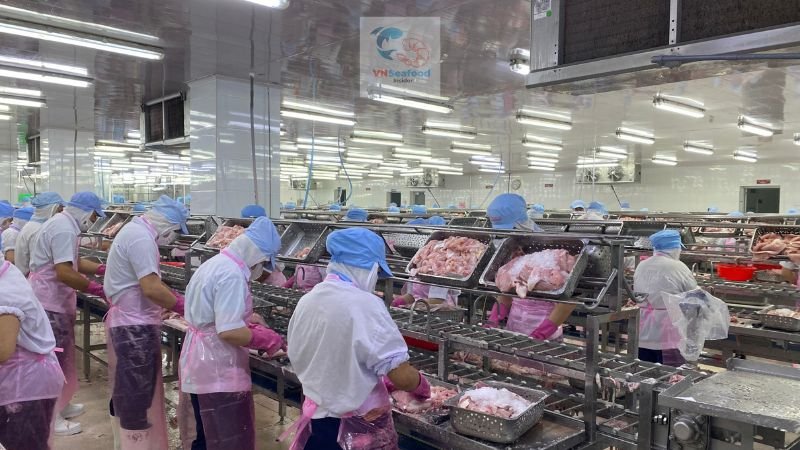
Read more: Pangasius Quality Control – How to Avoid Quality Issues When Importing
Layer 2: Processing Plant Controls in Vietnam Seafood Food Safety
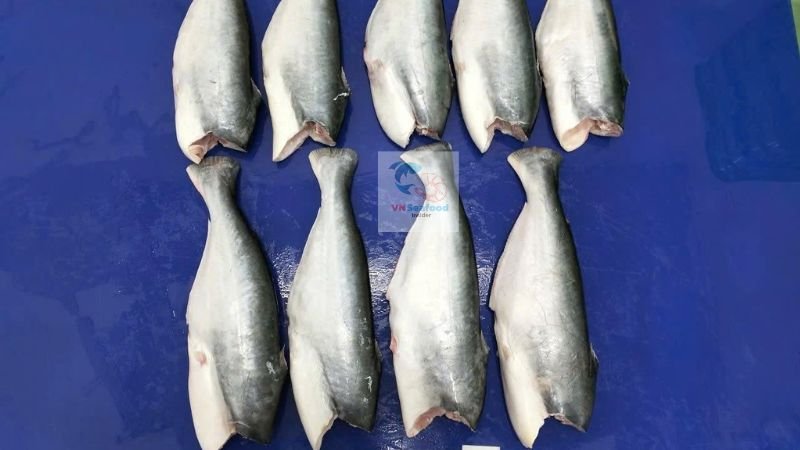
Good raw material can still be ruined by a bad factory. Layer 2 is where hygiene, process control and documentation take over.
HACCP, GMP and Hygiene Requirements
Export-approved processing plants must meet food safety conditions, maintain a quality management system, and control critical limits throughout production.
HACCP certification is the backbone. It forces a plant to identify where things can go wrong, set limits, monitor them, and prove it did so. Add GMP on top — layout, flow, sanitation, personal hygiene — and you have a factory that behaves consistently rather than occasionally.
EU Regulation EC 852/2004 and Vietnamese Processing Plants
For EU-bound products, Regulation EC 852/2004 sets the hygiene baseline. It covers equipment design, staff training, water quality, record keeping, pest control, chemical use, HACCP, and waste handling.
Vietnamese plants on the EU approved list build their systems around these requirements. That is also why EU-approved facilities are often a safer bet even when you are shipping to a less demanding market. The discipline carries over.
Additional Certifications: BRCGS, ASC, BAP, GlobalG.A.P. and SMETA
Beyond the legal minimum, many Vietnamese factories hold private or international certifications:
- BRCGS for food safety management
- ASC and BAP for responsible aquaculture
- GlobalG.A.P. for farm-level good practice
- SMETA for social and ethical audits
These are assessed by independent third parties. They go beyond domestic law and help suppliers meet the ESG, traceability and social responsibility expectations that global buyers now write into contracts. If your retailer asks about sourcing ethics, these are the certificates that answer the question for you.
Layer 3: Export Inspection and Health Certificate
Now the product is finished, packed and waiting. Layer 3 decides whether it travels.
Priority List vs Non-Priority List Establishments
Vietnam operates two inspection streams for export consignments.
Priority List establishments have demonstrated consistent compliance. They benefit from a lighter, faster process — the system rewards a clean track record.
Non-priority establishments go through the fuller route: dossier verification, on-site inspection, result processing, and food safety certification. Under previous regulations, processing timelines were around 3 days for dossier review and 7 days after inspection completion.
The practical takeaway for you? Ask your supplier which list they are on. It tells you something about their history without anyone having to say it out loud.
Inspection, Sampling and Health Certificate Issuance
NAFIQPM and its regional centres handle verification, sampling, laboratory testing and certificate issuance.
The Health Certificate is the official document confirming the consignment meets the destination market’s requirements. Different markets want different formats and different test parameters, which is why the certificate is issued per market, not as a one-size-fits-all paper.
Documents Required for Each Export Shipment
For a complete export file, expect to see:
- Food safety certification for the lot
- Inspection slips and laboratory test results
- Health Certificate for the destination market
- Customs declaration
- HACCP documentation
- Traceability records linking the lot to its raw material source
Keep these on file. If a question arises six months later, you will be glad you did.
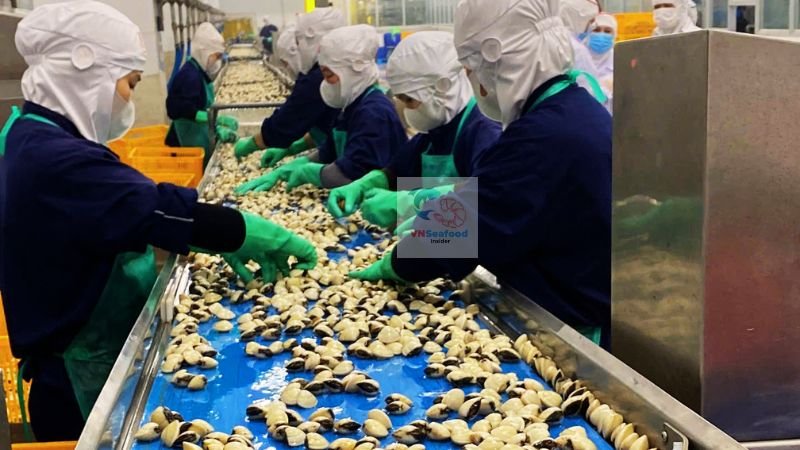
Layer 4: Market Feedback and Corrective Action
The chain does not end when the vessel sails. There is a fourth layer, and it runs backwards.
How NAFIQPM Handles Alerts, Recalls and Regulatory Changes
When an importing country detects a violation, issues an alert, demands a recall, or changes its rules, NAFIQPM is the receiving point. It then communicates the information to affected establishments, industry associations and exporters.
A 2026 official dispatch from the Ministry of Agriculture and Environment reinforced this: timely warnings and concrete corrective measures are required to limit violations and reduce risk in seafood export trade.
Why Post-Export Feedback Strengthens Vietnam Seafood Food Safety
A system that only looks forward learns slowly. A system with a feedback loop learns fast.
Every alert becomes data. That data feeds back into residue monitoring priorities, plant audit frequency, and lot testing decisions. In other words, the mistakes of one exporter quietly make life safer for everyone else. Not a bad deal.
Adding Independent Pre-Shipment Inspection to Vietnam Seafood Food Safety
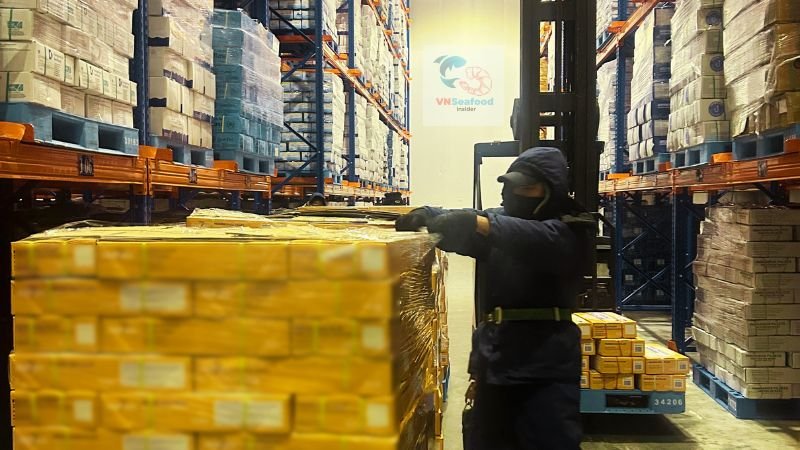
Four layers are strong. But all four are built around regulatory compliance — not your specific commercial requirements. That gap is where disputes usually start.
If you work with VNSeafoodInsider, you get an extra ring of protection: independent pre-shipment inspection.
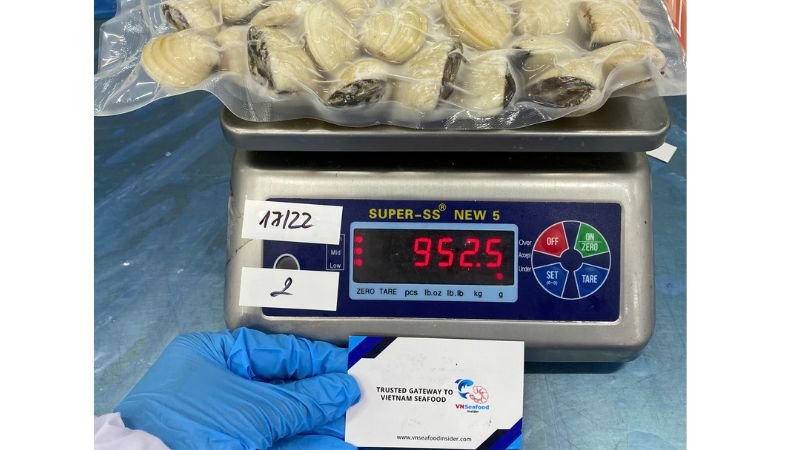
What an Independent Inspection Checks
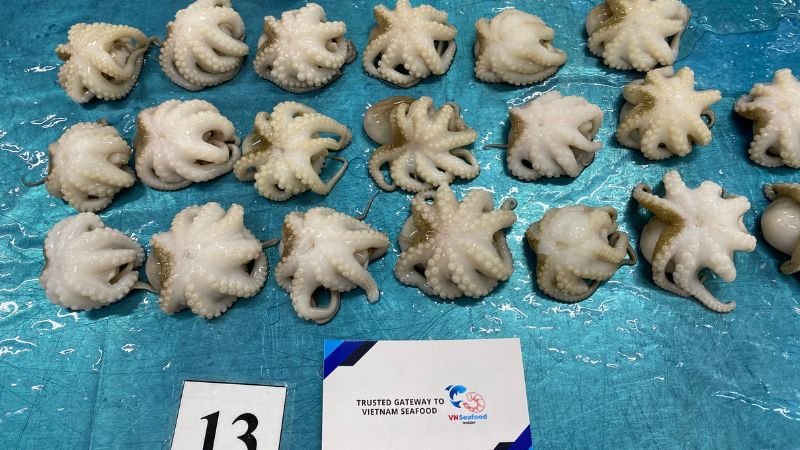
Before the container is sealed, we verify the things a certificate does not cover:
- Quality and grading against your specification
- Size and weight accuracy
- Glazing percentage and net weight after deglazing
- Packing, labelling and carton condition
- Temperature control and cold chain integrity
- Foreign material and sensory assessment
- Defect rate
- Lot documentation and conformity with your purchase order
Practical Benefits for Importers
- Catch size, weight, packing, glazing, foreign material, sensory or temperature deviations before loading.
- Reduce the risk of claims, return freight costs, container rejections, and damage to your reputation with end customers.
- Add independent evidence of control for high-specification lots or sensitive markets.
- Create a genuine fourth line of defence after the farm, the HACCP-certified plant, and government certification.
One inspection costs far less than one rejected container. The maths is not complicated.
Vietnam Seafood Food Safety FAQs
Who Regulates Vietnam Seafood Food Safety?
NAFIQPM — the National Authority for Agro-Forestry-Fisheries Quality, Processing and Market Development, under the Ministry of Agriculture and Environment — is the lead agency, supported by regional centres and local sub-departments.
Is Vietnamese Seafood Safe to Import?
Vietnamese seafood is exported to the EU, US, Japan, Korea and China under chain-based controls covering farms, processing plants, export certification and post-market feedback. Safety depends on choosing a properly approved supplier and verifying documentation — which is exactly what the four layers are designed to support.
What Is a Health Certificate for Vietnamese Seafood?
It is the official document issued by the competent authority confirming that a consignment meets the food safety requirements of the importing country. It is issued per shipment and tailored to the destination market.
Conclusion: Building Confidence in Vietnam Seafood Food Safety
Vietnam seafood food safety is not one inspection. It is a chain — farm records, residue monitoring, HACCP-controlled processing, government certification, and a feedback loop from the markets that matter most.
That system is why Vietnam moved over USD 10.4 billion of seafood in ten months and kept growing.
Your job as an importer is simpler than it looks. Understand the layers. Ask the right questions. Collect the right documents. And when the specification really matters, add a fifth set of eyes before the container closes.
That is where VNSeafoodInsider comes in — not to replace the system, but to make sure it delivers exactly what you ordered.
Read more: Vietnam Seafood Export: Complete Guide for Importers
