
Vietnam Seafood Export 9 Months 2026 at a Glance
Before we dive into individual species and markets, here is the big picture. Growth of Vietnam seafood has been steady rather than explosive, and September gave the year an extra push.
September 2026 Exports Reach $1.135 Billion
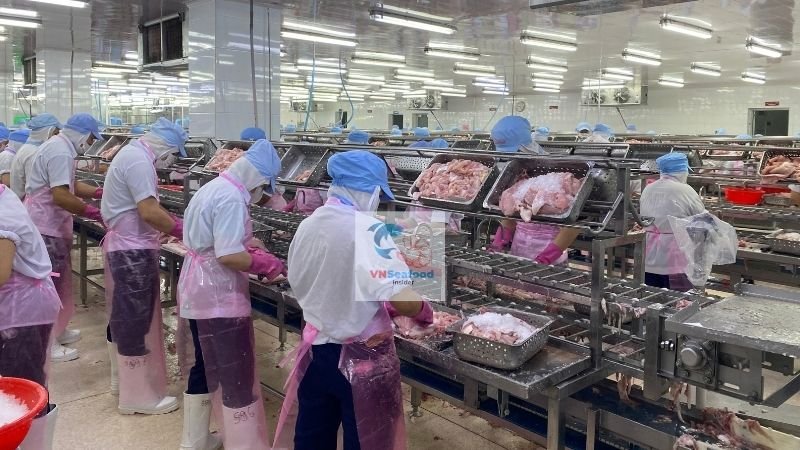
September Vietnam seafood exports hit an estimated $1.135 billion, up 11.9% compared to the same month last year. That is a strong finish to the third quarter.
What makes this number interesting is the breadth. Almost every product group grew. Shrimp, pangasius, tuna, squid, crab — they all moved in the right direction. When growth is spread out like that, it usually means demand is real, not just one buyer stocking up.
Full-Year Outlook: On Track Toward $12 Billion
With $9.1 billion already booked, Vietnam seafood export value for the full year is projected at around $12 billion. That requires roughly $2.9 billion in the last quarter, which is reasonable given the typical Q4 holiday pull.
Still, we would call this an optimistic-but-achievable target. Raw material shortages could cap how much Vietnamese factories actually ship. More on that later.
Vietnam Seafood Export 9 Months 2026 by Product
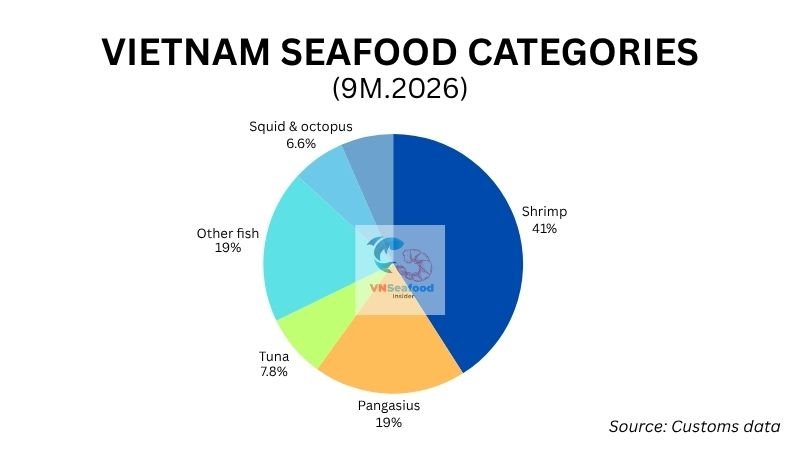
Different species had very different years. Some rode favorable supply conditions. Others fought for every container. Here is how the Vietnam seafood export 9 months 2026 results break down by product.
|
Product Sep 2026 (USD mn) YoY (%) 9M 2026 (USD mn) YoY (%) |
|
Shrimp |
467.1 |
+3.9 |
3,745.3 |
+11.0 |
|
Pangasius |
214.3 |
+18.6 |
1,737.0 |
+10.7 |
|
Tuna |
82.1 |
+13.1 |
716.1 |
+3.5 |
|
Other fish |
215.7 |
+23.2 |
1,740.7 |
+12.2 |
|
Squid & octopus |
79.3 |
+17.2 |
606.4 |
+15.4 |
|
Others |
76 |
– |
598.1 |
– |
|
Total |
1,134.5 |
+11.9 |
9,103.5 |
+11.4 |
Shrimp: 41% of Total Export Value
Shrimp remains the king. Vietnam shrimp exports brought in $3.75 billion over nine months, up 11%, holding a 41% share of total seafood export value.
September shrimp shipments were $467 million, up 3.9%. That slower monthly pace is worth noting. Vietnamese shrimp still competes head-to-head with Ecuador and India, two origins that can usually undercut on price. Vietnam wins on processing quality and value-added products, not on raw cost.
Pangasius: September Rebound and Small-Size Shortage
Pangasius had a very good September. Exports reached $214 million, up 18.6%, bringing the nine-month total to $1.74 billion, up 10.7%.
Part of the reason is outside Vietnam’s control. Tighter supply of several wild-caught whitefish species pushed buyers toward pangasius as a substitute. Good news for Vietnamese pangasius exports.
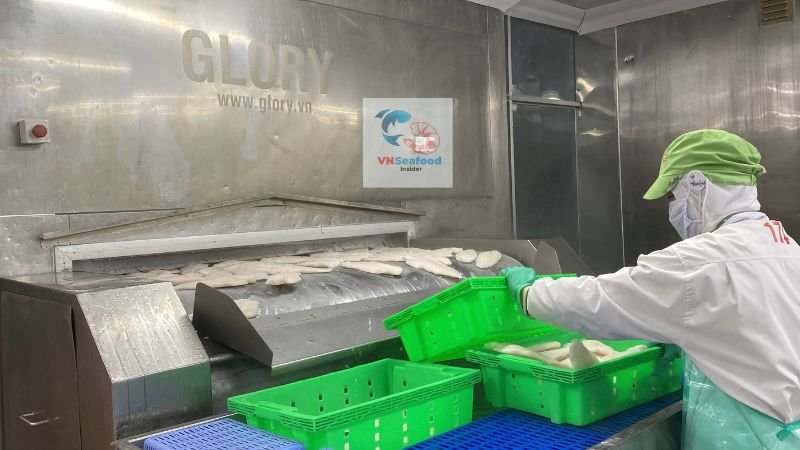
The catch? Raw fish prices have climbed in recent months, and small sizes are genuinely scarce. Several processors are struggling to fill orders they already signed. If you have a contract for small-size fillets, check in with your supplier early.
Tuna: $716 Million After Nine Months
Tuna exports reached about $82 million in September, up 13.1%. Cumulative nine-month value came to $716 million, up a modest 3.5%.

Tuna has been the quiet underperformer. Raw material access and origin documentation requirements keep limiting how fast this category can grow.
See more: Vietnam Tuna Export: Complete Market Guide for Importers
Other Fish, Squid, Octopus, Crab and Mollusks
The smaller categories deserve attention because several grew faster than the headliners.
- Other fish: $1.74 billion, up 12.2% — now rivaling pangasius in total value
- Squid and octopus: $606 million, up 15.4%
- Crab and other crustaceans: $354 million, up 31.6% — the fastest grower
- Bivalve mollusks: $231 million, up 25.2%
- Other mollusks: $12.8 million, up 71.4% (small base, big percentage)
Crab’s 31.6% jump is the standout. Buyers looking to diversify beyond shrimp should take a look here.
See more: Vietnamese White Clams: Everything Importers Should Know Before Sourcing
Vietnam Seafood Export 9 Months 2026 by Market
Growth was far from even across destinations. Asia carried the year. The West was flat or down.
China and Hong Kong: $3.75 Billion
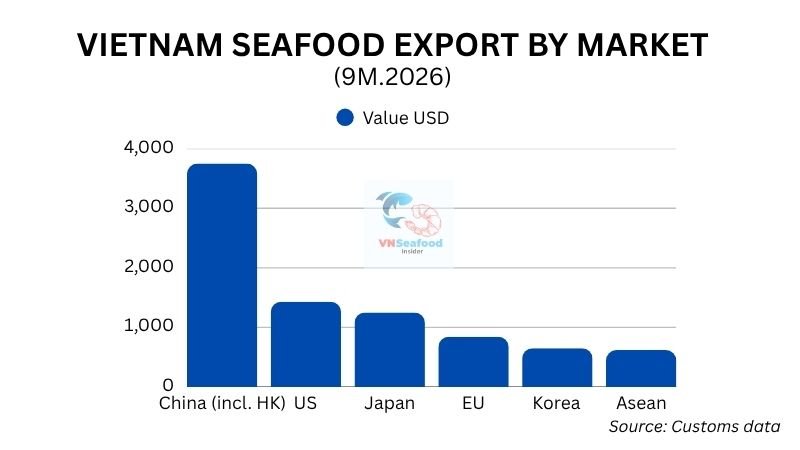
China including Hong Kong imported $3.75 billion worth of Vietnamese seafood, up 11%. That makes it the single largest destination and a major reason the Vietnam seafood export 9 months 2026 total looks as healthy as it does.
United States: Additional Tariffs, MMPA and COA Requirements
The US took $1.43 billion, up just 0.9%. Essentially flat.
Three things are weighing on this market. Additional tariff costs raise landed prices. MMPA (Marine Mammal Protection Act) compliance adds paperwork. COA requirements add more.
Read more: MMPA Tuna Ban 2026: Critical Challenges for Vietnam Tuna Industry
Retail demand is also splitting in two directions. Canned seafood is gaining volume. Fresh and frozen are growing in revenue, but mostly because prices went up — not because shoppers are buying more.
Japan, South Korea and the EU
Japan imported $1.25 billion, up 0.8%. Flat, but Japan is a mature, reliable market, so flat is not a disaster.
South Korea reached $652 million, up 6.1%. Steady.
The EU was the only major market to decline: $843 million, down 3%. European buyers have been cautious on price all year.
ASEAN: $620 Million, Up 21%
ASEAN was the bright spot, up 21% to $620 million. Short shipping routes, lower logistics costs, and rising middle-class demand make this region one to watch for 2027.
Supply and Demand Challenges Behind Vietnam Seafood Exports
Now for the less cheerful part. Growth happened despite real pressure on both ends of the chain.

Raw Material Limits in Shrimp, Pangasius and Tilapia
Shrimp, pangasius, and tilapia all faced raw material constraints this year. Farmers held back on stocking when prices were uncertain. Processors are now paying more for fewer fish and shrimp.
This is the core risk to that $12 billion target. Demand exists. Supply may not.
Wild-Catch Constraints and Traceability Rules
Wild-caught seafood faces a double squeeze: limited suitable raw material plus strict origin and traceability requirements. Even when a buyer is ready to order, the paperwork chain has to line up first.
Price-Sensitive Buyers and Rising Competition
Competition is intensifying, and buyers have grown more careful about price. The result is a strange situation — demand in some markets exists, but Vietnamese exporters may still not be able to fill every order at an acceptable margin.
External Factors Shaping Vietnam Seafood Export in Q4 2026
Sometimes your competitors’ bad news is your good news. Two tariff developments could reshape the shrimp market.
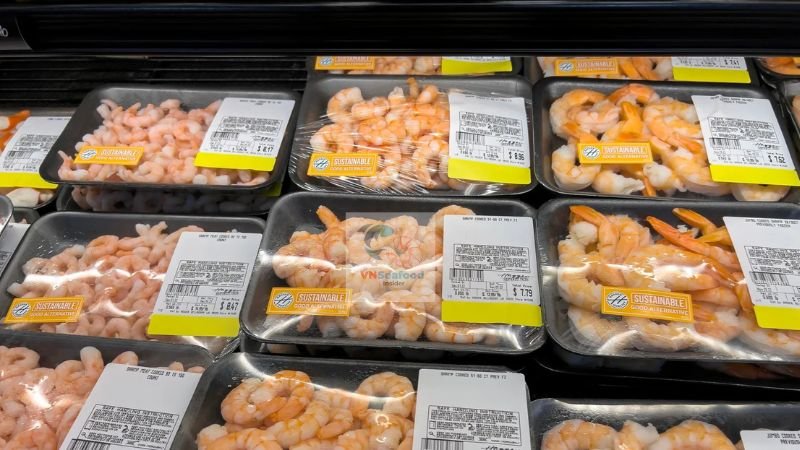
India Shrimp Anti-Dumping Duties Increase
The US Department of Commerce issued final results for the review period from 1 February 2024 to 31 January 2025:
- Sandhya Aqua Exports: 7.01%
- Devi Fisheries group (Satya Seafoods, Usha Seafoods, Devi Aquatech): 4.04%
- 106 non-selected Indian companies: 5.53%
These are sharply higher than May’s preliminary rates of 4.30%, 2.36%, and 3.33%. They also exceed the 19th review’s final rates of 5.08%, 2.71%, and 3.76%.
Ecuador Shrimp and the Proposed US Tariff Bill
As Ecuadorian shrimp is also facing higher duties under a new US bill (according to Intrafish). Final rates are not yet confirmed, so treat this as developing news rather than settled fact.
What Competitor Tariffs Mean for Vietnamese Shrimp
If both India and Ecuador see higher US duties, the price gap with Vietnam narrows. Vietnamese shrimp exporters could pick up share in the US — assuming they have the raw material to supply it. That “assuming” is doing a lot of work.
What Vietnam Seafood Export 9 Months 2026 Results Mean for Importers
Numbers are nice. Decisions are better. Here is how we would read this data as a buyer.
Sourcing Opportunities by Product
Pangasius looks attractive as a whitefish substitute while wild stocks stay tight. Crab and bivalve mollusks are growing fast off smaller bases, meaning less competition for capacity. Shrimp remains the safest bet for consistent quality and volume.
Risks to Plan for in Q4 Orders
Expect higher pangasius raw material prices and scarce small sizes. Expect tight shrimp supply if US demand shifts away from India and Ecuador. Expect longer lead times on anything requiring traceability documentation.
How to Secure Supply From Vietnamese Suppliers
Book early. Confirm sizes in writing. Build in a price adjustment clause instead of pretending input costs are fixed. And keep a backup processor on file — the factories with raw material access in Q4 will be the ones who planned for it in Q2.
Read more: Vietnam Seafood Export: Complete Guide for Importers
FAQ: Vietnam Seafood Export in 2026
How much did Vietnam export in seafood in the first 9 months of 2026?
Vietnam exported $9.1 billion worth of seafood in the first nine months of 2026, an increase of 11.4% year over year.
Which Vietnamese seafood product leads exports in 2026?
Shrimp leads with $3.75 billion over nine months, representing 41% of total Vietnam seafood export value.
Will Vietnam reach $12 billion in seafood exports in 2026?
Roughly $12 billion is the current projection. It is achievable, but depends heavily on whether raw material supply holds up through Q4.
