Why Does Brazil Import Tilapia Despite Strong Domestic Production?
Before we dive into the regulatory drama, let’s address the elephant in the room: Why would Brazil, the world’s fourth-largest tilapia producer, need to import the stuff at all?
It seems counterintuitive at first, doesn’t it? Brazil produced over 534,000 tons of tilapia annually and continues ramping up production. Yet Brazilian tilapia imports from Vietnam and other origins keep flowing. The answer lies in a perfect storm of economics, consumer behavior, and strategic trade dynamics.

Price competitiveness is the obvious starting point. Vietnamese tilapia fillets land in Brazilian ports with a 15-20% cost advantage over locally produced equivalents. When you’re a restaurant chain or institutional buyer working on thin margins, that price difference isn’t just attractive—it’s decisive. Brazilian producers face brutal production costs: expensive feed (much of it imported), higher labor expenses, and operational overhead that Vietnamese integrated producers simply don’t carry.
Then there’s surging internal demand. Brazil’s growing middle class has developed an appetite for affordable protein, and tilapia fits the bill perfectly. Consumption patterns have shifted dramatically over the past decade, with seafood imports becoming normalized rather than exotic.
But here’s where it gets interesting: Brazilian producers have largely positioned themselves for the export market. They focus on premium fresh tilapia for neighboring Latin American countries and even Europe. This strategic choice creates a domestic gap—especially in the frozen, value-added segment—that imports naturally fill. It’s market segmentation in action.
The bilateral trade framework adds another layer. Vietnam agreed to open its market to Brazilian beef imports as part of broader economic cooperation targeting $15 billion in bilateral trade turnover by 2030. From Brazil’s federal perspective, allowing Vietnam seafood exports into the country was part of a strategic quid pro quo. Vietnamese tilapia was essentially a bargaining chip in a much larger economic game.
So despite robust domestic production, Brazil’s import dependency persists because of structural economics, consumer demand patterns, and diplomatic horse-trading. Vietnamese exporters identified this opportunity and built supply chains to exploit it—until states like Santa Catarina decided to throw a wrench in the works.
Vietnamese Tilapia Quality Advantage in the Brazilian Market
Let’s talk about what makes Vietnamese tilapia competitive beyond just price—because if quality weren’t there, cost advantages alone wouldn’t sustain market share.
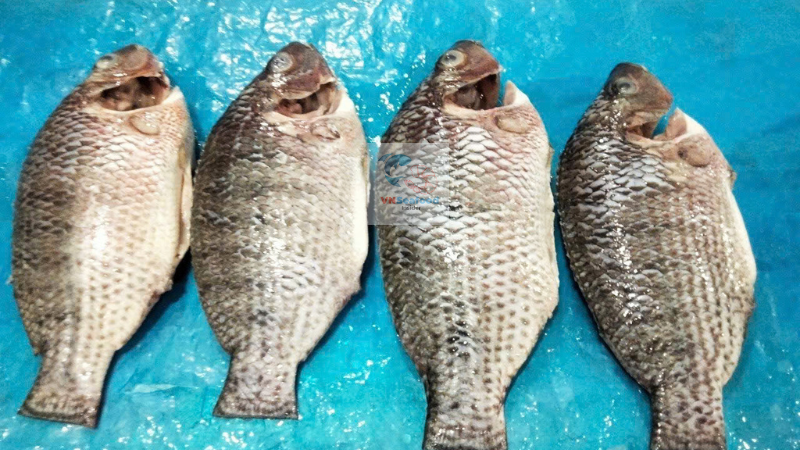
Vietnamese processing facilities have spent decades building international credibility. Many hold HACCP certifications and meet EU import standards, which are among the world’s strictest. When you’re exporting to the European Union successfully, convincing Brazilian importers of your quality control becomes significantly easier.
Fillet consistency matters more than most consumers realize. Institutional buyers—hotels, restaurant chains, catering operations—need uniform sizing and presentation. Vietnamese processors have industrialized this precision through integrated operations from farm to fillet. The consistency level satisfies quality control managers who can’t afford batch-to-batch variability.
Then there’s product innovation. While Brazilian producers focus on whole fresh fish or basic frozen fillets, Vietnamese exporters offer value-added options: pre-portioned servings, marinated varieties, ready-to-cook formats. These products command better margins and appeal to time-pressed Brazilian consumers and food service operators.
Cold chain expertise provides another edge. Advanced freezing technology—Individual Quick Freezing (IQF) and blast freezing—preserves texture and flavor better than traditional methods. For a frozen fillet traveling 17,000 kilometers from the Mekong Delta to São Paulo, maintaining organoleptic quality isn’t optional—it’s survival. Vietnamese exporters have mastered this logistics choreography.
The sweet spot Vietnamese tilapia suppliers occupy is the mid-market segment: better quality than the cheapest Chinese imports, more affordable than premium Brazilian fresh fish. It’s that quality-to-price ratio that Brazilian local producers struggle to match, creating the persistent demand that federal trade negotiators recognized when lifting import restrictions.
See more: 5 Common Mistakes When Importing Tilapia from Vietnam
Understanding the TiLV Virus Controversy and Trade Policy Factors
Now we get to the heart of the conflict—the science, the politics, and the regulatory tug-of-war that’s created this mess for Vietnam tilapia export operations.
The Science Behind TiLV Concerns
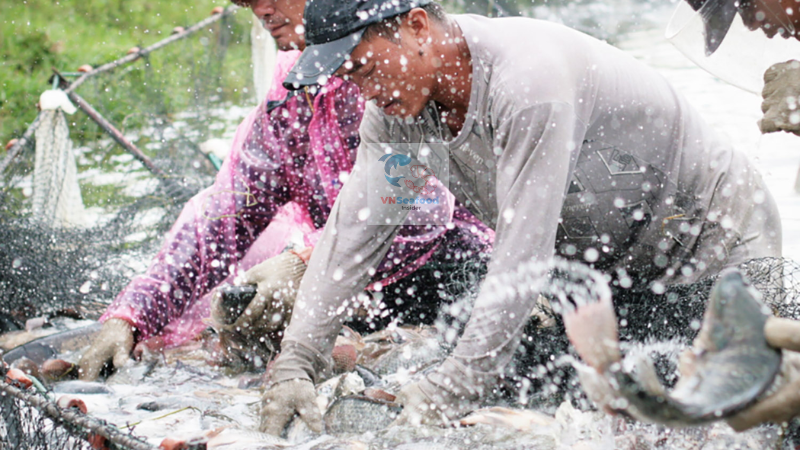
If you haven’t heard of TiLV before, welcome to the obscure world of aquatic animal diseases. Tilapia Lake Virus is a pathogen that affects tilapia populations globally, causing mortality in farmed fish. It’s been detected on multiple continents, including in Brazil itself, which makes the selective targeting of Vietnamese imports somewhat ironic.
Here’s what matters: WOAH—the World Organisation for Animal Health, the global authority on these issues—has conducted extensive assessments on TiLV transmission risks. Their conclusion? Processed, frozen fillets present negligible disease transmission risk. The virus doesn’t survive commercial processing, freezing, and the standard handling that frozen tilapia fillets undergo.
Brazil’s Ministry of Agriculture (MAPA) reviewed this evidence and agreed. Their May 2025 decision to lift the federal ban explicitly referenced WOAH standards and concluded that properly processed Vietnamese products pose no meaningful biosecurity threat. The filleting process itself—removing heads, guts, and viscera where viral loads concentrate—combined with freezing temperatures essentially eliminates transmission pathways.
Vietnamese exporters have gone further, implementing enhanced testing protocols and third-party certifications specifically to address Brazilian concerns. Many facilities now conduct batch-level TiLV testing, maintaining documentation trails that exceed international baseline requirements.
So if the science says processed fillets are safe, and the federal government agrees, and international standards support this position… why the state-level ban? That’s where science ends and politics begins. The gap between evidence-based risk assessment and protectionist industry lobbying has created this regulatory contradiction that Vietnamese tilapia exporters now face.
Federal vs. State-Level Trade Regulations
Here’s where Brazilian constitutional complexity meets international trade law—and creates headaches for everyone involved.
In theory, trade policy and international commerce fall under federal jurisdiction in Brazil. MAPA’s authority should be supreme when it comes to import permissions, health certifications, and market access decisions. The federal government lifted the Vietnam tilapia ban based on technical assessments and diplomatic considerations, intending to create nationwide market access.
But Brazil’s federal system grants states substantial autonomy, including police powers over local health and safety matters. Santa Catarina exploited this authority, arguing that restricting circulation of products within state borders falls under legitimate state regulatory power. It’s a constitutional gray zone that’s never been fully adjudicated in the context of international trade.
From a WTO perspective, this raises serious questions. Brazil’s commitments under international trade agreements presumably bind the entire country, not just the federal government. State measures that contradict federal trade policy could violate Most Favored Nation and National Treatment obligations. Vietnamese officials and importers are exploring legal challenges on exactly these grounds.
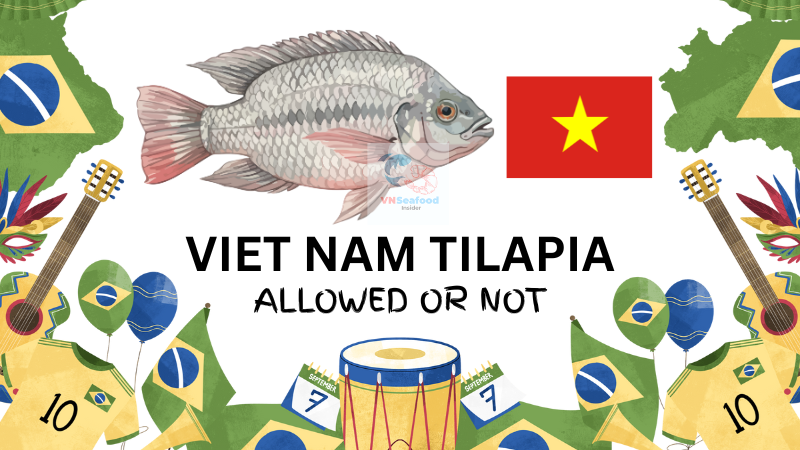
The industry lobbying angle can’t be ignored. Brazilian producer associations—particularly Abipesca and Peixe BR—have campaigned aggressively against Vietnamese seafood imports. Santa Catarina hosts significant tilapia farming operations, making local politicians responsive to producer concerns about competition. When industry groups frame imports as biosecurity threats rather than economic competition, they gain political leverage that pure protectionist arguments wouldn’t provide.
The precedent concern is what keeps Vietnamese exporters up at night. If Santa Catarina successfully implements state-level restrictions without federal override or WTO sanctions, what stops Paraná, São Paulo, or other states from following suit? You’d end up with market fragmentation where Brazilian tilapia market access becomes a state-by-state patchwork, making nationwide distribution economically unviable.
Historical Timeline: Brazil’s On-Again, Off-Again Relationship with Vietnam Tilapia Export
Understanding this latest restriction requires context—and frankly, the history here reads like a regulatory soap opera.
February 2024 marked the first major disruption. Brazil abruptly halted tilapia imports from Vietnam, citing TiLV concerns and alleged non-compliance with health standards. The timing raised eyebrows; many interpreted it as yielding to domestic industry pressure rather than responding to actual new biosecurity intelligence.
The impact was immediate and severe. From November 2023 through February 2024, Brazilian authorities issued only 22 import licenses for Vietnamese tilapia—a fraction of normal trade volumes. Only a single shipment actually cleared customs during this period. For Vietnamese exporters with containerized shipments already in transit or contracts signed, the sudden restriction created chaos.
Behind the scenes, bilateral negotiations intensified. The diplomatic framework became transactional: Vietnamese officials made clear that continued market closure for tilapia would jeopardize Vietnam’s planned opening to Brazilian beef imports—a priority for Brazil’s powerful agricultural sector. Trade ministries on both sides recognized the larger economic partnership goals, including the ambitious target of $15 billion in bilateral trade turnover by 2030.
These negotiations bore fruit in May 2025, when MAPA announced the lifting of the nationwide suspension. The decision came with technical justification—the risk assessment validating WOAH standards—but everyone understood the diplomatic component. Within weeks, the first 700-ton Vietnamese tilapia shipment cleared Brazilian customs, and exporters cautiously celebrated the market reopening.
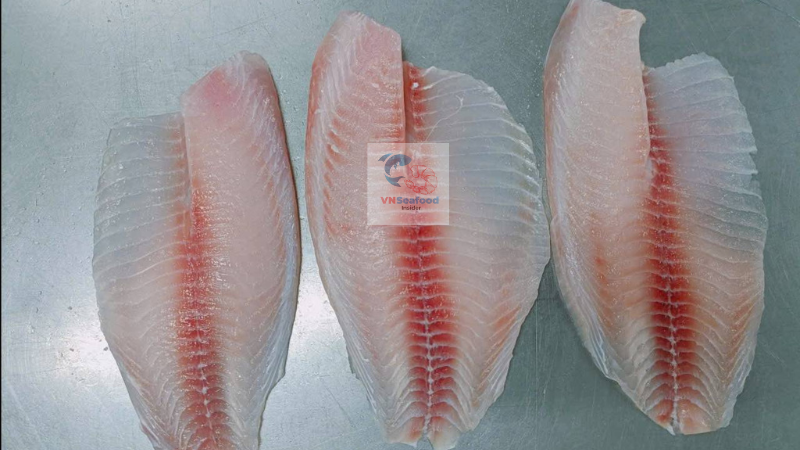
That optimism lasted approximately seven months. In December 2025, Santa Catarina’s administrative measure blocked all Vietnamese tilapia products within state boundaries. Fresh, frozen, whole fish, fillets—everything was suddenly restricted again. For Vietnamese exporters who’d rebuilt supply chains and signed new contracts based on federal market access, this represented a devastating setback.
The pattern reveals an uncomfortable reality: market access in Brazil depends not just on federal policy but on navigating state-level political dynamics that can override national trade commitments. It’s regulatory whack-a-mole, and Vietnamese tilapia producers are the ones getting hammered.
Business Impacts: What This Means for Vietnamese Seafood Exporters
Let’s get practical about what Santa Catarina’s ban actually costs Vietnamese exporters—because the impacts extend far beyond blocked shipments.
Immediate financial losses hit first. Containers destined for Santa Catarina distributors either sat in ports accruing storage fees or required expensive rerouting to other states. Contracts with buyers in the restricted state faced cancellation, often triggering penalty clauses. Some exporters found themselves holding inventory they couldn’t deliver, with working capital tied up in products generating storage costs rather than revenue.
The operational complexity multiplies from here. Vietnamese exporters now face dual compliance regimes: meeting federal requirements that grant national market access, while somehow navigating state restrictions that override federal permissions. Each shipment requires documentation proving TiLV-free status—not once at the federal level, but potentially multiple times if different states demand separate certifications. These administrative costs add up quickly, eroding the price competitiveness that made Vietnam tilapia export viable in the first place.
Market access challenges cut deeper than immediate sales figures. Santa Catarina isn’t peripheral—it’s a major aquaculture hub and significant consumption center. Losing access to this state means forfeiting penetration in a strategic regional market. Reduced sales volumes undermine economies of scale, affecting cost structures for exporters’ entire Brazil operations. When you’re shipping frozen seafood halfway around the world, volume efficiency determines profitability; lose enough volume, and the whole market becomes marginally viable.
Reputational risks may prove most damaging long-term. Even though the ban stems from political protectionism rather than legitimate safety concerns, it creates perception problems. Buyers in other Brazilian states start questioning whether Vietnamese tilapia carries risks they haven’t considered. Food safety rumors spread faster than corrections, especially in B2B channels where institutional buyers operate on risk-averse procurement policies.
The competitive dynamic shifts unfavorably too. Brazilian producers gain indirect protection through regulatory barriers they couldn’t win in open market competition. Alternative origin countries—China, Ecuador, even Thailand—might fill gaps Vietnamese exporters leave, establishing relationships that prove difficult to recapture even if restrictions eventually lift. In international seafood trade, lost market share rarely returns automatically once barriers fall.
For smaller Vietnamese exporters, Brazil might simply become too complex and risky to justify continued investment. Larger, diversified companies can absorb the volatility, but specialized tilapia exporters heavily exposed to the Brazilian market face potentially existential challenges.
See more: Top five tilapia producers in vietnam
Strategic Outlook: How Vietnamese Exporters Can Navigate Brazil’s Regulatory Maze
So what can Vietnamese exporters actually do about this situation? Complaining about unfairness doesn’t move product, so let’s discuss practical responses.
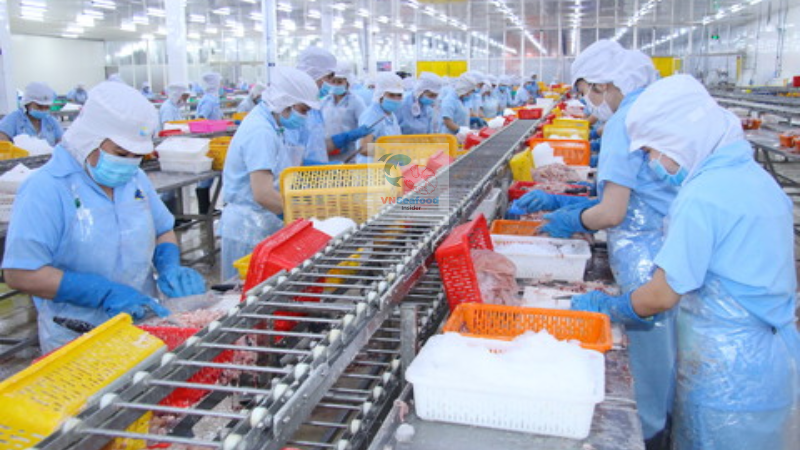
Short-Term Tactical Responses
Diplomatic engagement through official channels provides the foundation. The Vietnamese government needs to leverage the bilateral trade framework, reminding Brazilian federal authorities that market access disruptions jeopardize the broader economic partnership—including Brazilian beef exports to Vietnam. Trade diplomacy works best when both sides have skin in the game, and Brazil’s agricultural sector certainly wants Vietnamese market access.
Legal challenges represent another avenue. Working with Brazilian importers and legal experts, Vietnamese exporters should contest the state measures under WTO frameworks and Brazilian constitutional law. Establishing precedent that state restrictions violating federal trade policy are invalid could benefit the entire Vietnamese seafood industry, not just tilapia exporters.
Enhanced certification and transparency can preempt objections. Proactive third-party TiLV testing with results publicly available, facility audits by independent international bodies, and documentation exceeding baseline requirements build credibility that makes protectionist arguments harder to sustain politically.
Market diversification within Brazil offers tactical flexibility. States without restrictions still represent substantial markets; concentrating sales there maintains Brazil presence while navigating restrictions elsewhere. Focusing on federal-level approval for distribution through national retail chains that operate across states might bypass some state-level barriers through legal complexity.
Documentation excellence isn’t glamorous, but it matters. Bulletproof compliance with every federal requirement eliminates technical justifications for restrictions, forcing opponents to reveal their protectionist motivations rather than hiding behind health pretexts.
Long-Term Strategic Positioning
Stepping back, geographic diversification reduces Brazil dependency. Vietnamese exporters should accelerate expansion into other Latin American markets—Chile, Peru, Colombia—where tilapia import demand exists without Brazil’s regulatory volatility. Reducing the percentage of production dependent on any single market improves resilience against political disruptions.
Value chain upgrading moves Vietnamese tilapia toward higher-margin segments less vulnerable to price-based competition and protectionist pressures. Premium products with stronger differentiation—certified organic, sustainable aquaculture labels, specialized flavored preparations—create defensible market positions that commodity products can’t sustain.
Joint ventures with Brazilian partners might offer political cover. Local production partnerships or distribution joint ventures create Brazilian stakeholders with incentives to support Vietnamese market access. When restrictions harm Brazilian companies and employment, political calculations change.
Industry coalition building matters too. Vietnamese exporters should work systematically with Brazilian importers, retailers, food service operators, and consumer groups who benefit from access to competitively priced, quality tilapia. Creating a domestic Brazilian constituency advocating against protectionism shifts political dynamics.
Alternative species development provides portfolio diversification. If tilapia faces persistent barriers, expanding pangasius exports, shrimp, and other Vietnamese seafood to Brazil reduces single-product vulnerability. Brazilian importers value supplier relationships; offering multiple products strengthens those partnerships.
Finally, bilateral trade leverage should be deployed strategically. Vietnamese market access for Brazilian beef remains valuable to Brazil. Making clear that continued seafood market disruptions threaten broader trade cooperation applies pressure that purely commercial arguments can’t match.
See more: How to Identify High-Quality Frozen Tilapia Fillets A Complete Guide for Importers
Lessons for the Global Seafood Trade
This Santa Catarina situation illustrates dynamics extending far beyond Vietnam and Brazil—lessons that apply throughout international seafood commerce.
Federal-state regulatory conflicts are emerging as sophisticated non-tariff barriers. As traditional tariffs decline under WTO frameworks, protectionist interests exploit domestic constitutional divisions to create market access restrictions that technically bypass international trade commitments. It’s regulatory arbitrage, and we’ll likely see more of it.
Sanitary measures have become the preferred protectionist tool precisely because they carry scientific legitimacy—even when the underlying motivations are purely economic. Challenging health-based restrictions requires technical evidence and diplomatic pressure, making them more durable than straightforward tariffs that violate WTO rules.
The importance of diplomatic frameworks alongside commercial relationships becomes obvious. Vietnamese exporters who viewed Brazil purely as a commercial opportunity without investing in government-to-government relationship management now understand the limitation of that approach. Trade happens within political contexts, and those contexts require cultivation.
Market diversification isn’t optional for exporters dependent on emerging economies with volatile regulatory environments. Single-market concentration creates existential vulnerabilities when political winds shift. The Vietnamese companies weathering this disruption best are those with significant sales across multiple regions.
Finally, the tension between scientific standards and political pressure remains unresolved in international trade governance. WOAH standards, WTO agreements, and technical risk assessments should theoretically determine market access—but domestic political pressures consistently override international commitments when governments perceive sufficient local benefit. Until enforcement mechanisms strengthen, exporters will continue navigating this gap.
Conclusion: The Road Ahead for Vietnam Tilapia Export to Brazil
So where does this leave Vietnamese tilapia exporters eyeing the Brazilian market?
Santa Catarina’s ban is a symptom of larger trade tensions—the collision between open market principles and protectionist pressures, between federal trade authority and state-level political autonomy, between scientific risk assessment and industry lobbying. Vietnamese tilapia exports happened to land at the intersection of all these conflicts.
Yet Vietnam’s seafood industry has demonstrated remarkable resilience throughout its export history. From overcoming EU yellow card warnings on IUU fishing to navigating complex U.S. anti-dumping regulations, Vietnamese exporters have consistently adapted to and overcome market access barriers. There’s no reason to assume Brazil represents an insurmountable challenge.
Cautious optimism seems warranted. Federal support provides a foundation—MAPA’s position on TiLV risks and federal market access permissions establish legitimate grounds for challenging state restrictions. The bilateral trade framework creates incentives for Brazil to resolve these tensions rather than jeopardizing broader economic cooperation with Vietnam.
For exporters, this situation demands proactive compliance, strategic diversification, and patience. Brazil remains a priority market given its size, growth trajectory, and strategic location for Latin American expansion. But success requires navigating not just commercial competition but complex regulatory and political landscapes where federal policies can be overridden by state measures.
At VNSeafoodInsider, we’ll continue tracking how this situation evolves—because frankly, it’s become a case study in modern seafood trade complexity. The companies that figure out this regulatory maze will gain competitive advantages extending well beyond Brazil, developing capabilities for managing political risk that prove valuable in multiple markets.
The Vietnam tilapia export story in Brazil isn’t over—it’s just entered a more complicated chapter. Vietnamese exporters who treat this as a learning opportunity rather than just a setback will emerge stronger, more sophisticated, and better prepared for the increasingly complex world of international seafood trade.
Want to stay updated on Vietnam tilapia export developments and seafood trade insights? VNSeafoodInsider covers the stories that matter for your business. Follow us for analysis you won’t find elsewhere.
