
Vietnam Shrimp Production 2025: Record Volumes Drive Revenue Recovery
The Vietnamese shrimp sector didn’t just recover in 2025—it roared back. After hitting rock bottom in 2023, the industry has found its footing again, and the production numbers tell a story that’s hard to ignore.
National Production Hits 1.41 Million Tons
Here’s where things get interesting. In the first 11 months of 2025, Vietnam shrimp production reached over 1.41 million tons. That’s a solid 5.5% increase compared to the same period in 2024. For an industry that was nursing wounds from pandemic disruptions and market volatility, this isn’t just growth—it’s a statement.
This production surge didn’t happen by accident. Farmers across the Mekong Delta have been investing in better pond management, disease control, and feed quality. The result? Higher survival rates and better yields per hectare. It’s the kind of fundamentals-driven growth that suggests sustainability rather than a flash in the pan.
Ca Mau Province: Leading Production Success Story
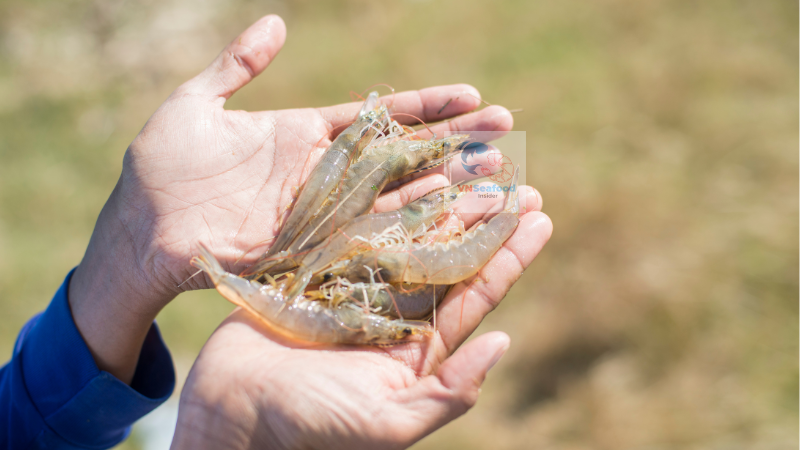
If there’s a star performer in the Vietnamese shrimp farming landscape, it’s Ca Mau province. This southwestern powerhouse produced 594,851 tons throughout 2025, exceeding its own ambitious targets by 5.2%.
Ca Mau’s success isn’t accidental. The province has been systematically upgrading its farming practices, investing in processing infrastructure, and working closely with exporters to understand market demands. When you source shrimp from Ca Mau, you’re tapping into a region that’s mastered the balance between volume and quality—a sweet spot that many shrimp-producing regions struggle to find.
Export Revenue Recovery Timeline
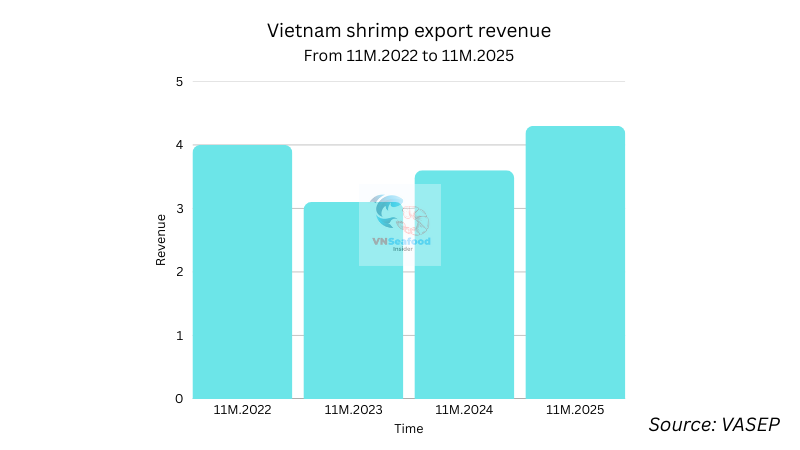
Now let’s talk revenue, because that’s ultimately what matters for your bottom line. The Vietnam shrimp export revenue trajectory over the past four years reads like a comeback story:
- 11 months 2022: $4.0 billion (the pre-crisis peak)
- 11 months 2023: $3.1 billion (the painful trough)
- 11 months 2024: $3.6 billion (cautious recovery begins)
- 11 months 2025: $4.3 billion (exceeding pre-crisis levels)
That’s a 38.7% recovery from the 2023 low and importantly, 7.5% above the 2022 benchmark. The shrimp export growth isn’t just recovering lost ground—it’s breaking new territory. For importers, this signals improved supply stability and producer confidence, which typically translates to better reliability in fulfilling orders.
See more: Top 5 shrimp processing companies in Vietnam
Top Export Markets: Diversification Drives Growth
One of Vietnam’s smartest moves? Not putting all its shrimp in one basket. The 2025 export data reveals a well-diversified portfolio that provides resilience against single-market shocks.
China and Hong Kong Lead with $1.2B in Imports
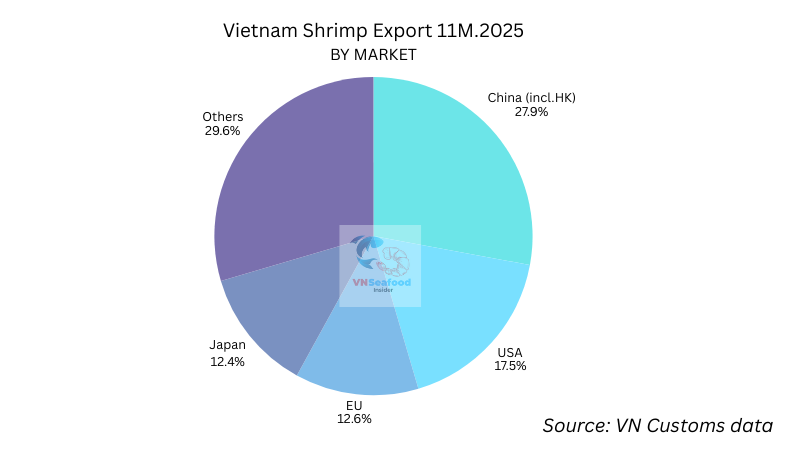
Surprise, surprise—or maybe not. China and Hong Kong collectively imported $1.2 billion worth of Vietnamese shrimp in the first 11 months of 2025, making them the largest market destination. That’s roughly 28% of Vietnam’s total shrimp exports.
The Chinese market loves Vietnamese shrimp for several reasons: proximity means freshness, processing standards meet their requirements, and pricing remains competitive. Plus, as China’s middle class continues to grow, so does their appetite for premium seafood. Hong Kong serves as both a consumption market and a re-export hub, distributing Vietnamese shrimp throughout Asia.
United States: $754M Market with Complex Dynamics
The United States remains Vietnam’s second-largest shrimp market, with imports reaching $754 million through November 2025—an 8% year-over-year increase. Not spectacular growth, but definitely solid given the tariff headwinds (more on that minefield shortly).
What’s fascinating about the US shrimp market is its stability despite the bureaucratic challenges. American consumers love their shrimp—it’s the most consumed seafood in the United States—and Vietnamese processors have built strong relationships with US importers and retailers over decades. That relationship capital matters when navigating trade barriers.
EU and Japan: Stable Premium Markets
The European Union and Japan each imported approximately $540 million and $535 million worth of Vietnamese shrimp respectively in the 11-month period. These markets might not grab headlines, but they represent something valuable: premium pricing and stable demand.
European and Japanese buyers typically prioritize quality, traceability, and sustainability credentials over rock-bottom pricing. They’re willing to pay more for shrimp that meets their stringent standards. For Vietnamese producers who’ve invested in certifications and quality systems, these markets offer better margins than volume-driven alternatives.
Strategic Implications of Market Mix
This diversification isn’t just smart—it’s essential. When one market sneezes (looking at you, US tariff system), Vietnam’s shrimp sector doesn’t catch pneumonia. The spread across four major markets, plus smaller destinations, creates a buffer that protects both producers and, by extension, your supply chain.
US Market Challenges: Navigating the Tariff Maze
Let’s address the elephant—or should we say, the shrimp—in the room. The United States shrimp market remains attractive but increasingly complicated. If you’re importing Vietnamese shrimp to the US, you need to understand this landscape.
Strong Export Growth Despite Rising Barriers
Through mid-November 2025, Vietnam shrimp exports to USA hit $731 million, up 8% from the previous year. That growth, while modest, is actually impressive when you consider the tariff environment. Vietnamese shrimp isn’t just surviving in the US market—it’s slowly expanding despite headwinds that would flatten less competitive suppliers.
Anti-Dumping Duties: The Biggest Headache
Here’s where things get painful. The anti-dumping duties on Vietnamese shrimp are reviewed periodically through what’s called a Period of Review (POR). In POR 19, the preliminary results announced by the US Department of Commerce showed anti-dumping duty margins reaching a whopping 35.29%.
What does this mean in practical terms? Shrimp shipments that left Vietnam during 2021-2022 are now subject to an additional 35% duty upon final determination. That’s a massive retrospective cost that can turn profitable shipments into loss-makers overnight. For importers, this creates financial uncertainty and requires sophisticated duty drawback strategies or absorption into pricing structures.
See more: Vietnam Shrimp Antidumping Duty – Latest Updates and Impact on US Importers 2025
Reciprocal Duties Add Another Layer
But wait, there’s more! (And not in a good way.) On top of anti-dumping duties, Vietnamese shrimp faces Reciprocal duties—tariffs designed to offset alleged government subsidies. Currently, the general countervailing duty rate for products from Vietnam sits at 20%.
These aren’t alternative tariffs—they’re cumulative. So we’re potentially looking at combined duty exposure that significantly impacts landed costs. It’s the kind of math that makes importers reach for the aspirin bottle.
See more: How US Reciprocal Tariffs impact Vietnam Seafood Exporters
Real Numbers: What Tariffs Mean for Competitiveness
Let’s do some back-of-the-envelope calculations. If you’re importing Vietnamese shrimp to the US and facing both anti-dumping duties (35.29%) and reciprocal tariff (20%), your total duty burden exceeds 55%. On a container with $100,000 of shrimp at customs value, that’s an additional $55,000+ in duties alone.
Suddenly, that competitive FOB price from Vietnam doesn’t look quite so attractive when landed in Los Angeles or Miami. This is why understanding the tariff structure isn’t optional—it’s essential for accurate cost modeling and maintaining margin integrity.
Competitive Landscape: Global Shrimp Market Competition
Vietnam doesn’t operate in a vacuum. Understanding where competitors stand in the global shrimp trade helps you make smarter sourcing decisions.
India: Largest Exporter Faces Even Higher Tariffs
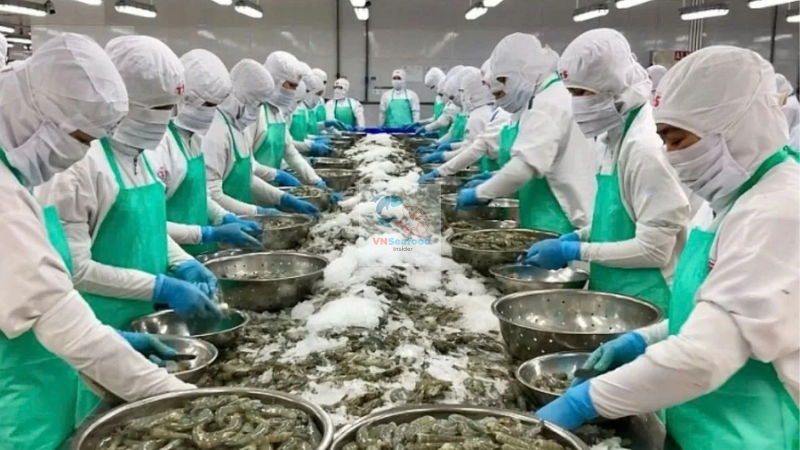
India, the world’s largest shrimp exporter to the United States, faces an even more brutal tariff environment. When you add up anti-dumping duties, countervailing duties, and anti-subsidy duties, Indian shrimp faces a combined rate of approximately 58.26% entering the US market.
This is actually good news for Vietnamese shrimp competitiveness. Despite Vietnam’s own tariff challenges, it maintains a significant duty advantage over its largest Asian competitor. For importers, this means Vietnamese shrimp often pencils out better than Indian alternatives when doing landed cost comparisons for the US market.
Indonesia: Quality Concerns Create Openings
Indonesian shrimp faces different challenges—not primarily tariff-related, but quality-based. The FDA has been expanding recalls of Indonesian shrimp products due to contamination concerns, including radioactivity fears in certain regions.
These quality issues create market openings that Vietnamese producers have been quick to exploit. Buyers concerned about supply chain reliability and product safety have been shifting volume from Indonesia to Vietnam, where quality control systems are generally more robust and transparent.
Ecuador: The Low-Tariff Challenger
Ecuador enjoys significantly lower countervailing duty rates compared to Asian producers, giving it a tariff advantage in the US market. However, Ecuador’s product mix heavily favors whole, head-on shrimp rather than the peeled and deveined products that dominate US retail and foodservice.
This product differentiation means Ecuador and Vietnam aren’t always direct competitors—they often serve different segments of the market. Vietnamese producers excel at value-added processing, which commands premium pricing despite higher tariff burdens.
Vietnam’s Competitive Edge of Vietnam shrimp production 2025
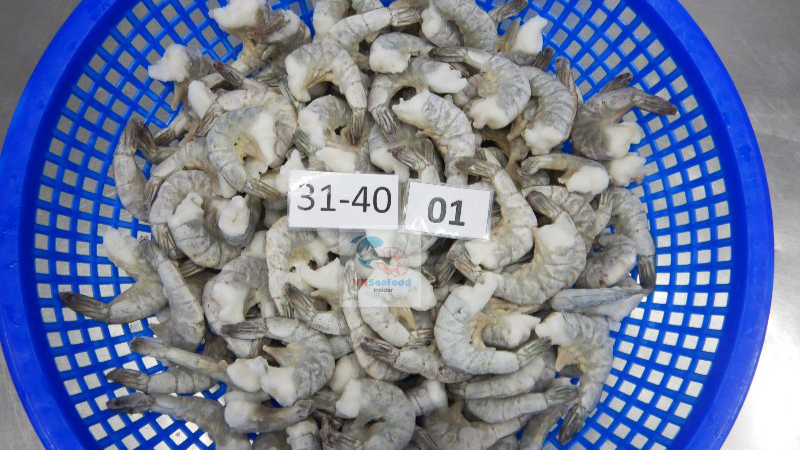
So where does Vietnam stand after weighing all competitive factors? Pretty solidly, actually. The Vietnam seafood industry offers:
- Processing sophistication: decades of experience in value-added products
- Quality systems: established traceability and certification programs
- Flexibility: ability to produce diverse product forms and sizes
- Reliability: mature logistics and consistent supply
- Tariff advantage: over India specifically in the US market
It’s not perfect, but it’s competitive—and in the complex world of international shrimp trade, competitive is often good enough to win.
Production-to-Export Value Chain: Vietnam’s Strategic Advantage
What makes Vietnamese shrimp consistently competitive isn’t just farming—it’s the entire integrated value chain.
From Farm to Global Markets
Vietnam’s Mekong Delta offers ideal conditions for shrimp farming: brackish water, suitable temperatures, and extensive coastal areas. But natural advantages only get you so far. Vietnamese farmers have invested heavily in semi-intensive and intensive farming systems that balance productivity with sustainability.
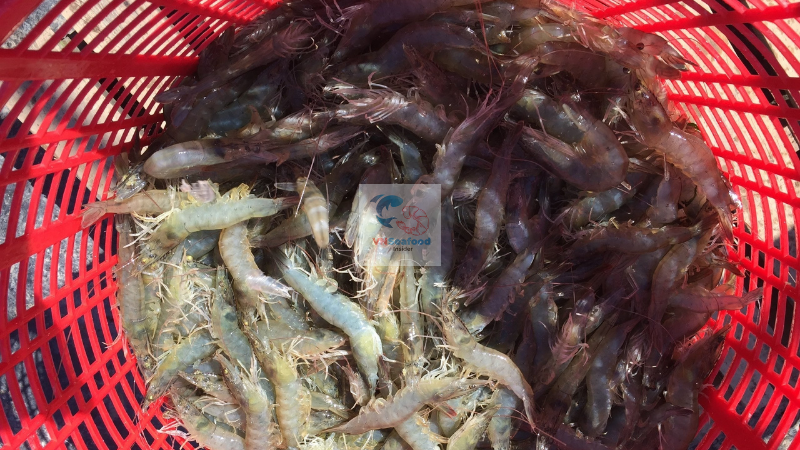
The processing sector sits close to production areas, minimizing transport time and maintaining freshness. This geographic integration means shrimp can move from pond to frozen state within hours—a freshness advantage that quality-conscious buyers appreciate.
Quality Control and Sustainability
Vietnamese shrimp producers increasingly hold certifications that international buyers require: BAP (Best Aquaculture Practices), ASC (Aquaculture Stewardship Council), and organic certifications. These aren’t just wall decorations—they represent real investments in farming practices, environmental stewardship, and social responsibility.
For importers, these certifications reduce reputational risk and open doors to retail chains and foodservice operators with strict supplier standards.
Infrastructure Supporting Scale
Vietnam’s seafood processing infrastructure is world-class. Modern facilities with HACCP, BRC, and IFS certifications can handle large orders while maintaining quality consistency. Transportation links to major ports are efficient, and container availability, while sometimes tight, is generally manageable.
This infrastructure density means Vietnam can scale up production to meet growing demand without sacrificing the quality controls that premium markets demand.
See more: Top 20 biggest seafood companies in vietnam
Looking Ahead: 2026 Opportunities and Risks
As we move into 2026, the Vietnam shrimp industry faces a landscape filled with both promise and peril.
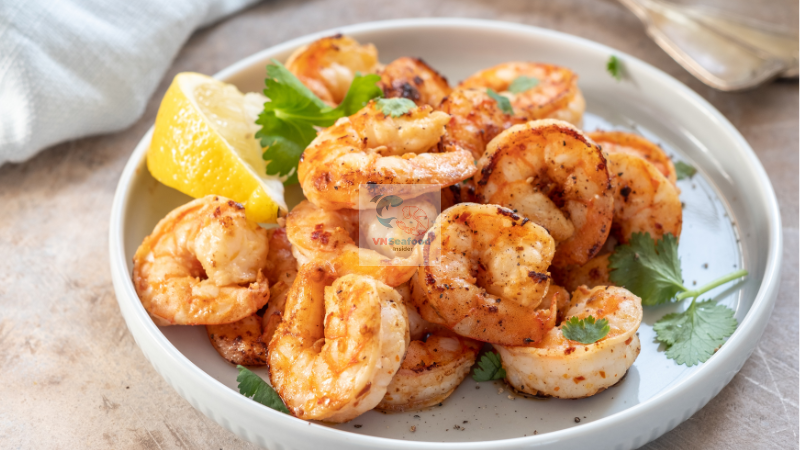
The opportunities are substantial. Asian markets, particularly China, Japan, and South Korea, continue growing their middle classes and premium seafood consumption. European markets value Vietnam’s sustainability efforts and quality standards. Even the challenging US market shows resilience, with American consumers’ insatiable appetite for shrimp showing no signs of diminishing.
The risks? Tariff uncertainty remains the elephant in every room. Period of Review results can shift dramatically, changing cost structures overnight. Climate change brings increasingly unpredictable weather patterns affecting production. Disease outbreaks, while less frequent than in past decades, remain a constant concern requiring vigilance.
Feed costs, heavily dependent on global commodity prices, create margin pressure that farmers can’t always pass through to buyers. And competition never sleeps—Ecuador, Indonesia, and India are all working to improve their competitive positions.
Perhaps most importantly, 2026 will test Vietnam’s ability to maintain production growth without sacrificing sustainability. Expanding too quickly risks environmental damage and disease problems that could undermine long-term competitiveness.
Key Takeaways for Shrimp Importers and Distributors
Let’s bring this home with actionable insights for your sourcing strategy:
Production reliability is strong: Vietnam’s 1.41 million ton production capacity and proven track record mean supply stability for your orders. The Vietnam shrimp production 2025 results demonstrate consistent growth momentum.
Understand total landed costs: Don’t just focus on FOB pricing. Model out anti-dumping and countervailing duties for realistic US landed cost projections. Vietnamese shrimp remains competitive, but only when you account for all costs accurately.
Diversify product mix: Vietnam excels at value-added products. Consider expanding beyond commodity items to differentiated products that command better margins and face less tariff sensitivity.
Leverage quality certifications: Vietnamese producers with strong certifications offer lower risk profiles. These credentials matter increasingly to retail and foodservice buyers.
Watch regulatory developments: POR results, FDA actions, and trade policy shifts can dramatically impact competitiveness. Stay informed or work with partners who monitor these developments closely.
Consider non-US markets: Given tariff complexities, explore opportunities in Asian and European markets where Vietnamese shrimp faces fewer trade barriers and often commands premium pricing.
Build supplier relationships: In an environment with tariff uncertainty and production variables, strong supplier relationships provide stability and preferential treatment when supply gets tight.
The bottom line? Vietnam shrimp exports demonstrate an industry that’s resilient, competitive, and strategically positioned despite real challenges. The $4.3 billion revenue recovery isn’t just about bouncing back—it’s about moving forward with improved fundamentals.
For importers and distributors, Vietnam remains a compelling sourcing origin that balances quality, reliability, and cost-effectiveness. Yes, the US market brings complications. But with proper planning and realistic cost modeling, Vietnamese shrimp continues delivering value throughout your supply chain.
At VNSeafoodInsider, we’ll keep tracking these trends and bringing you the insights that help you make smarter sourcing decisions. Because in the seafood business, information isn’t just power—it’s profit.
Want to stay ahead of Vietnam seafood market developments? Follow VNSeafoodInsider for data-driven analysis that helps you source smarter and compete better.
