
Critical Thing #1 — Start with Sample Orders and Quality Verification
Let’s be blunt. If you skip the sample phase, you’re gambling. And not the fun kind of gambling — more like the “bet your entire margin on a stranger’s promise” kind. Before you commit to a full container of Vietnamese barramundi, you need to see it, touch it, smell it, and yes — cook it. Samples are non-negotiable. They’re your first real handshake with the product and the supplier. Everything that follows depends on what you learn here.
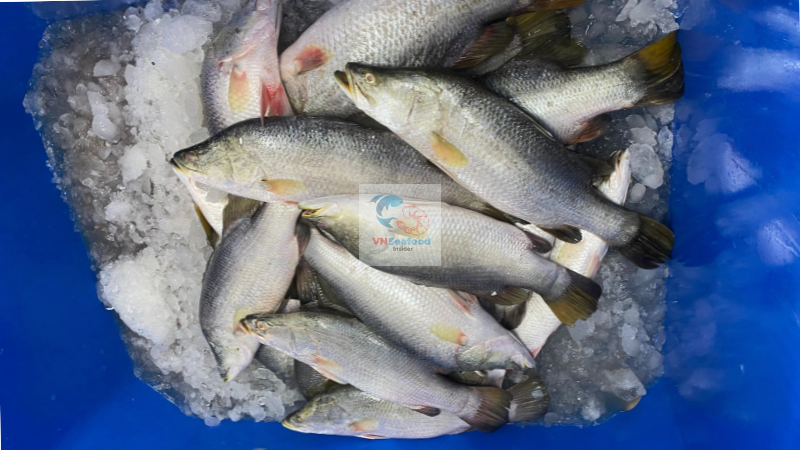
How to Structure Your Sample Order
Most barramundi fish suppliers in Vietnam are comfortable with sample quantities between 2 and 10 kg. That’s enough to run proper testing without breaking the bank.
For sample shipments, air freight is your best friend. It’s pricier, sure, but it gets the product to you fast — typically within 3 to 5 days. Sea freight makes no sense for small trial quantities. You’d wait weeks and risk quality degradation before you’ve even begun evaluating.
Expect to pay premium pricing on samples. Suppliers often charge 10 to 20 percent more per kilogram because the logistics cost per unit is higher. That’s normal. Don’t let it scare you off.
Your sample specification sheet should be crystal clear. Include target species (Lates calcarifer), size range, product form (whole, fillet, portion), glaze percentage, packaging type, and any certification requirements. Leave nothing to assume. The more specific you are now, the fewer surprises you’ll face later.
Typical delivery timeline? Plan for 5 to 10 business days from order confirmation to arrival at your door.
What to Test in Your Sample Shipment
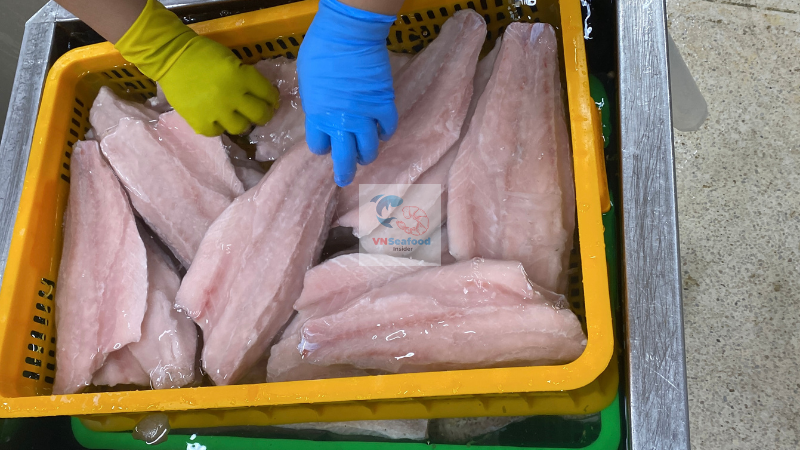
When that box arrives, put on your inspector hat. Start with the basics — what we call organoleptic evaluation. How does the fish look? Is the color consistent? Does it smell clean and oceanic, or does something feel off? Press the flesh. Good frozen barramundi fillets should bounce back, firm and resilient.
Check size and weight accuracy against your specifications. A supplier who can’t hit the target weight on a 10 kg sample probably won’t hit it on a 20-ton container either.
Measure the core temperature upon arrival. Frozen products should be at -18°C or below. Anything warmer raises questions about cold chain integrity.
Inspect packaging. Look for vacuum seal integrity, label accuracy, and proper box condition.
Now here’s where it gets serious. Send samples to a third-party accredited lab. Test for:
- Antibiotic residues (chloramphenicol, nitrofurans, fluoroquinolones)
- Heavy metals (mercury, lead, cadmium)
- Microbiological analysis (total plate count, E. coli, Salmonella, Listeria)
And don’t forget the cooking test. At the end of the day, someone is going to eat this fish. Cook it simply — pan-seared, steamed — and evaluate the taste, texture, and moisture retention. The plate doesn’t lie.
Red Flags During Sample Phase
Here are warning signs VNSeafoodInsider has learned to watch for — sometimes the hard way.
If your samples arrive looking flawless but production batches consistently fall short, that’s a classic bait-and-switch. Some suppliers reserve their best product for samples only.
A supplier who resists third-party testing? Walk away. Transparency is the baseline, not a bonus.
Watch for inconsistent specifications between what was agreed and what arrives. If they can’t get a sample right, imagine a full container.
Poor communication during the sample process is a preview of coming attractions. And any reluctance to provide traceability documentation — farm origin, processing dates, batch codes — should set off alarm bells. Traceability isn’t optional. It’s the backbone of seafood import compliance.
See more: Top 5 exotic vietnam white fish that the importers should consider
Critical Thing #2 — Master the Documentation Requirements
If sampling is the handshake, documentation is the contract. And in the international seafood trade, paperwork isn’t just bureaucracy — it’s your insurance policy. One missing certificate can hold your container at port, rack up demurrage fees, and spoil an entire shipment. VNSeafoodInsider has seen it happen more times than we’d like to admit.

Core Export Documents from Vietnam
Health Certificate (NAFIQAD)
Every legal barramundi export from Vietnam requires a health certificate issued by NAFIQAD — Vietnam’s National Agro-Forestry-Fisheries Quality Assurance Department. This certificate confirms the product meets food safety standards and is fit for human consumption. Always verify the certificate number and ensure it matches the specific shipment. Common issues include expired certificates or certificates issued for different product forms than what’s actually in the container.
Certificate of Origin (Form E/C/O)
This little document can save you thousands. A Certificate of Origin unlocks preferential tariff rates under trade agreements like the EVFTA (EU-Vietnam Free Trade Agreement), CPTPP, or bilateral arrangements. If you’re importing to Europe, for instance, the EVFTA can reduce your duty rate significantly. Without the right C/O form, you’ll pay standard rates. It directly affects your landed cost, so don’t treat it as an afterthought.
Commercial Documentation
The commercial invoice must detail product description, quantity, unit price, total value, and Incoterms used. Your packing list should match the invoice exactly — carton counts, net and gross weights, product codes. The Bill of Lading (B/L) is your title document. Decide early whether you’ll use original B/Ls or telex release based on your payment terms and port procedures. If buying on CIF terms, verify that the marine insurance certificate covers the full shipment value plus at least 10 percent.
Certification Documents You Must Verify
Beyond government-issued documents, you need to verify every certification your supplier claims to hold.
ASC certification (Aquaculture Stewardship Council) — check the certificate number directly on the ASC website. Same for BAP certification (Best Aquaculture Practices). Certificates expire, and some suppliers let them lapse quietly.
Verify the processing plant approval numbers. If you’re importing to the US, the Vietnamese facility must have an active FDA registration. For EU imports, the plant needs an EU establishment number listed in the TRACES system. No registration? No entry. Simple as that.
Laboratory test reports should be recent — typically less than three months old. Confirm the testing lab is accredited (ISO 17025 is the gold standard). And make sure the tests cover parameters required by your specific destination market.
Create Your Documentation Checklist
VNSeafoodInsider recommends creating a standardized pre-shipment verification template. Before production even begins, request draft copies of all documents. Review them carefully. Check for spelling errors, inconsistent product descriptions, wrong HS codes, and mismatched weights.
Common errors we catch early: health certificate listing “pangasius” instead of “barramundi,” incorrect consignee details, or Certificate of Origin with the wrong trade agreement form.
Know your market’s requirements for original versus digital documents. The US is increasingly digital-friendly. The EU still requires certain originals. Build your checklist once, and use it every single time.
Critical Thing #3 — Understand Import Regulations for Your Market
Here’s where things get real. The rules for importing barramundi fish from Vietnam look completely different depending on where you’re located. What flies in Dubai might get your shipment detained in Rotterdam. And what works in Los Angeles won’t necessarily pass in Tokyo. VNSeafoodInsider always tells new importers: know your own country’s rules before you even call a supplier.
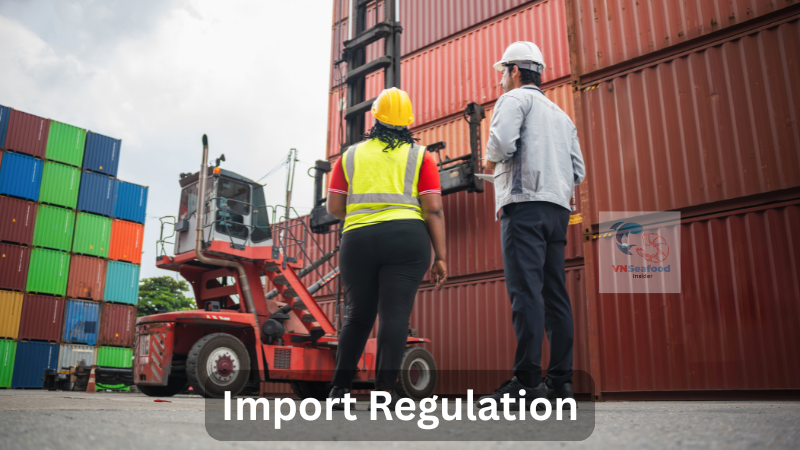
Importing Barramundi Fish from Vietnam to the United States
The United States is one of the largest markets for imported barramundi, and the FDA runs a tight ship.
You must file FDA Prior Notice before your shipment arrives — at least 2 to 4 hours before arrival by air, or 8 hours before arrival by sea. This filing includes product description, manufacturer details, country of origin, and anticipated arrival information. Miss this window, and your shipment gets refused at the border.
Your Vietnamese supplier’s processing facility must have an active FDA facility registration. They also need to operate under a HACCP plan that meets US standards.
Be aware that the FDA may examine your shipment — physically, through document review, or by pulling samples for lab analysis. First-time importers and first-time suppliers face higher scrutiny. Previous violations by your supplier can also trigger automatic detention.
For HTS code classification, barramundi typically falls under:
- 0302.89 for fresh barramundi
- 0303.89 for frozen whole fish
- 0304.89 for frozen barramundi fillets
Duty rates vary by product form, so classify correctly. And yes, Country of Origin Labeling (COOL) applies — your product must clearly state “Product of Vietnam.”
One piece of good news: the Seafood Import Monitoring Program (SIMP) does not currently apply to barramundi. That’s one less hoop to jump through.
Importing Barramundi Fish from Vietnam to the European Union
The EU has some of the strictest seafood import regulations in the world. That’s not a complaint — it’s just reality.
First, confirm the Vietnamese processing facility has an EU-approved establishment number. You can verify this on the European Commission’s website. No approval, no entry.
All shipments enter through designated Border Inspection Posts (BIP) and must be pre-notified through the TRACES system (Trade Control and Expert System). You’ll need to file a Common Entry Document (CED) before arrival. TRACES tracks the shipment from origin to entry point.
IUU Catch Certificates are required to combat illegal fishing. For farmed barramundi, you’ll need aquaculture production certificates and chain of custody documentation instead of traditional catch certificates.
Pay close attention to Maximum Residue Limits (MRLs). EU standards for antibiotic residues and contaminants are stricter than most other markets. Pre-shipment testing is not optional — it’s essential.
The EVFTA offers significant tariff advantages. Standard duty rates for frozen fish fillets can be around 7 to 15 percent, but EVFTA preferential rates may bring that down substantially or even to zero. Make sure your Certificate of Origin is in the correct EUR.1 format.
Other Key Markets
Australia: You’ll need a biosecurity import permit from the Department of Agriculture, Fisheries, and Forestry. Australia has strict biosecurity protocols, especially for aquatic products.
Japan: Expect rigorous antibiotic residue testing. Japan’s import notification system requires advanced documentation, and their tolerance for residues is among the lowest globally.
Middle East: Halal certification is mandatory for most GCC countries. Ensure your Vietnamese supplier holds valid halal certification from a recognized body. GCC standards also have specific labeling and quality requirements.
Critical Thing #4 — Negotiate Clear Terms and Understand True Costs
This is where dreams meet spreadsheets. Many importers fixate on the FOB price and think that’s the finish line. It’s not even halfway. The FOB price is where your costs begin, not where they end. Let VNSeafoodInsider walk you through what “true cost” really means when you import barramundi fish from Vietnam.
Understanding Incoterms for Barramundi Imports
FOB (Free on Board) is the most common Incoterm in Vietnamese seafood exports. Under FOB, the supplier handles everything up to loading the container onto the vessel at the Vietnamese port. From that point forward — ocean freight, insurance, customs, delivery — it’s all on you. Risk transfers once the goods are on board.
CFR/CNF (Cost and Freight) means the supplier arranges and pays for ocean freight to your destination port. But — and this catches people — insurance is still your responsibility. If the container sinks, you’re unprotected unless you’ve arranged your own coverage.
CIF (Cost, Insurance, Freight) is the most comprehensive option from the supplier’s side. They handle product, freight, and insurance. However, always verify the insurance coverage. Some suppliers take minimum coverage that won’t fully protect your investment. Make sure the policy covers at least 110 percent of the invoice value.
Calculate Your True Landed Cost
Here’s a rough framework for calculating what that barramundi actually costs when it hits your warehouse:
Cost Component Typical Range |
Product cost (FOB) | Base price per kg |
Ocean freight | $2,500–$5,500 per 40ft reefer |
Marine insurance | 0.3–0.5% of cargo value |
Import duties | Varies by market and HS code |
Customs clearance fees | $150–$500 |
Port handling charges | $300–$800 |
Inland transport | Varies by distance |
Cold storage | $0.03–$0.08 per kg/day |
Lab testing fees | $200–$1,000 per shipment |
Customs broker fees | $150–$400 |
Add it all up. That’s your real number. VNSeafoodInsider recommends building a detailed landed cost calculator for every shipment, because these numbers shift with fuel prices, exchange rates, and seasonal demand.
Payment Terms and Risk Management
For first-time orders, protect yourself. A Letter of Credit (L/C) is the safest option — your bank guarantees payment only when the supplier presents compliant documents. It costs more, but it’s worth the peace of mind.
Alternatively, a 30 percent deposit via T/T (telegraphic transfer) with 70 percent payable against a copy of shipping documents is standard in the industry.
As relationships mature, many importers move to straight 30/70 T/T terms. Some established partnerships even negotiate extended payment terms or use trade finance facilities. Trust is earned, not given.
Critical Thing #5 — Plan for Customs Clearance and Common Delays
You’ve done everything right. Samples approved. Documents are perfect. Container on the water. And then… it sits at port. For days. VNSeafoodInsider won’t sugarcoat it — customs clearance for imported seafood can be unpredictable. But with proper planning, you can tilt the odds heavily in your favor.
The Customs Clearance Process for Imported Barramundi
Pre-Arrival Preparation is everything. File your entry documents before the vessel arrives. Submit FDA Prior Notice (for US) or TRACES notification (for EU) on time. Have every document — commercial invoice, packing list, B/L, health certificate, C/O, lab reports — organized in digital format and ready for your customs broker.
Upon Arrival, the container is discharged at port. Customs authorities may conduct a document review, a physical examination, or both. They’ll verify temperatures, check seals, and compare documents against the actual cargo.
Common examination triggers include: being a first-time importer, using a first-time supplier, random selection algorithms, or — worst case — previous violations associated with the supplier or exporter. If your supplier has a history of FDA import alerts, expect extra scrutiny on every single shipment.
FDA and Border Inspection Procedures
In the US, FDA inspections range from simple document review to full physical examination with laboratory sampling. If they pull samples, your container sits until results come back — typically 1 to 5 business days, sometimes longer. A “May Proceed” status means you’re clear. Detention means trouble. Refusal means the product goes back or gets destroyed.
In the EU, shipments must enter through designated Border Inspection Posts. Physical and identity checks are standard. Laboratory analysis may be required, and the whole process can take 2 to 7 days. Patience is a virtue, but planning is a strategy.
Avoiding Common Customs Delays
The top causes of delays VNSeafoodInsider sees repeatedly:
- Incomplete or incorrect documentation (the number one culprit)
- Discrepancies between documents and actual cargo — wrong weights, wrong product codes
- Failed temperature checks — if the container recorded temperature spikes in transit, expect questions
- Certification issues — expired or unverifiable certificates
- Unpaid duties or fees
- Contamination detection during inspection
Prevention strategies that actually work:
Pre-clear all documents with your customs broker before the vessel arrives. Build a 3 to 5 day buffer into your delivery timeline. Maintain complete cold chain documentation from factory to port. Use customs brokers who specialize in seafood — generalists miss things specialists catch. And always, always have a contingency plan for detention. Know where nearby cold storage is. Know who to call.
Bonus: Working with a Customs Broker and Freight Forwarder
Why You Need Specialized Help
Seafood importation is not a DIY project for beginners. The regulations are complex, they change frequently, and the consequences of getting things wrong range from expensive to catastrophic. A specialized customs broker who understands FDA seafood regulations and cold chain logistics is not a cost — they’re an investment. They know which ports process seafood fastest, which inspectors are thorough, and how to resolve issues before they become crises.
Choosing the Right Partners
Look for brokers and freight forwarders with specific seafood import experience. Ask for references from other seafood importers. Verify they have strong relationships with FDA and customs officials at your port of entry. Port-specific knowledge matters enormously — what works at the Port of Miami is different from the Port of Los Angeles.
Ask about their technology and tracking capabilities. Can they give you real-time shipment visibility? How do they handle urgent issues at 2 AM? Understand their cost structure — flat fee versus percentage of shipment value — and choose what aligns with your volume.
Conclusion: Your Import Success Checklist
There you have it — five critical things every importer must know to successfully import barramundi fish from Vietnam. Let’s recap:
 Start with samples and verify quality — never skip this step, no matter how good the price looks
- Master documentation requirements — one missing document can cost you an entire shipment
- Understand your market’s regulations — US, EU, Australia, Japan — each has its own rulebook
- Calculate true landed costs — FOB is just the beginning of your cost story
- Plan for customs clearance and delays — expect the unexpected and build buffers
VNSeafoodInsider has watched importers succeed spectacularly and fail painfully. The difference almost always comes down to preparation. The fish is excellent. Vietnam’s barramundi aquaculture industry delivers world-class products. Your job is to get it from there to here — safely, legally, and profitably.
Next steps:
- Download our Import Documentation Checklist
- For supplier selection guidance, see our [Vietnam Barramundi Supplier Selection Guide]
- Understanding pricing? Read our [Vietnam Barramundi Wholesale Price Guide]
- Return to our comprehensive [Vietnam Barramundi Import Guide]
Ready to start importing? Request quotes from verified Vietnam barramundi suppliers today.
