
What Makes Japanese Scallop a Premium Product
Before we talk logistics, let’s talk about the product itself. Not all scallops are created equal, and the Japanese ones have earned their reputation the hard way — through cold water, slow growth, and decades of careful fishery management.
Yesso Scallop (Hokkaido) Characteristics and Quality Traits
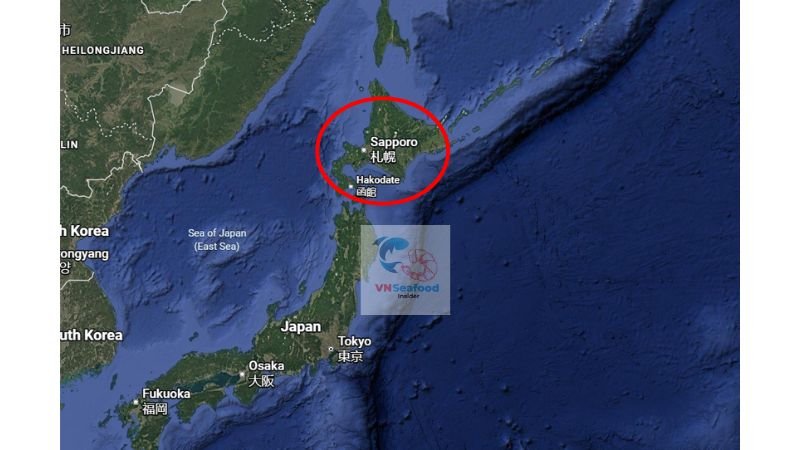
The star here is the Yesso scallop (Patinopecten yessoensis), harvested mainly from the cold waters off Hokkaido, Japan. This species grows slowly in frigid northern seas, and that slow growth is exactly what gives it that dense, sweet, almost buttery meat texture buyers pay a premium for.
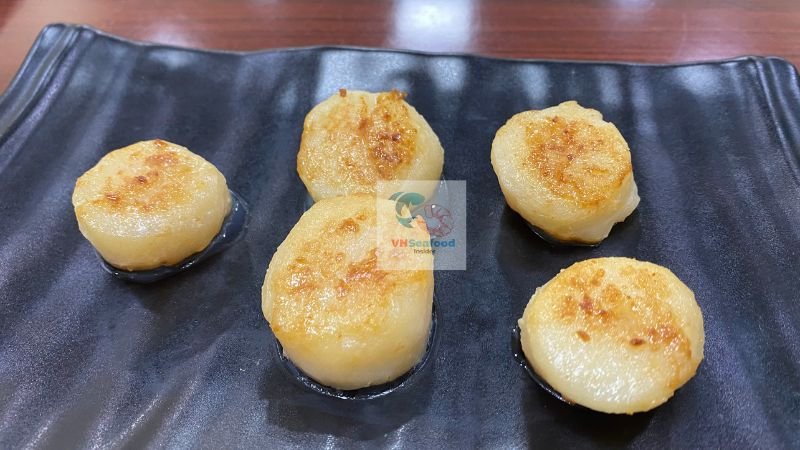
Hokkaido scallop meat tends to be larger, firmer, and noticeably sweeter than warm-water alternatives. The adductor muscle holds its shape well after cooking. It sears beautifully. It doesn’t shrink into a sad rubber disc. Chefs know this, which is why Yesso scallop shows up on high-end menus from Tokyo to New York.
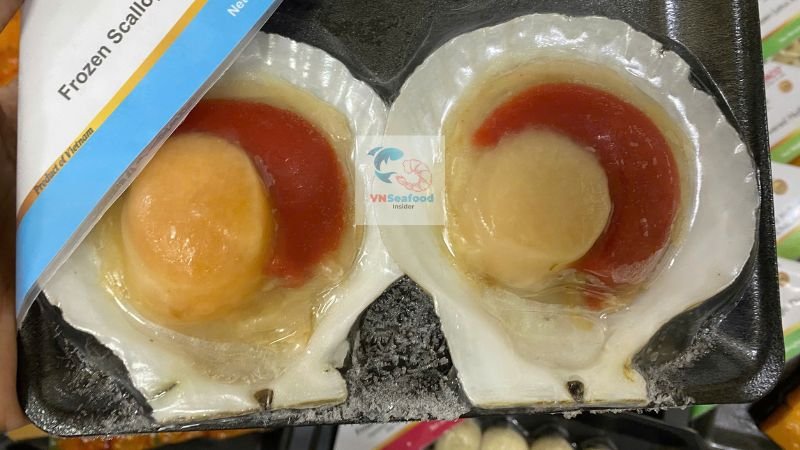
Color matters too. Premium Yesso scallop meat is creamy white to pale ivory, with minimal discoloration. The roe, when kept on, adds a coral-orange contrast that plates well and appeals strongly to European and Japanese consumers.
Why Japanese Scallop Commands Strong Global Demand
Reputation compounds over time. Japan built its scallop industry on strict harvest controls, clean waters, and consistent grading standards. Buyers trust it. That trust translates into pricing power.
Demand is also broad. Sashimi-grade markets want it raw. Foodservice wants it seared. Retail wants it in neat frozen packs. One species, many channels — and that flexibility keeps global demand steady even when other seafood categories wobble.
Why Japanese Scallop Processing Happens in Vietnam
Here’s the part that confuses people. If the scallop comes from Japan, why is it being processed six thousand kilometers away? The answer is part trade politics, part economics, and part plain old capacity math.
Disruption in Japan’s Domestic Scallop Supply Chain
Japan’s traditional scallop trade routes got shaken up in recent years. Established processing and re-export channels became unreliable, and Japanese suppliers suddenly needed alternative destinations for large volumes of raw material.
Vietnam stepped in. Not overnight, but quickly. Factories that already handled shrimp, squid, and other value-added seafood had the equipment, the labor, and the certifications to take on scallop work with relatively little retooling.
Vietnam’s Role in Shelling, Pre-Processing, and Freezing
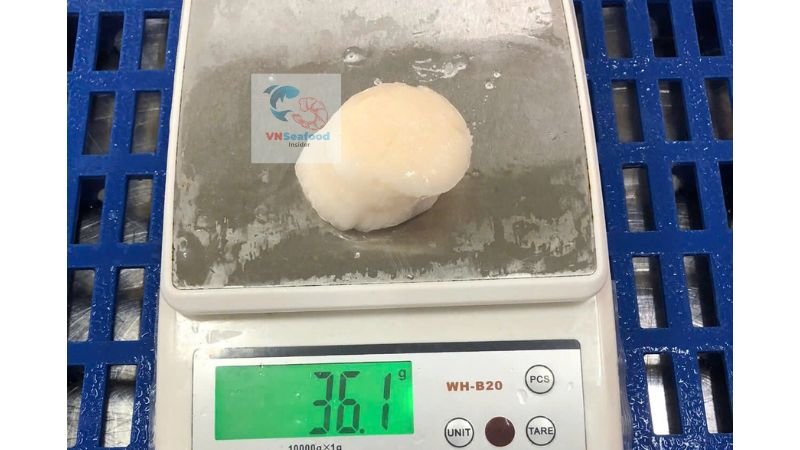
The core work is straightforward but labor-intensive. Raw scallops arrive from Japan. Vietnamese plants handle shelling, trimming, roe removal (or retention, depending on the order), grading by size, IQF freezing, glazing, and packing.
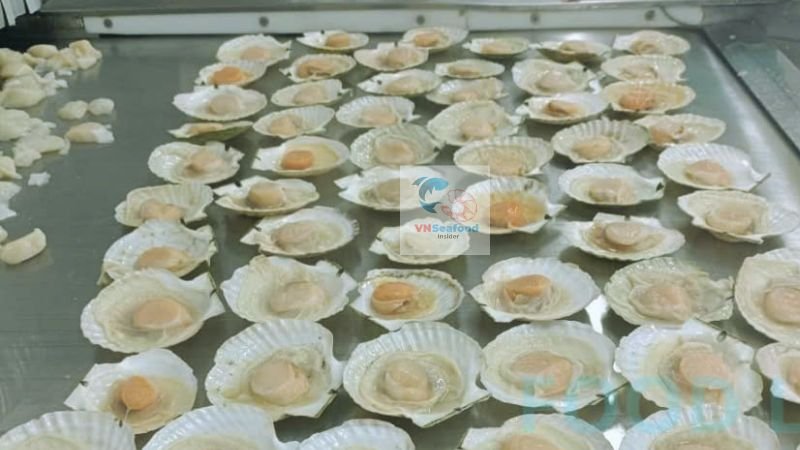
This is where Vietnam seafood processing shines. Hand-shelling scallops without damaging the adductor muscle takes skill, patience, and a lot of trained hands. Automation helps, but human judgment still wins on delicate species like this.
Cost, Labor, and Capacity Advantages of Vietnam Processing
Labor cost in Vietnam runs a fraction of Japanese domestic rates. That alone changes the math on a labor-heavy product. Add in existing cold storage infrastructure, established export logistics, and a workforce already trained on EU and US compliance standards, and the case gets stronger.
Capacity matters too. Vietnamese plants can scale up during peak seasons in ways smaller Japanese facilities simply can’t. When a large volume of raw material needs processing on a deadline, that flexibility is worth real money.
Vietnam Scallop Export Market Overview 2026
Numbers tell the story better than adjectives. Let’s look at what Vietnam scallop export figures have done over the past three years — because the growth curve here is genuinely striking.
Export Value Growth: 2024–6M2026
- 2024: USD 44 million
- 2025: USD 66 million
- First half of 2026: nearly USD 49 million
That 6M2026 figure represents a 141% increase versus the same period in 2025. Half a year, and Vietnam has already exported more scallop value than the entire year of 2024. If the second half holds anywhere near this pace, 2026 will roughly double the previous record.
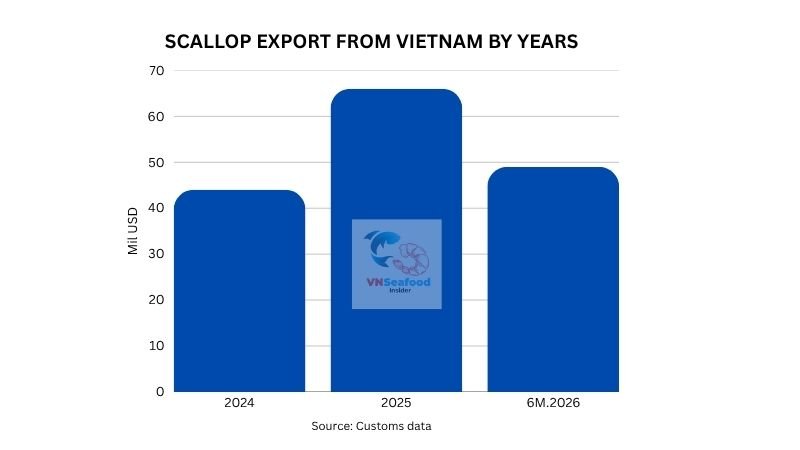
This isn’t a slow build. It’s a step change, and it’s driven almost entirely by processing demand rather than domestic harvest.
See more: Top 20 Biggest Seafood Companies in Vietnam
Key Import Markets: Japan, Australia, and the US
Three markets dominate. Japan, Australia, and the United States together account for nearly 56% of total Vietnamese scallop export value.
Japan leads with over USD 9 million in 6M2026, up 126%. Worth noting: Japan is both the top destination and the main raw material source. Product goes out, comes back processed, and goes out again.
Australia hit USD 9.3 million — an eye-watering 1,136% increase. That makes Australia the single largest contributor to absolute growth in the first half of 2026. It’s now essentially neck-and-neck with Japan by value.
The United States rounds out the top three, drawing on steady foodservice and retail demand for frozen scallop products.
What Rising Exports to Japan Reveal About Scallop Processing Vietnam Demand
Here’s a nuance worth pausing on. Rising exports to Japan don’t simply mean Japanese consumers are eating more scallops.
A big share of that value reflects toll processing — raw material shipped from Japan to Vietnam, shelled and frozen, then returned. So the export figure captures value-added work, not just final consumption. Understanding this distinction helps you read the market correctly instead of assuming a consumer boom that isn’t quite there.
How Japan-Vietnam Scallop Trade Flow Works
Let’s map the actual journey. Once you see the loop, the numbers above make a lot more sense.
Raw Material Import from Japan
It starts in Hokkaido. Whole scallops are harvested, chilled or frozen, and shipped to Vietnam under formal import channels. Legitimate processors bring material in through official import documentation — not gray-market routes — with health certificates and catch documentation intact.
This paperwork trail matters enormously later, when your buyer asks about origin.
Processing and Re-export Cycle
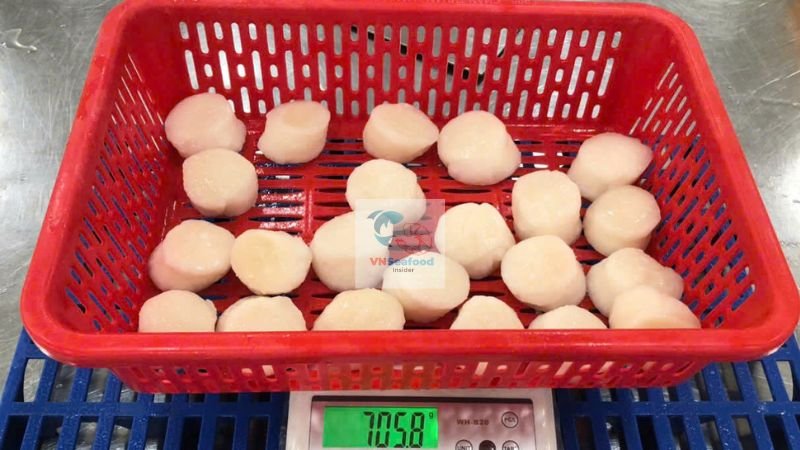
At the plant, scallops are thawed if needed, shelled, cleaned, graded, and refrozen using IQF technology. Depending on the order, they’re packed as meat-only or half-shell, roe-on or roe-off, in bulk or retail packs.
Finished goods then ship out — back to Japan, or onward to Australia, the US, Europe, and beyond. The whole cycle typically runs a few weeks, cold chain unbroken from start to finish.
Impact on Product Traceability and Origin Claims
This is where buyers need to pay attention. Country of origin for the raw material remains Japan. Country of processing is Vietnam. Labeling rules differ by destination market, so your documentation needs to reflect both accurately.
Get this wrong and you risk customs delays, relabeling costs, or worse. Get it right and you have a clean, defensible story for your customers.
Scallop Processing Standards in Vietnam
Standards separate the reliable plants from the risky ones. Here’s what a serious frozen scallop supplier should be able to demonstrate without hesitation.
Product Forms: Meat-Only and Half-Shell Options
Two main formats dominate the market:
Meat-only — just the adductor muscle, graded by count per pound or per kilogram. Clean, versatile, popular in foodservice.
Half-shell — scallop served on one shell, available roe-on or roe-off. Roe-on appeals to Japanese and European buyers. Roe-off suits North American and Australian preferences. Half-shell products present beautifully and command higher retail prices.
Good processors handle both without drama.
Import Compliance for Raw Material Sourcing
Ask to see import declarations, Japanese health certificates, and lot-level traceability records. A plant sourcing properly will produce these quickly. A plant that hesitates, or offers vague explanations, is telling you something important.
Quality Control and Cold Chain Requirements
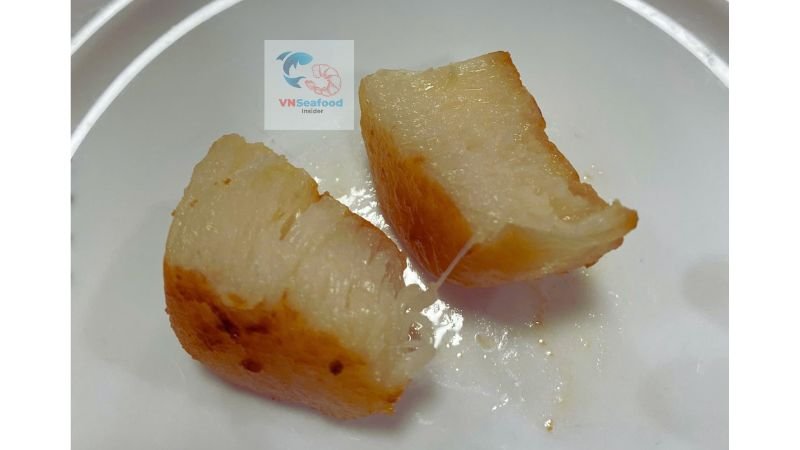
Scallop is unforgiving. Temperature abuse shows up as texture loss, drip, and off-flavors that no amount of glazing hides. Look for HACCP systems, documented CCP monitoring, metal detection, and continuous cold chain records from raw intake through container loading.
Glaze percentage should be declared honestly. If someone quotes a suspiciously low price, check the glaze first — that’s usually where the trick hides.
Choosing a Reliable Scallop Processing Partner in Vietnam
Sourcing well is less about finding the cheapest quote and more about avoiding expensive surprises. A few practical filters go a long way.
Verifying Raw Material Origin and Import Documentation
Start with paperwork. Request import records tied to specific production lots. Cross-check quantities — if a plant claims 100 tons of Japanese raw material but imported 30, the math is doing you a favor.
Processing Capability and Certification Checks
Confirm certifications relevant to your market: HACCP, BRCGS, IFS, or FDA registration for US shipments. Check EU approval numbers if you’re shipping there. Then confirm the plant actually runs scallop lines regularly, not just occasionally.
Role of Third-Party Inspection in Quality Assurance
Independent inspection is cheap insurance. Pre-shipment inspection seafood process checks on size grading, glaze, packing, and cold chain integrity cost a fraction of one rejected container. VNSeafoodInsider recommends third-party verification for any first-time supplier relationship — and periodically after that, just to keep everyone honest.
Frequently Asked Questions About Scallop Processing in Vietnam
A few questions come up in nearly every buyer conversation. Here are the short answers.
Is Vietnam-Processed Scallop Still Considered Japanese Origin?
The raw material origin stays in Japan. Vietnam is a processing country. How you label it depends on your destination market’s specific rules, so confirm requirements before printing packaging.
What Sizing and Packing Options Are Available?
Meat-only typically grades by count per pound (10/20, 20/30, 30/40, and so on). Half-shell grades by shell size. Packing ranges from 1 kg retail bags to 10 kg bulk cartons, with custom private label available at most established plants.
How Can Buyers Verify Supplier Reliability?
Request documentation, run a factory audit, order a trial shipment, and use third-party inspection. Reliable suppliers welcome scrutiny. The ones who resist it are answering your question already.
The scallop processing Vietnam story is still being written, and the 2026 numbers suggest the chapter is far from over. For buyers looking for vietnam seafood export guide, the combination of premium Japanese raw material and competitive Vietnamese processing is a genuinely compelling opportunity.
