
Vietnam Seafood Export 2026 – Early 2026 Performance at a Glance
The headline number is encouraging. Vietnam seafood exports in January and February 2026 reached approximately 1.7 billion USD, marking a solid 20% increase compared to the same period last year. That’s not a fluke — it reflects genuine demand recovery across multiple products and markets.

Now, before you pop the champagne, a bit of nuance. January carried the heavy lifting. February, as anyone familiar with the Vietnamese calendar knows, brought the Lunar New Year holiday. Factories slowed down. Workers went home. Shipments stalled. It happens every year, but it still shows up in the data as a visible dip.
Think of it this way: January was the sprinter, February was the water break. The race isn’t over — March and beyond should tell us whether this recovery has real legs or just borrowed energy.
For importers and distributors watching from abroad, VNSeafoodInsider sees early 2026 as a classic “recovery with headwinds” narrative. Good momentum, genuine demand, but enough uncertainty to keep everyone sharp.
Vietnam Seafood Export 2026 – Product-Level Breakdown
Not all products shared the same fortune. Let’s dig into the specifics, because the devil — and the opportunity — is always in the details.
Shrimp – Vietnam Seafood Export 2026’s Leading Driver
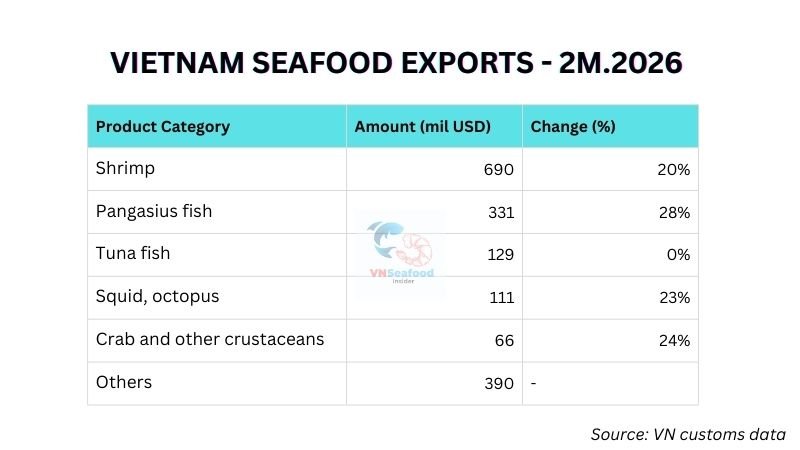
Shrimp remains the undisputed champion. In the first two months, Vietnamese shrimp exports hit roughly 690 million USD, up 20% year-on-year. No surprise there — shrimp has been Vietnam’s flagship seafood product for years, and 2026 is no different.
But here’s where it gets complicated, especially for the U.S. market. The U.S. Department of Commerce released final results for the 19th Period of Review (POR19) on anti-dumping duties for frozen Vietnamese shrimp. Two mandatory respondents — STAPIMEX and the Thong Thuan/TTCR group — received a steep 25.76% duty margin. Meanwhile, 22 other companies qualified for a separate rate of 4.58%.
What does this mean practically? Some U.S. importers may shift sourcing toward lower-duty suppliers or renegotiate pricing structures. The playing field just tilted, and smart buyers will adjust accordingly. For Vietnam shrimp exporters, diversifying beyond the American market has never felt more urgent.
See more: How to Source High Quality Shrimp from Vietnamese Shrimp Suppliers
Pangasius (Catfish) – Vietnam Seafood Export 2026’s Strong Comeback
If shrimp is the reliable workhorse, pangasius is the comeback kid. Pangasius exports reached 331 million USD in January–February, surging 28% compared to last year. After a turbulent 2024–2025 stretch, this feels like a breath of fresh air.
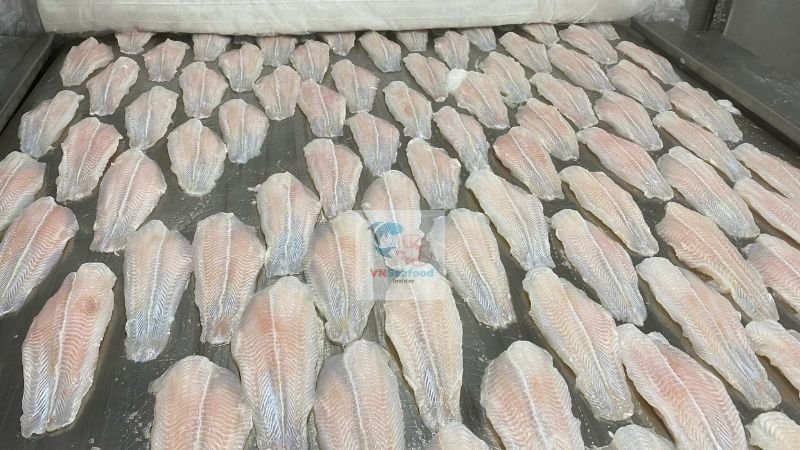
However — and there’s always a however — exports to the U.S. dropped by about 20%. The culprit? Ongoing Middle East tensions have disrupted shipping routes and created payment uncertainties, making American buyers more cautious about orders routed through affected corridors. Some pangasius fillets shipments to the Middle East itself have essentially paused.
The silver lining: growth in China, ASEAN, and EU markets is picking up the slack. Diversification isn’t just a buzzword anymore. It’s a survival strategy.
Tuna – A Warning Sign for Vietnam Seafood Export 2026
Here’s the segment that keeps VNSeafoodInsider up at night. Tuna exports came in at 129 million USD — essentially flat versus last year. February saw declines across major markets, with exports to the U.S. dropping nearly 26%.
The root cause? From January 1, 2026, NOAA’s MMPA regulations kicked in. Shipments from fisheries that failed to receive equivalency recognition now face potential import restrictions. Those with partial recognition must provide a Certification of Admissibility (COA) for each relevant shipment. This paperwork burden is real — it slows contracts, creates uncertainty, and makes importers think twice before signing new orders.
If you’re sourcing Vietnamese tuna, tighter documentation and transparent supply chains are no longer optional. They’re table stakes.
Squid, Mollusks, and Other Seafood – Broadening Vietnam Seafood Export 2026
Recovery isn’t a one-trick pony. Look at the broader portfolio:
- Squid and octopus: 111 million USD (+23%)
- Crabs and other crustaceans: 66 million USD (+24%)
- Bivalve mollusks: 51 million USD (+39% — the quiet star)
- Other mollusks: 1.4 million USD (+21%)
- Other seafood: 338 million USD (+19%)
The takeaway? Vietnam seafood export 2026 growth is spread across species. That’s healthy. When bivalve mollusks grow nearly 40%, you know demand is reaching beyond the usual suspects.
Vietnam Seafood Export 2026 – Key Market Developments
Products tell half the story. Markets tell the other half.
China and Hong Kong: The Fastest-Growing Outlet
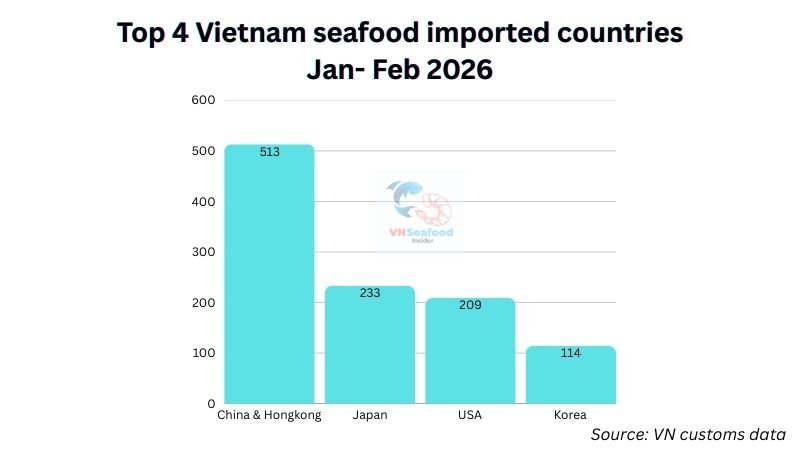
The big story here is China and Hong Kong, which together absorbed 513 million USD worth of Vietnamese seafood — a stunning 54% increase. February alone saw growth exceeding 80% year-on-year. Recovery in China’s food service sector, retail expansion, and favorable trade conditions are all fueling this surge.
For importers looking at a high-volume, relatively low-tariff hub, China remains the market to watch in Vietnam’s seafood trade 2026.
Japan – Stable but Steady Buyer
Japan posted 233 million USD in imports (+5%). Not flashy, but reassuringly consistent. Japanese buyers continue to prioritize food safety, traceability, and sustainability certifications — areas where Vietnam’s upgraded processing infrastructure increasingly shines.
Steady hands, steady orders. Sometimes that’s exactly what you need.
United States – Cautious Demand Shaping the Outlook
On paper, the U.S. market looks fine: 209 million USD, up 3%. But scratch the surface and you’ll find mixed signals. Shrimp held up, but tuna and pangasius declined.
The elephant in the room? After the Supreme Court struck down the previous tariff structure, Trump enacted a supplementary 10% import tariff on goods entering the U.S., effective February 24, 2026 — valid for 150 days. Worse, there’s talk of raising it to 15%. Add shrimp dumping duties and tuna COA requirements, and you’ve got a triple squeeze on costs and compliance.
U.S. importers are understandably cautious. Expect shorter contracts, tighter negotiations, and a premium on suppliers who can absorb or share risk.
South Korea – Slow but Stable Partner
South Korea came in at 114 million USD (+3%). Not explosive, but reliable. Korean seafood importers tend to be price-sensitive and favor convenience-oriented formats like ready-to-cook products. If you’re a Vietnamese exporter who can deliver on packaging innovation and competitive pricing, Korea offers solid mid-term potential.
Vietnam Seafood Export 2026 – Challenges Ahead
Recovery doesn’t mean smooth sailing. Here’s what VNSeafoodInsider is watching closely.
EU Competition and White-Fish Supply Dynamics
European white-fish supply is tightening, which theoretically benefits Vietnam. But China and Brazil are aggressively pushing tilapia and pangasius into the EU, intensifying competition in the mid-tier segment. Vietnamese pangasius exporters can differentiate through branding, traceability, and certifications like ASC and MSC — but they’ll need to act fast before shelf space gets crowded.
See more: Vietnamese Whitefish Alternatives: Is it a Solution to EU’s Seafood Shortage Crisis?
Middle East Tensions and Logistics Disruptions
The Iran–Israel conflict continues to rattle Red Sea and Gulf shipping routes. Insurance premiums are climbing. Many orders have been delayed or outright canceled. That causes seafood shipping disruption Middle East 2026. Vietnam’s seafood exports to the Middle East still grew year-on-year, but the month-on-month slowdown signals that buyers are becoming more risk-averse.

VNSeafoodInsider’s advice? Importers should explore alternative routing or partner with multi-hub logistics providers to mitigate disruption risks.
Policy Uncertainty in the U.S. Market
We’ve said it already, but it bears repeating: the combination of additional U.S. import tariffs, MMPA-related COA requirements, and shrimp anti-dumping duties creates a layered compliance and cost challenge. Pricing strategy, contract flexibility, and regulatory readiness will separate winners from losers in Vietnam seafood export 2026 deals with American buyers.
Why Vietnam Seafood Export 2026 Still Makes Sense for Importers
Quality-to-Price Advantage
Despite all the headwinds — tariffs, logistics risks, regulatory complexity — Vietnam seafood companies continues to deliver something increasingly rare in global trade: high quality at competitive prices. Shrimp, pangasius, and processed seafood from Vietnam meet stringent HACCP, BRC, and international sustainability standards. That combination of affordability and compliance is hard to beat.
Diversified Product and Market Portfolio
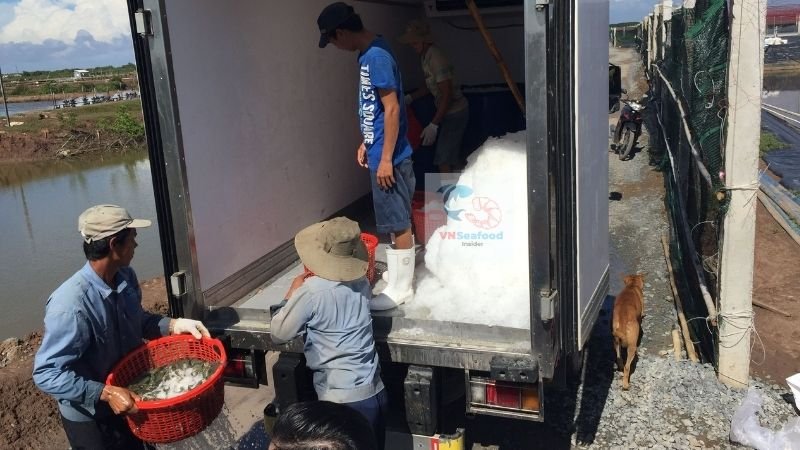
Early 2026 shows growth across shrimp, pangasius, squid, crabs, mollusks, and other categories. Markets are diversifying too — from China’s explosive growth to Japan’s steady hand to emerging opportunities in ASEAN and the EU. This breadth reduces over-reliance on any single product or country.
For importers and distributors, the math is straightforward. You can balance risk by mixing Vietnam-sourced seafood with other origins — using Vietnam for both volume and value. The early numbers say recovery is underway. The smart money says stay engaged, stay informed, and stay flexible.
VNSeafoodInsider will keep tracking every twist. Stay tuned.
