Vietnam Shrimp Export 2025 Performance Overview
Let’s start with the numbers that matter. The trajectory of Vietnam’s shrimp industry over the past four years tells a compelling story of resilience and strategic pivoting.
Four-Year Revenue Trajectory Shows Strong Recovery
Vietnam’s shrimp export journey has been anything but linear:
- 2022: $4.3 billion (establishing a strong baseline)
- 2023: $3.4 billion (a 21% contraction amid global economic headwinds)
- 2024: $3.9 billion (recovery phase begins with 15% growth)
- 2025: $4.6 billion (breakthrough year with 19% expansion)
The 2023 downturn reflected broader challenges—inflation-squeezed consumer spending in major markets, inventory overhang from the pandemic-era buying spree, and intense price competition from Ecuador. Many predicted a prolonged slump.
Instead, Vietnam shrimp export 2025 defied skeptics. The recovery accelerated as producers adapted. They invested in ASC and BAP certifications, diversified beyond traditional markets, and shifted product mix toward value-added offerings. Market stabilization came from strategic focus rather than wishful thinking.
What’s particularly encouraging? The growth came with improved margins in many segments. This wasn’t just about moving more volume—it was about moving smarter.
See more: The Untold Success of Sustainable Shrimp Farming Vietnam Eco-Innovations Importers Need to Know
Key Drivers Behind the 19% Growth in Vietnam Shrimp Export 2025
Several factors converged to power this impressive performance:
Market diversification proved critical. While the US remained important, explosive growth in China (+61%) and solid expansion in the EU (+19.9%) and CPTPP bloc (+28.8%) created multiple growth engines. When one market cooled, others heated up.
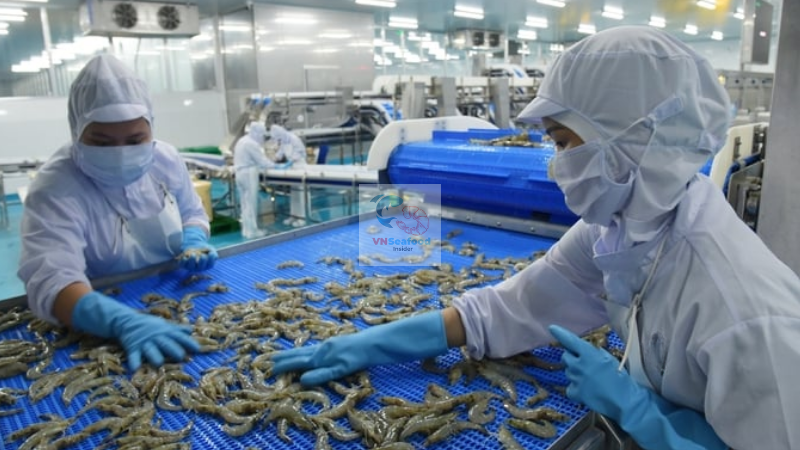
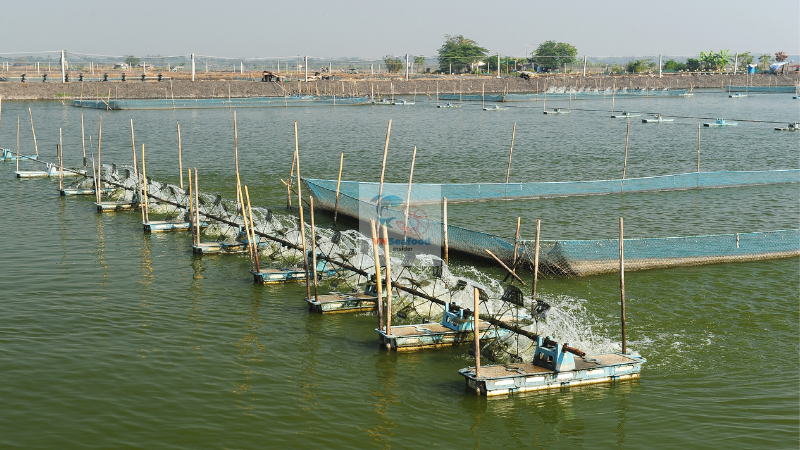
Production capacity expansion focused on quality over quantity. New farming zones adopted improved biosecurity protocols, reducing disease-related losses. Processing plants upgraded to meet stringent international standards, particularly for the EU market.
Certification momentum accelerated dramatically. More farms achieved ASC (Aquaculture Stewardship Council) and BAP (Best Aquaculture Practices) certification, opening doors to premium buyers. GlobalGAP compliance became standard rather than exception.
Strategic product positioning shifted the narrative. Instead of competing solely on price with Ecuador and India, Vietnamese vannamei shrimp carved out a quality-premium niche. Buyers willing to pay slightly more for traceability, consistency, and food safety found Vietnam increasingly attractive.
The global shrimp market landscape also worked in Vietnam’s favor. Ecuador faced its own production challenges, while India struggled with disease pressures in high-salinity zones, creating supply gaps Vietnam filled effectively.
Top Export Markets for Vietnam Shrimp in 2025
Geographic diversification wasn’t just smart—it was survival strategy. Let’s examine how different markets performed and what it means for sourcing decisions.
China Remains #1 Destination: $1.23B Revenue (+61%)
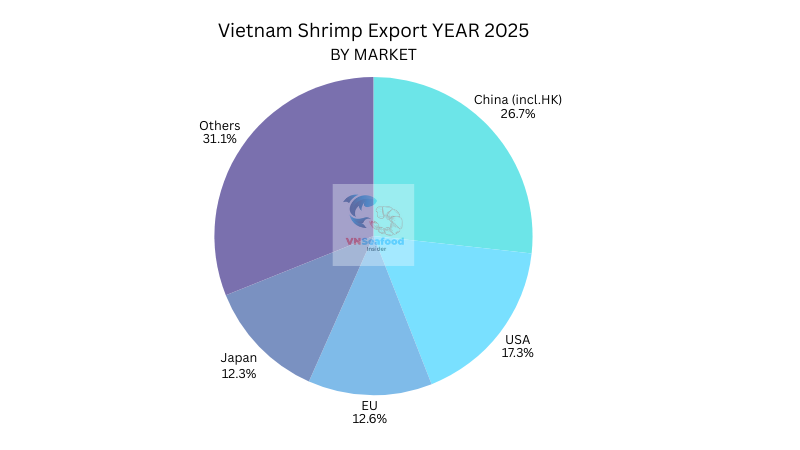
China’s dominance in Vietnam shrimp export 2025 intensified dramatically. The market generated $1.23 billion, capturing 26.6% of total export value with remarkable 60.8% growth. Including Hong Kong, the combined China-Hong Kong bloc reached $1.3 billion (28.3% market share, +55%).
These aren’t just impressive numbers—they reflect fundamental shifts in Chinese consumption patterns and trade dynamics.
The shrimp export markets in China show clear segmentation. The mid-tier segment faced pressure as inflation-conscious consumers cut back on discretionary spending. Many restaurants in second and third-tier cities reduced shrimp offerings or switched to cheaper alternatives.
But here’s the twist: premium and value-added segments thrived. Affluent Chinese consumers continued purchasing high-quality seafood, while convenience-focused products—breaded shrimp, ready-to-cook offerings, and pre-marinated items—gained traction among busy urban households.
This created sweet spots for Vietnamese exporters. Vietnamese lobster, premium black tiger shrimp, and large-count vannamei found eager buyers willing to pay for quality and food safety assurance. The post-pandemic emphasis on traceable, certified products played directly to Vietnam’s strengths.
Why do Chinese buyers prefer Vietnamese shrimp suppliers? Proximity matters—shorter supply chains mean fresher product and lower logistics costs. Established trade relationships and compatible business practices smooth transactions. And frankly, Vietnam’s reputation for consistent quality has improved significantly.
United States Market: Steady Growth Amid Tariff Concerns
The US market delivered $796 million in revenue (+5.4%), representing 17.2% of total exports. While growth appears modest compared to China’s explosion, context matters.
The first half of 2025 performed strongly as US buyers restocked after working through excess inventory. However, December saw sharp contraction (-16.4% compared to December 2024), signaling strategic pause.
Vietnam shrimp export 2025 to the US navigated complex tariff terrain. Exporters faced countervailing duties, anti-subsidy measures, and looming anti-dumping investigation risks. Late-year uncertainty about 2026 tariff policy prompted many US importers to reduce inventory positions and adopt wait-and-see approaches.
This created a paradox: demand for quality Vietnamese shrimp remained solid, but order timing shifted. Rather than large advance orders, buyers moved toward shorter lead times and smaller shipments—reducing their exposure to potential tariff changes.
For US importers seeking reliable Vietnamese suppliers, the value proposition centers on quality-price balance. Vietnam offers better traceability than many competitors, strong processing capabilities, and flexibility in product specifications. Even with potential tariff additions, these factors keep Vietnam competitive.
The long-term outlook? The US remains crucial for Vietnamese exporters, but the era of predictable, steady growth has given way to strategic agility requirements.
Japan and South Korea: Stable CPTPP Partners
Japan imported $565 million of Vietnamese shrimp (+9%), while South Korea took $360 million (+8%). These markets exemplify the stability benefits of CPTPP (Comprehensive and Progressive Agreement for Trans-Pacific Partnership) membership.
CPTPP advantages for Vietnamese shrimp exporters include preferential tariff rates, streamlined customs procedures, and mutual recognition of quality standards. This creates predictable trading environments—something increasingly valuable in volatile global markets.
Japanese buyers prioritize quality, traceability, and food safety above almost all other factors. They demand detailed documentation, consistent sizing, and immaculate processing standards. Vietnamese exporters who meet these requirements enjoy premium pricing and long-term relationships.
South Korean demand centers on frozen vannamei and value-added products for both retail and foodservice channels. The market appreciates Vietnam’s ability to customize products—specific glazing requirements, packaging formats, and labeling specifications.
Both markets showed consistent demand throughout 2025, providing revenue stability when other regions experienced volatility. This steady performance underscores the strategic importance of CPTPP relationships for Vietnamese exporters.
EU Market: 19.9% Growth Led by Germany and Belgium
The European Union generated $579.8 million (+19.9%), representing 12.6% of total Vietnam shrimp export 2025 revenue. This impressive growth came despite Europe’s economic challenges.
Country-level performance revealed strong momentum: Germany (+25.1%), Belgium (+22.3%), Netherlands (+8.2%), and UK (+6.6%) all expanded imports significantly.
EU emphasis on sustainability certifications aligned perfectly with Vietnam’s investment trajectory. ASC-certified farms and MSC chain-of-custody compliant processors gained preferential access to major European retailers. Organic shrimp, though still niche, found growing demand.
The EVFTA (EU-Vietnam Free Trade Agreement) delivered tangible benefits. Tariff reductions improved Vietnamese competitiveness versus non-FTA competitors, while regulatory alignment reduced friction in customs clearance.
European buyers increasingly view Vietnamese shrimp suppliers as preferable alternatives to Indian suppliers facing sustainability scrutiny and Ecuadorian suppliers with longer shipping times. Vietnam’s “sweet spot” position—quality above Ecuador, price below Norway—resonates with cost-conscious yet quality-minded European buyers.
CPTPP Bloc: Strategic Buffer Amid US Uncertainty
The entire CPTPP bloc generated $1.25 billion (+28.8%), accounting for 27.3% of total exports. This includes Japan mentioned earlier, plus Australia, Canada, Mexico, and other member states.
This bloc emerged as a strategic buffer during 2025’s US market uncertainty. When American importers hesitated amid tariff concerns, CPTPP markets absorbed additional Vietnamese production capacity.
The diversification benefits proved invaluable. Rather than depending heavily on one or two major markets, Vietnamese exporters cultivated multiple stable relationships. This spreads risk and reduces vulnerability to any single market’s policy changes or economic fluctuations.
For 2026 planning, the CPTPP foundation provides confidence. These markets may not offer explosive growth, but they deliver predictable demand—exactly what Vietnamese exporters need while navigating US market ambiguity.
See more: Top 5 shrimp processing companies in Vietnam
Product Composition: Vannamei Dominates Vietnam Shrimp Export 2025
Understanding product mix reveals where growth came from and where opportunities lie for specialized buyers.
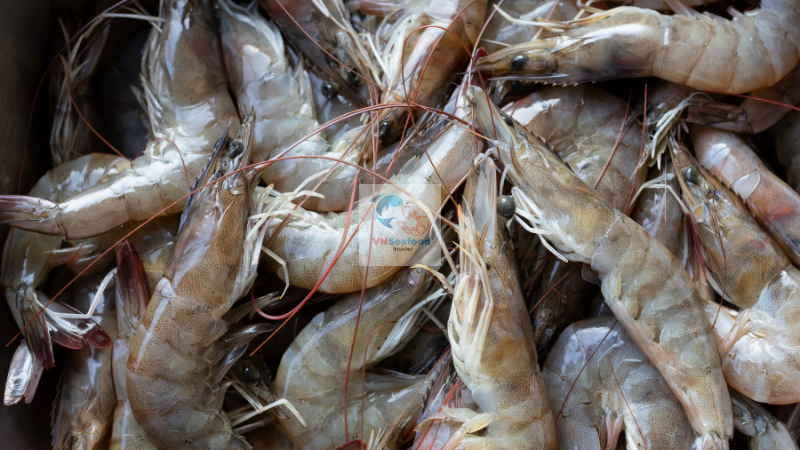
Whiteleg Shrimp (Vannamei) Remains Core Product
Vietnamese vannamei shrimp generated $2.98 billion, representing 64.6% of total exports with solid 9.6% growth. This dominance reflects global market preferences and Vietnam’s production strengths.
Vannamei’s appeal spans multiple factors: faster growth rates than black tiger, more predictable farming outcomes, and broad market acceptance. Vietnamese producers have mastered intensive vannamei cultivation, achieving competitive production costs while maintaining quality standards.
Processing capabilities distinguish Vietnam from pure commodity suppliers. Vietnamese facilities excel at HLSO (head-less, shell-on), PTO (peeled, tail-on), and cooked products. They handle custom specifications—IQF (individually quick frozen), block frozen, specific glazing percentages—with flexibility larger competitors often lack.
Why do global importers choose Vietnamese vannamei suppliers? Consistency ranks high. Orders arrive matching specifications reliably. Quality control systems catch issues before shipment. And communication works smoothly—Vietnamese exporters understand international buyer expectations.
The vannamei segment’s steady growth suggests continued strong demand across markets. This isn’t a boom-bust commodity but rather a stable foundation for Vietnam’s export industry.
Black Tiger Shrimp Shows Modest Growth
Black tiger shrimp contributed $452.9 million (9.8% of total) with modest 1.2% growth. While growth lagged other segments, black tiger maintains strategic importance.
Premium positioning differentiates black tiger from mass-market vannamei. The species commands higher prices due to superior texture, distinctive flavor, and cultural preferences in key Asian markets. Japanese buyers particularly value black tiger for sushi and sashimi applications.
Vietnamese black tiger production faces competition from Indian suppliers, but quality differentiation creates opportunities. Buyers seeking consistent sizing, minimal black spot issues, and certified sustainable sourcing increasingly turn to Vietnamese suppliers.
Target markets for black tiger include Japan’s high-end restaurant sector, Korean premium retail, and specialty importers serving ethnic communities worldwide. Price points typically run 20-40% above comparable-sized vannamei.
Other Shrimp Products Surge 67%: The Hidden Growth Driver
Here’s where Vietnam shrimp export 2025 revealed its most dynamic story. The “other shrimp” category surged nearly 67%, becoming the fastest-growing segment.
Digging deeper, live/fresh/frozen shrimp subcategories exploded 97.2%. This dramatic growth reflects booming lobster exports to China and specialty product demand.
Vietnamese lobster shipments to China captured upscale restaurant demand and affluent consumer appetite for premium seafood. Live lobster commands exceptional prices, and Vietnamese suppliers developed logistics capabilities to deliver quality product to Chinese markets quickly.
High-value specialty products also gained traction—ornamental shrimp species, specific regional varieties, and niche products for ethnic markets. While individually small, these collectively contributed meaningful revenue.
For niche importers, this segment offers opportunities. Vietnamese suppliers demonstrate increasing sophistication in handling specialized products, opening possibilities beyond commodity vannamei.
See more: How to Source High Quality Shrimp from Vietnamese Shrimp Suppliers
Global Shrimp Price Trends Impact Vietnam Export Strategy
Shrimp price trends in competing origins directly affect Vietnamese competitiveness. Let’s examine key developments shaping early 2026 dynamics.
India: Supply Shortage Pushes Prices Higher
Indian prices climbed for the second consecutive week in early 2026, with Andhra Pradesh seeing ₹5/kg increases across all sizes. This reflects acute off-season supply shortage.
Processing plants report minimal raw material availability, with new supply unlikely until mid-April. This creates temporary opportunity for Vietnamese exporters to capture orders from buyers facing Indian supply gaps.
Strategically, India’s production is shifting. Black tiger output may double to 120,000-150,000 tons in 2026, while vannamei holds at 850,000-900,000 tons. High-salinity zone farming challenges and US anti-dumping pressure drive this shift.
For Vietnamese shrimp suppliers, Indian supply tightness means less price competition in Q1 2026—a window to secure orders at favorable margins before Indian production ramps up seasonally.
China: Post-Lunar New Year Price Adjustment
Chinese domestic prices retreated after pre-holiday surges. Guangdong saw 60-count shrimp drop 3 CNY/kg, with smaller declines in Fujian and Shandong.
Industry analysts view this as typical short-term seasonal correction. Many farmers harvested in late December through early January, creating temporary supply increase precisely when holiday demand peaked then subsided.
Prices should stabilize and potentially rebound as the market enters Lunar New Year peak demand (around February 17). Post-holiday, normal consumption patterns resume, supporting price recovery.
This seasonal volatility doesn’t change the fundamental picture: Chinese demand for imported Vietnamese shrimp remains robust, particularly in premium segments where domestic supply can’t compete on quality.
Ecuador: Stable Pricing During Holiday Period
Ecuadorian farm-gate prices held mostly stable, with only 50/60 count rising slightly ($0.1/kg). European and US buyers focused on clearing existing inventory rather than placing large new orders during holiday periods.
Recovery is expected late January as normal commercial activity resumes. Ecuador remains Vietnam’s primary competitor in volume-focused segments, though Vietnamese quality advantages create differentiation.
The global shrimp market benefits from multiple significant suppliers—it prevents monopolistic pricing while ensuring supply reliability. For importers, this means strategic choices: Ecuador for cost-optimization, Vietnam for quality-premium positioning.
Thailand and Indonesia: Regional Price Divergence
Thailand saw prices ease slightly after post-flood recovery surges. The 80-count size dropped 5 baht/kg while others held steady. January production estimates of 12,000-16,000 tons remain below normal as southern regions continue rebuilding.
Indonesia maintained stable pricing despite logistics disruptions from flooding, elevated transport costs, and complications from Japan’s radiation testing requirements. The East Java market showed no price changes across 30-100 count sizes.
Regional price divergence creates arbitrage opportunities for savvy buyers. Vietnamese suppliers can capitalize on competitive positioning relative to Thai and Indonesian prices while offering superior consistency and certification levels.
Vietnam Shrimp Export 2026 Outlook and Challenges
Looking ahead, Vietnamese exporters and their international buyers face both opportunities and obstacles. Strategic navigation will determine who thrives.
US Anti-Dumping Tariff Risks Loom Large
The elephant in the room for Vietnam shrimp export strategy is potential US anti-dumping duties. Early 2026 concerns center on investigation expansion and duty rate increases.
If implemented, anti-dumping tariffs could significantly impact export volumes to the US market. Duties ranging from 15-40% would make Vietnamese shrimp less competitive versus domestic US production and non-tariffed origins.
Mitigation strategies for Vietnamese suppliers include:
- Market diversification acceleration: Reducing US dependence by growing EU, China, and CPTPP shares
- Value-added product emphasis: Duties may apply differently to processed versus commodity products
- Supply chain documentation: Thorough record-keeping to contest unfair duty determinations
- Joint advocacy: Industry association efforts to demonstrate fair trade practices
For US importers, prudent risk management suggests diversifying supplier relationships while maintaining Vietnamese partnerships. Complete abandonment of quality Vietnamese suppliers over tariff concerns may prove shortsighted if duties don’t materialize as feared or if competitors face similar measures.
China, EU, and CPTPP: Strategic Pillars of Growth
These three pillars are expected to drive Vietnam shrimp export growth in 2026, though short-term cyclical adjustments are likely.
China’s premium segment growth should continue as affluent consumers prioritize quality and food safety. However, mid-tier segments may face ongoing pressure if economic stimulus falls short. Net effect: continued growth, possibly at moderated rates (30-40% rather than 60%).
EU demand depends partly on economic recovery trajectory. If European consumer confidence improves, Vietnamese shrimp stands to benefit from EVFTA advantages and sustainability positioning. Realistic expectation: 10-15% growth maintaining 2025’s momentum.
CPTPP markets offer stability rather than explosive growth. Japan and other members provide steady demand base that buffers volatility elsewhere. Conservative forecast: 8-12% growth as relationships deepen.
Together, these pillars can offset potential US market challenges, though total 2026 growth may moderate from 2025’s exceptional 19% to a still-healthy 10-15% range.
Competing with Ecuador and India: The Quality Premium Strategy
Ecuador and India continue expanding production capacity with cost advantages from scale, climate, and labor costs. Vietnam cannot win a pure price war.
Instead, Vietnam’s competitive edge centers on quality over price. Strategic focus areas include:
Traceability and certifications: Maintaining and expanding ASC, BAP, and organic certifications that command premiums and access restricted markets. Investment in blockchain-based traceability systems may further differentiate Vietnamese suppliers.
Deep processing capabilities: Moving beyond commodity frozen shrimp to value-added products—marinated, breaded, ready-to-eat formats that capture more value chain margin. Processing sophistication creates barriers to entry competitors can’t easily replicate.
Premium product segments: Focusing on large-count vannamei, black tiger, and specialty species where quality differences are most visible and valued. Let competitors dominate small-count commodity segments while Vietnam owns premium tiers.
Value-added offerings: Customer service, flexible minimum orders, customized packaging, and reliable delivery schedules add value beyond the product itself. Relationship-based differentiation builds loyalty that pure price competition cannot break.
This strategic positioning in global supply chain recognizes Vietnam’s strengths and limitations. It’s not about being cheapest—it’s about delivering best value for buyers who prioritize quality, consistency, and reliability.
2026 Strategy for Shrimp Importers
For buyers and importers, 2026 strategic considerations include:
Capitalize on stable markets: If you serve EU, Chinese, or CPTPP markets, Vietnamese suppliers offer compelling advantages. Now is an excellent time to establish or deepen these partnerships.
Manage US market risks: If you import into the US, maintain dialogue with Vietnamese suppliers about tariff scenarios and contingency planning. Explore value-added products that may face lower duties. Don’t abandon proven suppliers prematurely, but diversify enough to manage risk.
Partner with certified suppliers: Prioritize Vietnamese shrimp suppliers holding recognized certifications. These aren’t just marketing badges—they indicate operational sophistication and quality management systems that reduce your risk.
Think long-term supply chain resilience: Cheapest price today may mean supply disruptions tomorrow. Vietnamese suppliers’ track record of consistency and investment in sustainable practices suggests reliability through market cycles.
See more: Top 5 exotic vietnam white fish that the importers should consider
Why Choose Vietnamese Shrimp Suppliers in 2026
As you evaluate sourcing decisions, consider these compelling benefits of partnering with Vietnamese shrimp suppliers:

Quality assurance and international certifications: Leading Vietnamese exporters hold ASC, BAP, and GlobalGAP certifications recognized worldwide. These verify sustainable farming practices, food safety protocols, and traceability systems. For importers facing retailer requirements or consumer scrutiny, certified Vietnamese suppliers simplify compliance.
Competitive pricing with premium quality positioning: Vietnam occupies the valuable middle ground—higher quality than pure commodity suppliers but more accessible pricing than premium origins like Norway or domestic US production. This sweet spot serves buyers seeking optimal value rather than cheapest price.
Diverse product range: From commodity vannamei to premium black tiger to specialty lobster, Vietnamese suppliers offer breadth. Many exporters can fulfill multiple product needs, simplifying your supplier management.
Processing capabilities and customization: Vietnamese facilities handle complex specifications—specific butterfly cuts, unique breading formulations, custom packaging formats. Flexibility that larger, more rigid competitors struggle to match.
Reliable supply chain and logistics infrastructure: Vietnam’s export infrastructure has matured significantly. Container availability, cold chain integrity, and documentation accuracy meet international standards. Shipments arrive as expected.
Government support for sustainable aquaculture: Vietnamese authorities actively promote sustainable practices through technical support, research funding, and regulatory frameworks. This governmental commitment signals long-term industry viability.
Traceability systems meeting EU and US requirements: Leading exporters implement farm-to-fork traceability, documenting every stage from pond to port. This transparency addresses regulatory requirements and consumer demands in sophisticated markets.
These aren’t theoretical advantages—they’re practical benefits Vietnamese suppliers deliver daily to importers worldwide.
Conclusion for Vietnam Shrimp Export Outlook
Vietnam shrimp export 2025 achievement of $4.6 billion with 19% growth represents more than statistical success. It demonstrates strategic maturity, market diversification, and quality positioning that positions Vietnam as a resilient global supplier.
The geographic balance—explosive China growth (+61%), solid EU expansion (+19.9%), stable CPTPP performance (+28.8%), and cautious US growth (+5.4%)—creates multiple engines driving the industry forward. Product mix evolution, with Vietnamese vannamei shrimp providing steady foundation while specialty products surge 67%, shows sophisticated market understanding.
Looking toward 2026, challenges exist—US tariff uncertainty primarily—but strategic pillars remain strong. China, EU, and CPTPP markets offer solid growth prospects. Vietnam’s quality-premium positioning differentiates effectively from pure commodity competitors.
For importers and buyers, Vietnamese suppliers merit serious consideration. The combination of quality certifications, processing flexibility, competitive pricing, and supply reliability addresses key sourcing priorities. Whether you’re establishing new supplier relationships or evaluating existing ones, Vietnam’s shrimp industry has demonstrated both capability and resilience.
The global shrimp market benefits from Vietnam’s ascent—more competition drives innovation, quality improvements, and fair pricing. As 2026 unfolds, VNSeafoodInsider will continue tracking developments, analyzing trends, and providing the insights you need to navigate this dynamic industry successfully.
Ready to explore partnerships with certified Vietnamese shrimp suppliers? The opportunities are substantial for buyers who recognize quality value over price-only considerations.
