
Overview of Vietnam Shrimp Export Challenges 2026
Before diving into the specifics, it helps to understand the bigger picture. Vietnam’s shrimp sector is not just large. It is strategically important to global seafood trade. And the early months of 2026 have already painted a complicated canvas.
Why Vietnam Matters in the Global Shrimp Supply Chain
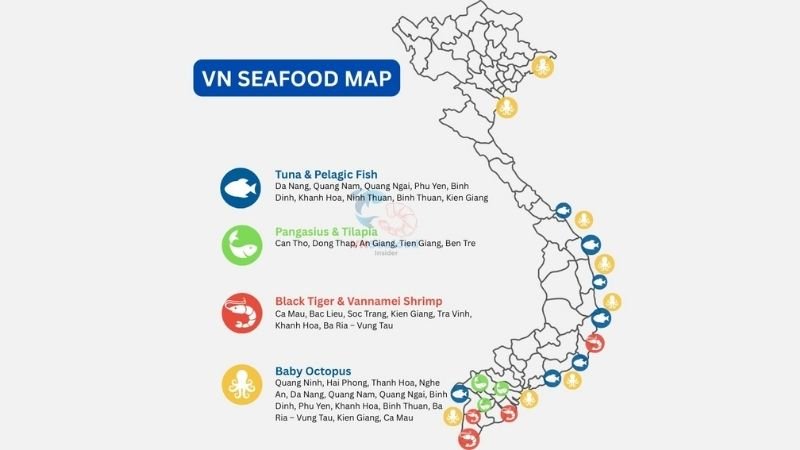
Vietnam consistently ranks among the top three shrimp exporting countries worldwide. The Mekong Delta alone produces hundreds of thousands of tons of shrimp annually. From vannamei to black tiger to the booming lobster segment, Vietnamese suppliers serve every major import market. EU buyers, Japanese retailers, Chinese distributors, and American foodservice companies all depend on this origin.
Simply put, a sentence I ussually joke with our customers: when Vietnam sneezes, the global shrimp market catches a cold.
Key Market Highlights in Early 2026
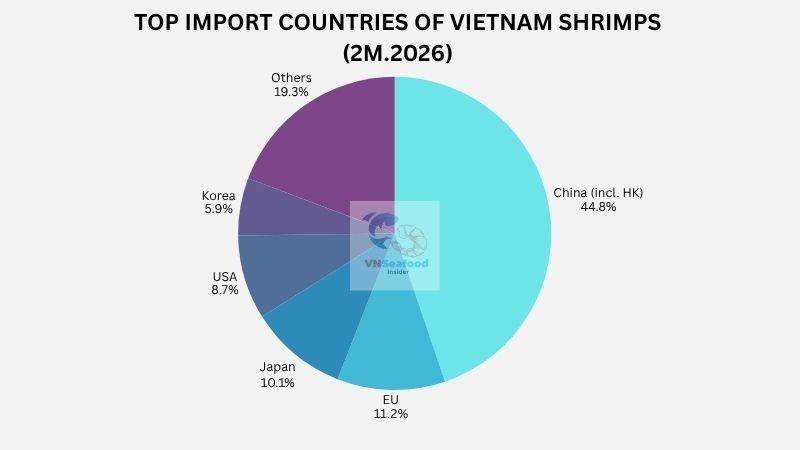
Here is the headline number. Vietnam shrimp exports in the first two months of 2026 reached $690 million. That is a solid 20% increase over the same period in 2025. China and Hong Kong led the charge, absorbing $309 million worth of shrimp, up a remarkable 58%. The EU followed at $77 million, up 28%.
But not everything glitters. Exports to the US dropped 22%, landing at just $60 million. South Korea also declined 14%. These divergent trends tell us that Vietnam shrimp export challenges 2026 are not uniform. They vary sharply by market, by product, and by regulatory environment.
Vietnam Shrimp Export Challenges 2026 from a Regulatory Perspective
Regulations might sound boring. Trust us, they are anything but boring when your container gets stuck at port. Regulatory hurdles have become one of the most pressing concerns for importers sourcing Vietnamese shrimp this year.
Residue Monitoring Program and Certification Issues
The National Fisheries Quality Assurance and Veterinary Directorate (NAFIQPM) launched its 2026 residue monitoring program for aquaculture products in southern Vietnam. According to Official Letter 53/CCNB-NV dated January 21, 2026, several key shrimp species including black tiger shrimp, white leg shrimp, and banana shrimp were not fully covered in monitoring plans at critical farming zones around Ca Mau and neighboring provinces.
This gap sounds technical. Its consequences are very real.
Impact on Health Certificates and EU Market Access
Without adequate residue monitoring coverage, raw shrimp from these areas cannot receive the veterinary health certificates required by EU regulations. No certificate means no export. Shipments get cancelled. Inventory piles up in cold storage. Costs mount.
For importers, this translates directly into delayed deliveries, broken contracts, and frantic searches for alternative supply. If you source shrimp from southern Vietnam for European markets, VNSeafoodInsider strongly recommends verifying your supplier’s monitoring zone status before confirming orders.
Recent Policy Adjustments and What Importers Should Know
Vietnamese authorities are aware of the problem and working to expand monitoring coverage. However, bureaucratic timelines do not always match commercial deadlines. Importers should maintain close communication with their Vietnamese partners, request updated compliance documentation, and consider diversifying sourcing zones as a buffer against certification delays.
Vietnam Shrimp Export Challenges 2026 at Farm Level
Moving from the office to the pond, the story gets muddier. Literally. The 2026 farming season started with optimism but quickly ran into familiar and some unfamiliar obstacles.
Early Start of the 2026 Crop and Weather Risks
Farmers in the Mekong Delta launched the 2026 brackish water shrimp crop earlier than usual. High prices throughout 2025 and tight global supply made everyone eager to get shrimp in the water fast.

Then nature had other plans. Unseasonal rainfall and abnormal tidal surges flooded ponds in coastal provinces like Ca Mau, Bac Lieu, and Soc Trang. Salinity levels swung wildly. Some farmers lost entire stocking cycles before the season truly began. It was a harsh reminder that shrimp farming risks do not care about market enthusiasm.
Cost Pressure and Shrimp Raw Material Price Volatility
Here is the squeeze. Shrimp raw material prices at the farm gate dropped sharply in early 2026 compared to late 2025. Meanwhile, input costs kept climbing. Feed prices rose. Seed costs increased. Electricity, labor, and chemicals all trended upward.
The result is a painful margin compression for farmers. When farmers lose money, they reduce stocking. When they reduce stocking, supply tightens later in the year. Importers should keep this dynamic in mind when planning Q3 and Q4 procurement.
Disease Risks: EHP and Biosecurity Concerns
The Vietnam shrimp parasites – microsporidian parasite EHP (Enterocytozoon hepatopenaei) continued to resurface in ponds across the delta. EHP does not kill shrimp outright. Instead, it causes slow growth and poor feed conversion. Shrimp take longer to reach market size. Survival rates drop. Production costs per kilogram rise.
For importers, EHP means potential supply shortfalls and inconsistent sizing. It is one of those quiet Vietnam shrimp export challenges 2026 that does not make headlines but absolutely affects what arrives at your warehouse.
See more: How to Source High Quality Shrimp from Vietnamese Shrimp Suppliers
Vietnam Shrimp Export Challenges 2026 in Global Markets
Let us zoom out from Vietnam and look at where the shrimp actually goes. The demand landscape in 2026 is shifting, and not every market is moving in the same direction.
Export Performance by Market: Where Demand Is Coming From
The star performer is undoubtedly China and Hong Kong. At $309 million in just two months, this market now accounts for roughly 45% of Vietnam’s total shrimp export value. Lobster exports, surging 65% to $259 million, are driving much of this growth.
The EU remains a strong and growing destination at $77 million, up 28%. Japan held steady at $70 million with modest 1% growth. These markets value quality, traceability, and food safety, areas where Vietnam can compete effectively.
US Tariffs, Anti-Dumping Duties and Market Headwinds
The US market tells a different story. Exports fell 22% to $60 million. Anti-dumping duties on Vietnamese shrimp continue to weigh heavily. Combined with broader tariff pressures and a competitive pricing environment dominated by cheaper origins, the American market has become increasingly difficult for Vietnamese exporters.
If you are a US-based importer, this does not mean abandoning Vietnam. It means being more selective. Focus on value-added and specialty products where Vietnam’s processing capability justifies a price premium.
EU, China, Japan and Korea: Different Risk Profiles for Importers
Each market carries its own risk profile. The EU demands rigorous compliance. China offers volume but with volatile demand cycles. Japan requires consistency and premium quality. Korea, down 14% to $41 million, faces competitive pressure from Indian and Ecuadorian shrimp.
Smart importers do not treat these markets the same. VNSeafoodInsider advises tailoring your sourcing strategy to each destination’s specific requirements and risk tolerance.
Vietnam Shrimp Export Challenges 2026 vs Ecuador and India
No discussion of Vietnam shrimp industry challenges is complete without acknowledging the competition. Ecuador and India are not standing still.
How Ecuador Reshapes Global Shrimp Pricing
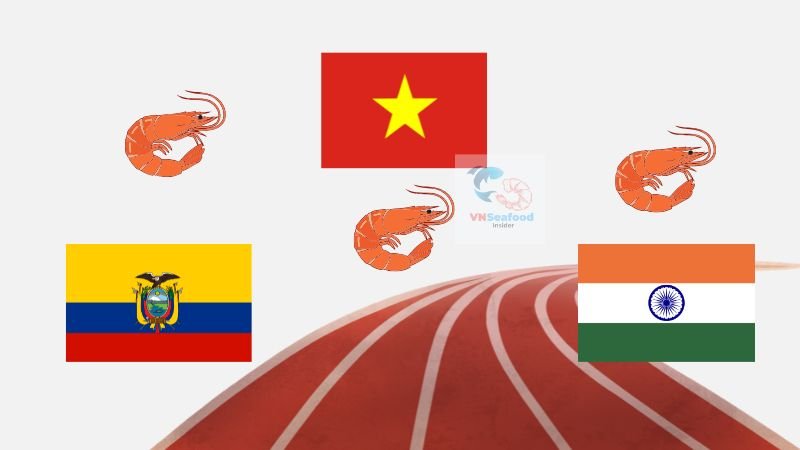
Ecuador exported 276 million pounds of shrimp in January 2026 alone, up 23% year-over-year. Full-year 2025 exports hit approximately $7.47 billion. Ecuador’s advantage is simple. Massive scale and low production costs. This keeps downward pressure on global shrimp prices and forces Vietnam to compete on quality rather than volume.
India’s Growth in Black Tiger Shrimp and Its Impact
India’s black tiger shrimp exports exploded from 6,059 tons in 2020 to 58,221 tons in 2025. That is nearly a tenfold increase in five years. Vietnam’s black tiger production, hovering around 260,000 to 310,000 tons annually, is much larger in absolute terms. But India is aggressively capturing market share in the EU, US, and Japan.
For importers who traditionally sourced black tiger shrimp from Vietnam, India now presents a credible alternative. This intensifies pricing pressure on Vietnamese suppliers.
Competitive Position of Vietnam for Importers
Vietnam’s edge lies in processing sophistication, product diversity, and established relationships with demanding markets. The country excels at value-added shrimp products like breaded shrimp, skewered shrimp, and ready-to-cook items. Ecuador and India are catching up, but Vietnam still holds a lead in this segment.
Vietnam Shrimp Export Challenges 2026 and Their Impacts on Farmers and Processors
The challenges described above do not exist in a vacuum. They ripple through the entire supply chain, from pond to shrimp processing plant.
Squeezed Margins and Farm-Level Consolidation
With input costs rising and farm-gate prices falling, small-scale farmers face a survival test. Many are reducing pond area or exiting the industry entirely. This gradual consolidation may improve efficiency over time, but in the short term, it reduces the raw material base available to processors.
Processing Plants Facing Order Volatility and Compliance Costs
Processing companies are dealing with order cancellations, shifting buyer demands, and rising costs for food safety certifications like ASC, BAP, and MSC. Each certification audit, each lab test, each traceability system upgrade adds cost. These expenses eventually find their way into FOB prices.
Long-Term Structural Issues Behind Vietnam Shrimp Export Challenges 2026
Beneath the surface, structural issues persist. Fragmented farming, inconsistent seed quality, limited cold chain infrastructure in some regions, and bureaucratic bottlenecks in inspection and certification all contribute to the recurring nature of these challenges. They will not be solved in one season.
Opportunities Hidden Behind Vietnam Shrimp Export Challenges 2026
Now for the good news. Every challenge carries an opportunity if you know where to look.
Rising Demand in Asia and High-Value Segments
The explosive growth of shrimp exports to China and Hong Kong signals a structural demand shift. Lobster exports from Vietnam, up 65%, highlight how premium segments can generate outsized returns. Importers who position themselves in high-value niches stand to benefit enormously.
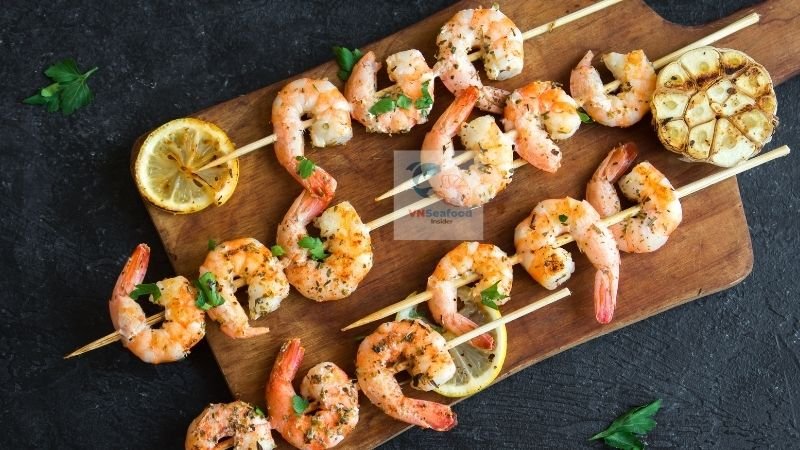
Value-Added Shrimp Products as a Differentiator
Vietnam’s processing industry is among the most advanced in Southeast Asia. The ability to produce complex, ready-to-eat, and branded shrimp products gives Vietnamese suppliers a competitive moat. If you are an importer competing on more than just price, Vietnam remains your best partner.
Sustainability, Traceability and Long-Term Partnerships
Increasingly, end consumers and retailers demand proof of sustainable shrimp sourcing. Vietnam’s growing adoption of ASC and BAP certifications, combined with improving traceability systems, positions the origin well for markets that prioritize responsible procurement. Long-term partnerships with certified Vietnamese suppliers can become a genuine competitive advantage.
How Importers Can Navigate Vietnam Shrimp Export Challenges 2026
So, what should you actually do? Here is VNSeafoodInsider’s practical advice.
First, verify your supplier’s residue monitoring status and certification compliance before every order, especially for EU-bound shipments. Do not assume last year’s documentation is still valid.
Second, diversify your sourcing across multiple provinces and farming zones. Concentration risk is real when weather events or disease outbreaks hit a single region.
Third, build buffer inventory for Q3 and Q4. Farm-level challenges in early 2026 may tighten supply later in the year. Planning ahead beats scrambling later.
Fourth, explore value-added and processed shrimp categories where Vietnam excels and where margin pressure from Ecuador and India is less intense.
Fifth, invest in relationships. The importers who weather storms best are those with deep, trust-based partnerships with their Vietnamese suppliers. Visit the farms. Meet the processors. Understand their challenges. That understanding becomes your edge.
The Vietnam shrimp export challenges 2026 are real, but they are navigable. With the right information, the right partners, and the right strategy, this year can be one of significant opportunities. VNSeafoodInsider will keep tracking the data and sharing the insights of Vietnam shrimp export. Stay close, and stay informed.
