
Vietnam Tuna Industry Overview — Scale, Species, and Global Position
Before you evaluate any supplier quote, you need to understand where Vietnam actually sits in the global tuna picture. It’s not the biggest player, but it punches well above its weight in certain segments — and knowing which ones matters for your sourcing decisions.
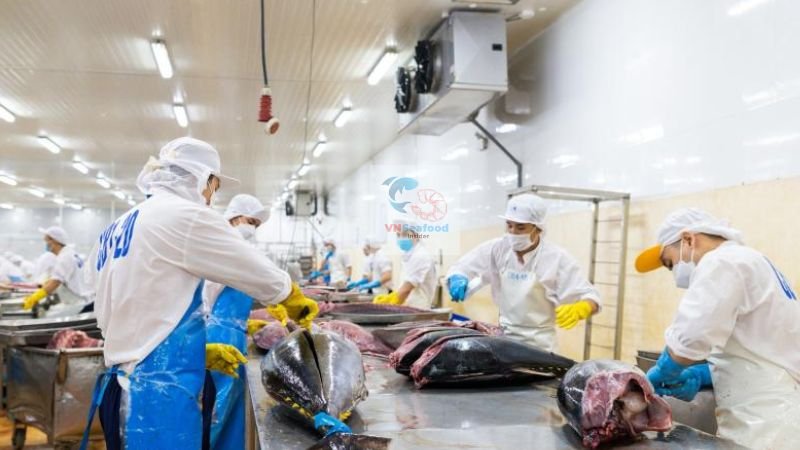
Where Vietnam Tuna Fits in the Global Tuna Supply Chain
Global tuna imports hover around 1.75–1.8 million tons annually, with the canned tuna market alone estimated at roughly $34–35 billion in 2025. Thailand, Ecuador, China, and Spain dominate the export leaderboard. Vietnam? It’s not at the very top — but it has carved out a serious niche.
Vietnamese tuna exporters excel particularly in frozen loin, steak, fillet, and increasingly in value-added products like ready-to-eat and retail-packed formats. The country is currently the second-largest tuna supplier to the United States, trailing only Thailand. That’s not a footnote — that’s a structural position in the world’s biggest import market.
The fishing grounds along Vietnam’s south-central coast — Binh Dinh, Phu Yen, Khanh Hoa — provide relatively stable raw material access, which matters when global skipjack supplies tighten (as they did through much of 2025).
Key Tuna Species Exported from Vietnam: Yellowfin, Skipjack, Bigeye and Albacore
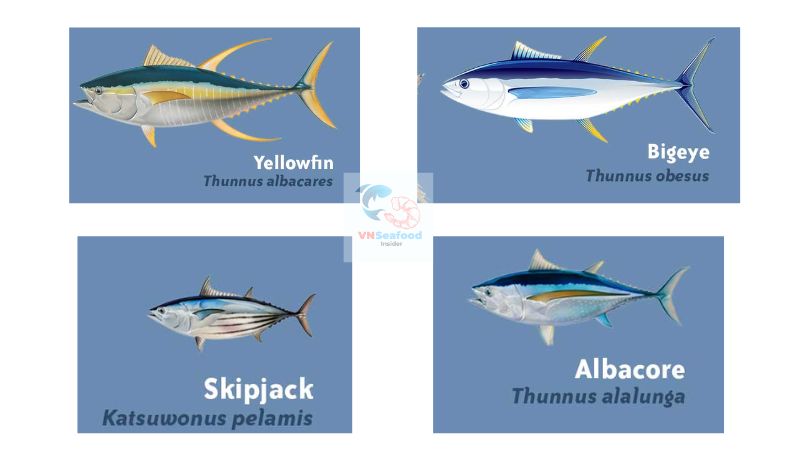
4 species drive the export engine:
- Yellowfin tuna (Thunnus albacares): The flagship. Beautiful meat color, firm texture, versatile across loin, steak, fillet, and even sashimi applications. This is where Vietnam’s competitive edge is sharpest.
- Skipjack tuna (Katsuwonus pelamis): The workhorse of canned and processed products. Global skipjack prices have been climbing due to lower catches in key fishing grounds, squeezing margins on canned products.
- Bigeye tuna (Thunnus obesus): Smaller volumes but valued for premium sashimi-grade applications, particularly for the Japanese market.
- Albacore tuna (Thunnus alalunga): Albacore is the only tuna species legally permitted to be labeled “white tuna” in the United States, and that single regulatory distinction shapes its entire market positioning. While it accounts for roughly 4% of global tuna catch — small compared to skipjack and yellowfin — its pale, firm flesh commands a dedicated buyer segment that no other species can substitute.
If you’re importing for retail or foodservice, yellowfin tuna from Vietnam is likely your starting point. If canned products are your game, skipjack availability and pricing will be your main concern.
Vietnam Tuna Export Revenue and Growth Trajectory
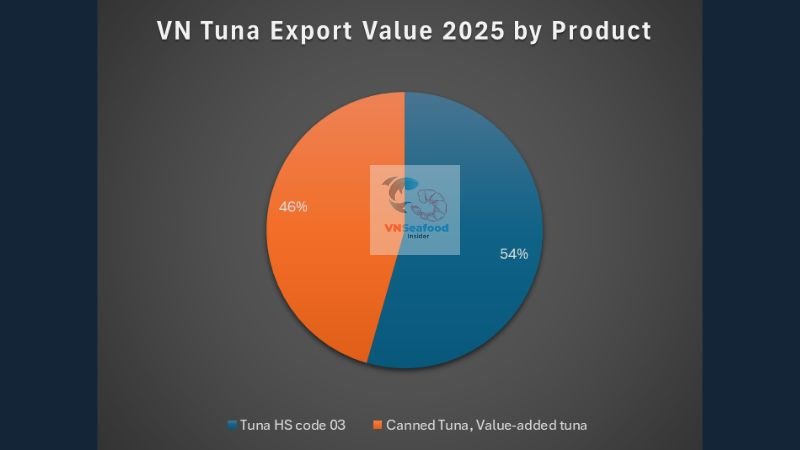
Here’s where the numbers tell an interesting story. Vietnam tuna exports in 2025 reached approximately $924 million — down about 7% from 2024. That sounds like a retreat, but look closer: the product mix shifted toward higher-value segments. Less bulk, more retail-ready. Less commodity, more margin.
Then 4 months in 2026 hit: over $289 million. That’s a 4.8% decline compared to the same period in 2025.
For a deeper dive into the export data and trajectory, see our full analysis of Vietnam tuna export trends in 2025.
Vietnam Tuna Export Markets — Where the Demand Is and Where It Is Shifting
Knowing which markets are growing — and why — helps you anticipate pricing pressure, competition, and opportunity before your competitors do.
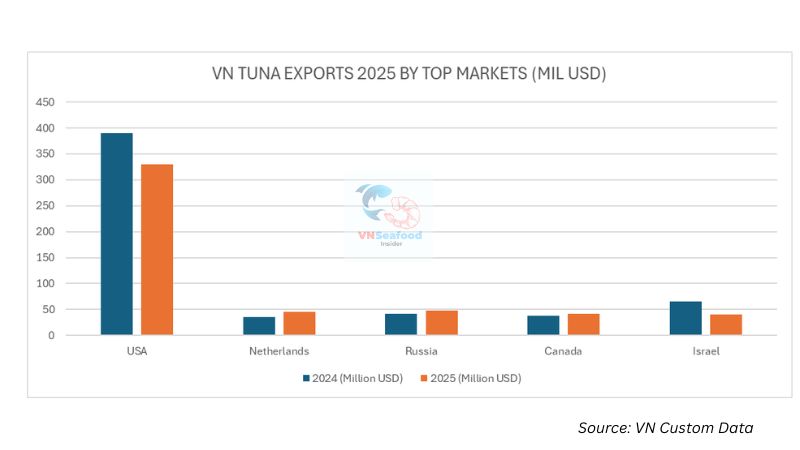
United States — High Value but High Regulatory Complexity for Vietnam Tuna
The US remains the single largest destination for Vietnam tuna, absorbing roughly $331 million in 2025 (about 36% of total tuna export value). January 2026 alone saw approximately $24 million flowing to American buyers.
But — and this is a big but — the regulatory environment is getting more complex, not less. Tariffs on certain canned tuna products range from 12.5% to 35%, and the upcoming MMPA regulations (more on that shortly) threaten to reshape market access fundamentally. High value, yes. Easy? Absolutely not.
European Union — EVFTA Opportunity Constrained by EUR1 Bottleneck
The EU showed strong momentum early in 2026: Germany up 39%, Netherlands up 15% compared to the same period in 2025. The EVFTA agreement theoretically offers preferential tariff access that should make tuna export to EU a goldmine.
In practice, it’s more complicated. The EUR1 certificate of origin requirement creates a structural bottleneck that limits how many Vietnamese exporters can actually benefit from those reduced tariffs. We unpack this problem thoroughly in our piece on Vietnam tuna export challenges to EU and US.
Japan and Russia — The Emerging Growth Markets for Vietnam Tuna in 2026
Japan recorded a stunning 95% increase in Vietnam tuna imports in early 2026, focused primarily on sashimi-grade and high-quality frozen products. Russia, meanwhile, has been quietly building as a destination, particularly for processed and canned tuna.
These aren’t niche footnotes anymore — they’re becoming strategic pillars. For importers in or serving these markets, our detailed analysis of Vietnam tuna export to Russia and Japan is worth your time.
How Global Demand Shifts Are Reshaping Vietnam Tuna Export Strategy
CPTPP markets grew 53% in early 2026. The Middle East jumped 35%. Egypt surged 129%. Chile, 133%.
The pattern is clear: Vietnamese tuna suppliers are diversifying aggressively, and for good reason. When your two biggest markets (US and EU) keep adding regulatory complexity, you hedge by building pipelines elsewhere. Smart importers should watch these emerging corridors — they often offer better negotiating leverage and less crowded competition.
Regulatory Challenges Every Vietnam Tuna Importer Must Understand
Here’s the section that separates informed importers from those who get blindsided. Regulations aren’t just paperwork — they determine whether your product clears customs or sits in limbo.
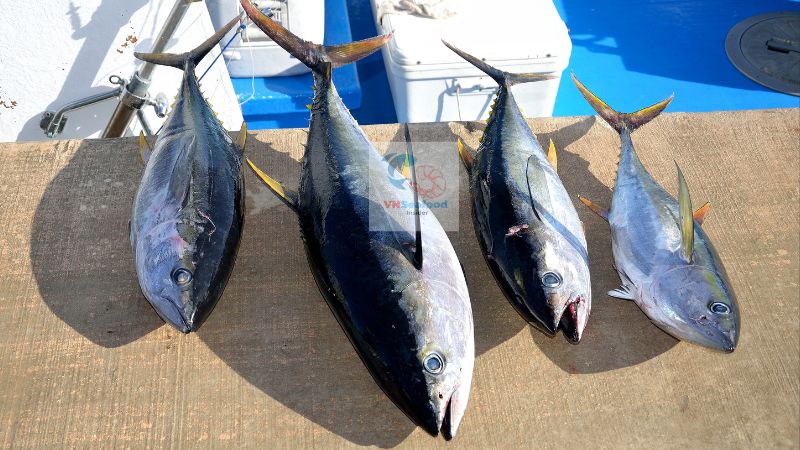
MMPA Tuna Ban 2026 — Direct Impact on Vietnam Tuna Fisheries and US Market Access
The Marine Mammal Protection Act’s import provisions are tightening, and Vietnam’s tuna fisheries face direct scrutiny. The MMPA tuna ban could restrict or complicate US market access for Vietnamese tuna if compliance benchmarks aren’t met by specific deadlines.
This isn’t theoretical. It’s happening. If the US is your primary market, you need to understand the timeline and your supplier’s compliance status right now. Our detailed breakdown covers exactly what’s at stake: MMPA tuna ban 2026 and Vietnam’s challenges.
EUR1 Certificate Bottleneck — Why Vietnam Tuna Export to EU Remains Structurally Limited
The EVFTA promised reduced tariffs. The EUR1 certificate is the key that unlocks them. Problem is, obtaining EUR1 certification requires meeting rules of origin that many Vietnamese processors — especially those using imported raw materials — struggle to satisfy.
The result? A frustrating gap between theoretical market access and practical reality. If you’re importing Vietnam tuna to Europe, understanding this bottleneck isn’t optional. Read the full analysis on the EUR1 certificate problem.
How Regulatory Changes Are Disrupting Vietnam Tuna Export Supply Chains
Between IUU fishing regulations, sustainability certification demands (MSC, ASC), food safety requirements, and trade policy shifts, the tuna export supply chain from Vietnam is being reshaped in real time. Suppliers who invested in traceability and compliance infrastructure are pulling ahead; those who didn’t are losing buyer relationships.
We map these disruptions and their practical implications in our analysis of regulatory changes in the tuna supply chain.
Vietnam Tuna Export Challenges to EU and US — What to Expect
Looking ahead, the twin pressures of US tariffs plus MMPA and EU’s EUR1 plus anti-IUU enforcement will continue to create a two-speed market. Exporters who can navigate both will command premium positioning. Those who can’t will compete on price in less demanding markets. As an importer, your job is knowing which category your supplier falls into.
Vietnam Tuna Product Guide — Species, Cuts, and Processing Formats
Now for the tangible stuff: what you’re actually putting in containers.
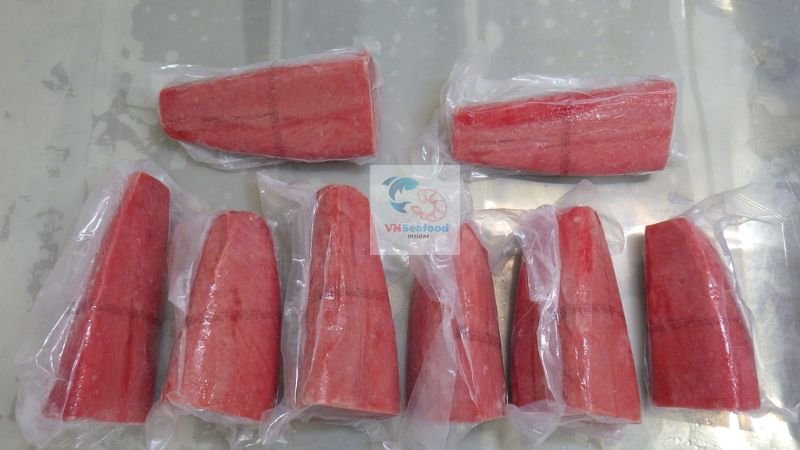
Yellowfin Tuna from Vietnam — Key Product Formats for Importers
Yellowfin tuna dominates Vietnam’s export portfolio. The main product formats include:
- Loin: Skin-off, bloodline-in or bloodline-out, vacuum-packed, frozen at -60°C or -18°C depending on grade
- Steak: Portion-cut, typically 150g–200g, skinless or skin-on
- Fillet: Boneless, suitable for retail and foodservice
- Saku block: Rectangular cuts for sashimi portioning
Each format has specific grading, temperature, and packaging requirements. Don’t assume — specify.
Vietnam Tuna Grading System — Grade A, AA, and AAA Explained
One thing we see importers overlook — especially those new to sourcing tuna from Vietnam — is the grading system. Price differences between Grade A and Grade AAA from the same supplier can reach 40% or more. Knowing what you are actually buying matters.
Here is how Vietnamese tuna exporters typically grade their product:
Grade A is the entry-level export grade. Flesh color is acceptable but may show early signs of oxidation — slight browning at the surface is possible. Fat content is lower, texture is firmer, and the product is generally suitable for cooked applications: canned tuna, heat-treated pouches, or value-added processed products. If your end use is cooking rather than raw consumption, Grade A delivers solid value at the most competitive price point.
Grade AA sits in the middle and is the most commonly traded grade from Vietnam. Color retention is good — bright red to deep pink — and fat marbling is visible but not exceptional. This grade works well for frozen tuna steaks, saku blocks, and foodservice sashimi where presentation matters but ultra-premium positioning is not required. The majority of Vietnamese yellowfin tuna entering the US and European foodservice channels falls in this category.
Grade AAA is the top of the Vietnamese tuna grading scale and is what serious sushi restaurants and premium retail programs are looking for. Deep, consistent red color throughout the loin with no oxidation, high fat content, firm yet smooth texture, and minimal bloodline. These fish are typically line-caught, handled individually on board, and processed through dedicated sashimi-grade lines with strict temperature control from vessel to freezer. Not every Vietnamese tuna exporter can reliably supply Grade AAA — it requires the right fishing method, handling protocol, and processing facility.
What we tell buyers at VNSF Insider: always specify the grade in your purchase order, not just verbally in conversation. “Premium quality tuna” means different things to different exporters. Ask for a written grade specification and, if possible, request a fat content test result (expressed as a percentage by weight) alongside the standard microbiological report. For sashimi-grade applications specifically, also confirm whether the product is CO-treated or naturally preserved — a distinction that has direct compliance implications in the US and EU markets.
The grade you need depends entirely on your end application. Getting this clarity before negotiating price will save you from receiving a product that technically meets the contract but does not meet your customer’s expectations.
Premium Tuna Cuts for Sushi — How to Select and Source from Vietnamese Suppliers
Sashimi and sushi applications demand a different level of scrutiny. Color, fat content, histamine levels, and handling protocols all matter enormously. Premium tuna cuts for sushi from Vietnam can be excellent — but only from suppliers with the right cold chain infrastructure and quality control.
Our sourcing guide on selecting premium tuna cuts for sushi walks through exactly what to look for and what to ask.
Yellowfin Tuna Cube — Applications, Grading, and What to Specify
The yellowfin tuna cube has become a popular format for poke bowls, salads, and ready-to-eat applications. Grading typically follows color standards (2+, 1+, etc.) and size specifications matter for consistency. Our dedicated guide on yellowfin tuna cube covers applications, grading systems, and specification language you should use with suppliers.
Tuna CO Treatment vs Natural Methods — Compliance and Quality Implications
Let’s address the elephant in the cold storage room. CO-treated tuna maintains an appealing cherry-red color longer, but regulatory acceptance varies dramatically by market. The EU effectively bans it. The US permits it with labeling. Japan has its own standards.
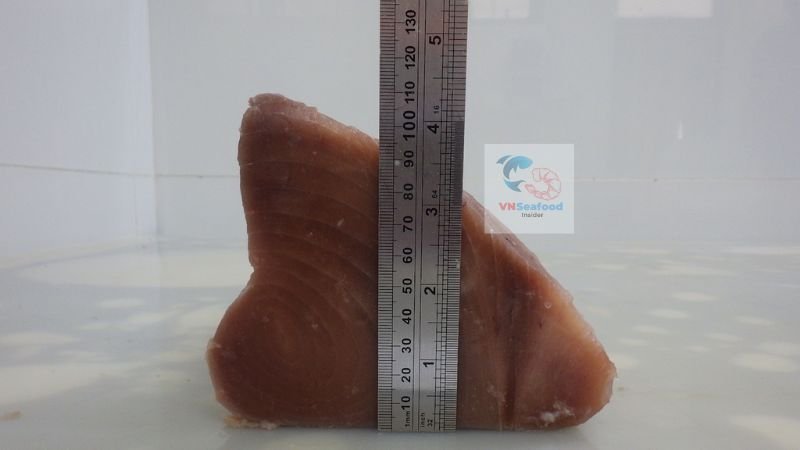
If you don’t specify — and verify — you risk compliance problems at the border. Our comparison of tuna CO treatment vs natural methods gives you the full picture.
Vietnam Tuna Pricing — How to Benchmark and Negotiate Effectively
Price is where the conversation always gets real. And in Vietnam tuna trade, pricing is anything but straightforward.
Key Factors Driving Vietnam Tuna Price Fluctuations
Several forces interact simultaneously:
- Raw material supply: Catch volumes in the Western Pacific directly influence pricing. Low catches in late 2024 and early 2025 pushed skipjack prices up significantly.
- Species and grade: Sashimi-grade yellowfin commands a substantial premium over standard frozen loin.
- Processing level: The more value-added the product, the higher the price — but also the more stable the margin.
- Currency movements: VND/USD fluctuations affect FOB pricing.
- Fuel and logistics costs: These have been volatile since 2022 and remain a factor.
How to Negotiate Tuna Import Prices with Vietnamese Exporters
Effective negotiation starts with knowing your benchmark. Come to the table with current FOB reference prices, understand seasonal patterns, and — this is crucial — don’t just squeeze on price. Vietnamese suppliers who are pushed below sustainable margins will cut corners on quality or traceability, which costs you more in the long run.
Volume commitments, payment terms, and specification flexibility are all negotiation levers beyond unit price. Our guide on how to negotiate tuna import prices provides a practical framework.
FOB Price Benchmarks and What to Watch for in Supplier Quotes
When reviewing quotes, look beyond the headline number. Check what’s included: packaging, glazing percentage, inspection costs, loading charges. A quote that looks $0.30/kg cheaper might actually be more expensive once you account for higher glaze weight or lower yield after thawing. Details matter.
How to Source Vietnam Tuna — Practical Steps for Importers
Theory is useful. Process is essential. Here’s the practical sequence.
Defining Your Vietnam Tuna Product Specification Before Outreach
Before you contact a single supplier, write down exactly what you need: species, cut, size, grade, treatment method, packaging format, temperature requirement, certifications, and target market. Vague inquiries get vague responses. Specific specifications get actionable quotes.
Certifications and Compliance Documentation Required by Market
Different markets require different paperwork. The US requires HACCP compliance, FDA registration, and increasingly MMPA-related documentation. The EU demands health certificates, IUU catch certificates, and — if you want preferential tariffs — the EUR1 form. Japan has its own import inspection protocols. Know your market’s requirements before you assess a supplier’s capability.
How to Verify a Vietnam Tuna Supplier’s Regulatory Compliance Record
Check the supplier of DL code (factory code). Verify FDA registration status. Ask for recent audit reports (BRC, IFS, or equivalent). Request sample shipment documentation. And frankly — visit the facility if the volume justifies it. Trust is built on verification, not promises.
You can also work with on-ground partner in Vietnam (such as VNSF Insider) to have the trusted Vietnam tuna processing companies.
Frequently Asked Questions About Vietnam Tuna
Is Vietnam tuna compliant with MMPA regulations for US import?
Compliance status is evolving. Vietnam’s fisheries are working toward meeting MMPA comparability findings, but as of early 2026, not all fisheries have secured clearance. Verify your specific supplier’s status and monitor NOAA updates closely.
What is the difference between CO-treated and natural tuna from Vietnam?
CO-treated tuna retains a bright red color through carbon monoxide exposure during processing. Natural tuna undergoes no gas treatment and may show darker or more variable coloring. CO treatment is permitted in the US (with labeling) but restricted in the EU and some Asian markets.
Which Vietnam tuna products are eligible for EU preferential tariffs?
Products meeting EVFTA rules of origin — primarily those processed from domestically caught raw materials — can qualify for reduced tariffs via EUR1 certification. However, many processors using imported raw materials cannot meet these origin requirements.
What is the typical FOB price range for yellowfin tuna from Vietnam?
FOB prices for yellowfin tuna loin from Vietnam typically range from $7–$12/kg depending on grade, season, and specification. Sashimi-grade commands the upper end; standard frozen loin sits lower. Always confirm current pricing, as raw material costs have been volatile.
How do I find a verified Vietnam tuna exporter for my import program?
Start with FDA’s registered facility list, and check for current BRC/IFS or equivalent certifications. VNSeafoodInsider also maintains updated supplier intelligence — reach out if you need specific guidance.
The bottom line: Importing Vietnam tuna offers genuine opportunity, but it rewards preparation and punishes assumptions. The Vietnam seafood export is shifting — in product mix, in regulatory landscape, in geographic demand patterns. Importers who stay informed, specify precisely, and verify thoroughly will find Vietnam an increasingly valuable sourcing origin.
And if you’ve made it this far, you’re already ahead of most. That counts for something.
